
By Corina Godoy, Mojave Desert Seed Bank Collections Manager
Photos by Sarah Sido
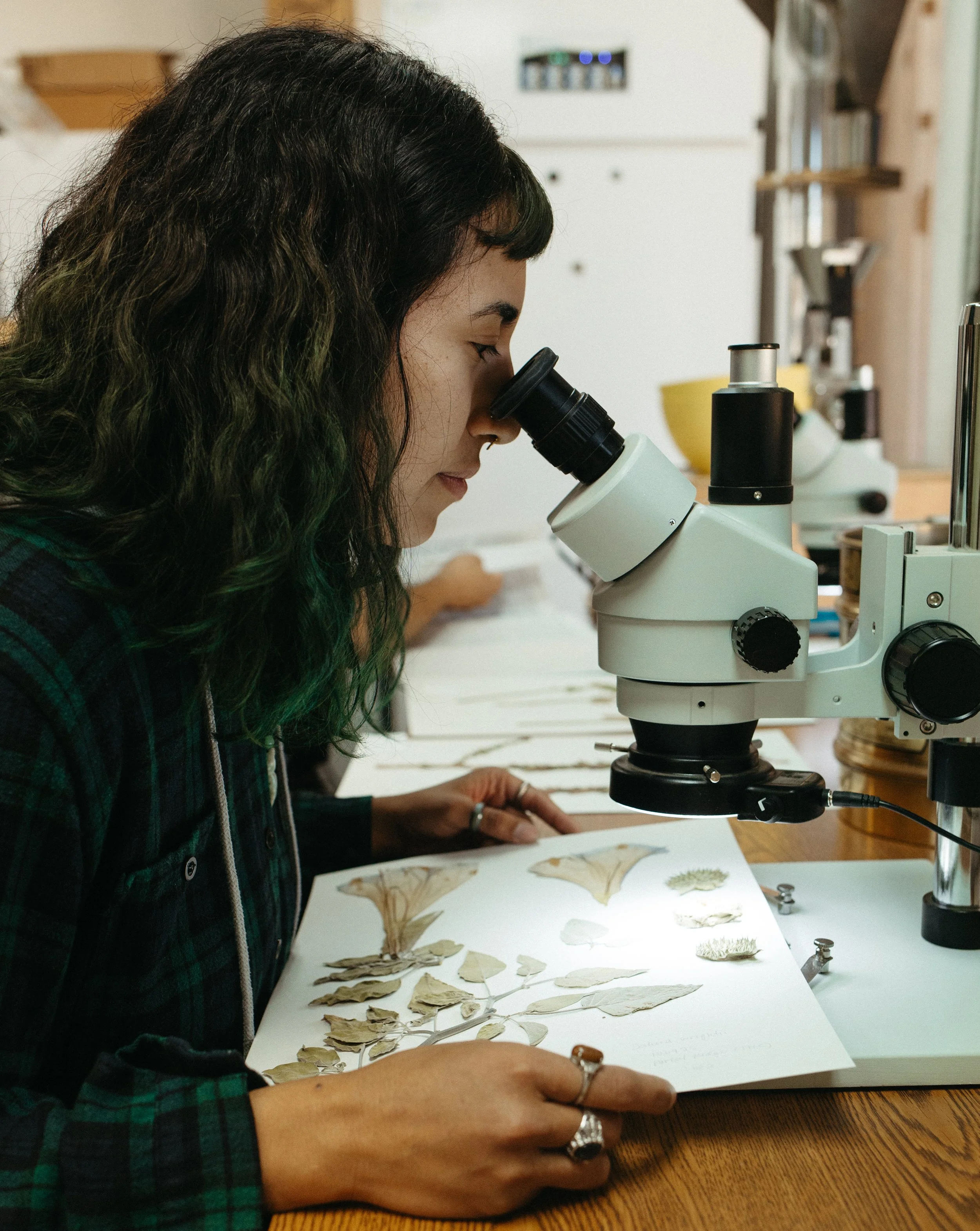
Field Supervisor Ashley Soto views a voucher of Datura wrightii under a microscope.
Within the Mojave Desert Seed Bank, we have millions of seeds from over 400 species; but did you know we also have shrubs? And forbs in a constant state of flower? If you are picturing them growing in a pot with soil though, think again—these specimens are pressed into a 2D form on paper, for what is known as an herbarium. Now these specimens are being digitized for use by researchers anywhere.
What is an herbarium?
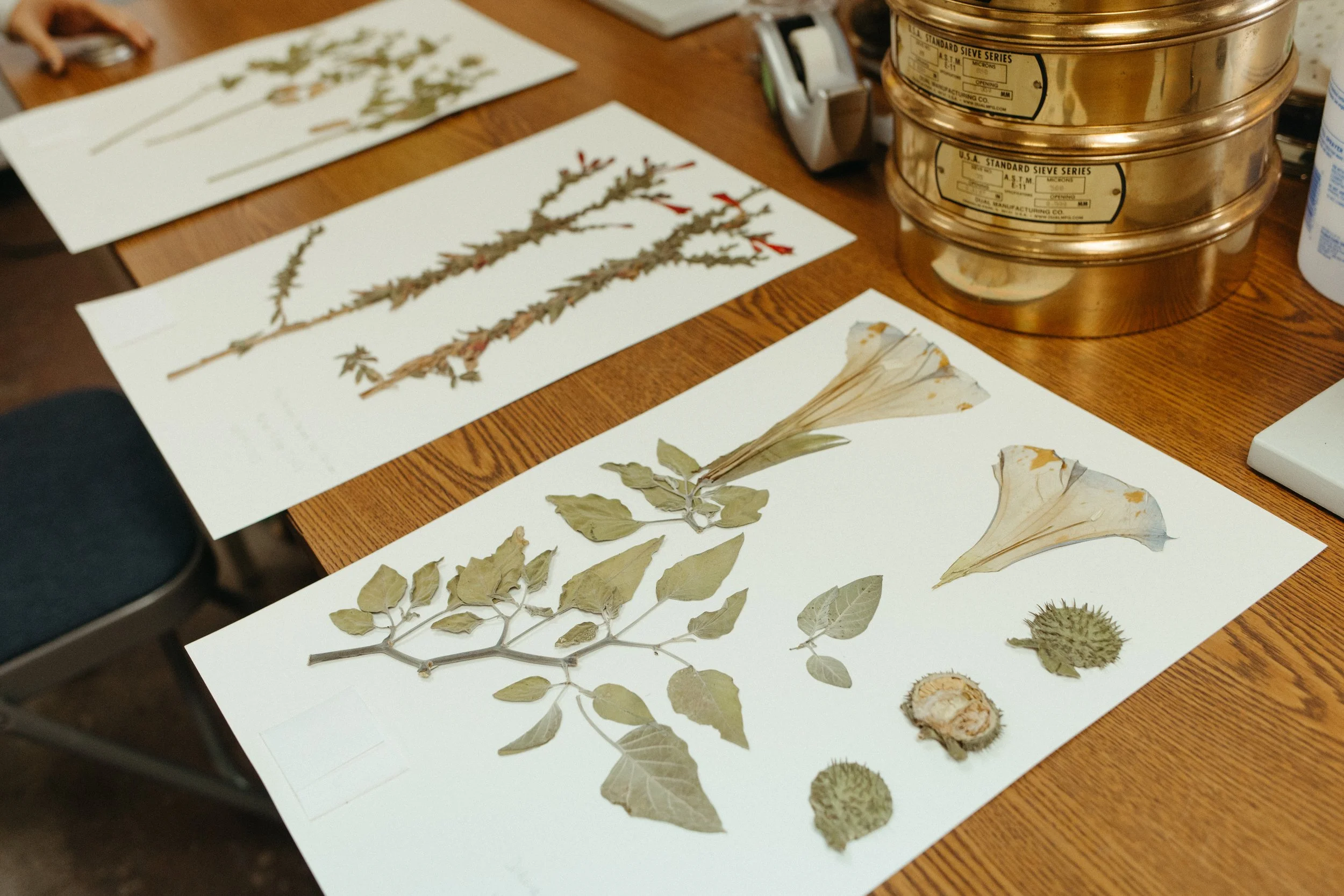
Herbarium vouchers in the Mojave Desert Seed Bank.
An herbarium is a collection of pressed plant specimens and their associated data. In early herbaria, the collection and sharing of these specimens helped establish an agreed-upon nomenclature among the European scientific community. While this practice dates back to the 16th century, the value they provide continues to evolve. In addition to documenting the geographic distribution and observing phenology of flora over time, herbaria also support the advancement of studies in fields such as plant genetics, global change, and paleobotany.
The methods used to collect botanical data have also evolved over time. Accessible, digital platforms like iNaturalist provide millions of occurrence and phenology data points from citizen scientists supported by a dedicated user community that helps identify observations. But with a physical specimen in-hand, we are able to study minute details that allow for more precise identification.
Herbaria are a valuable resource for future morphologic and genetic research as species evolve and science advances over time.
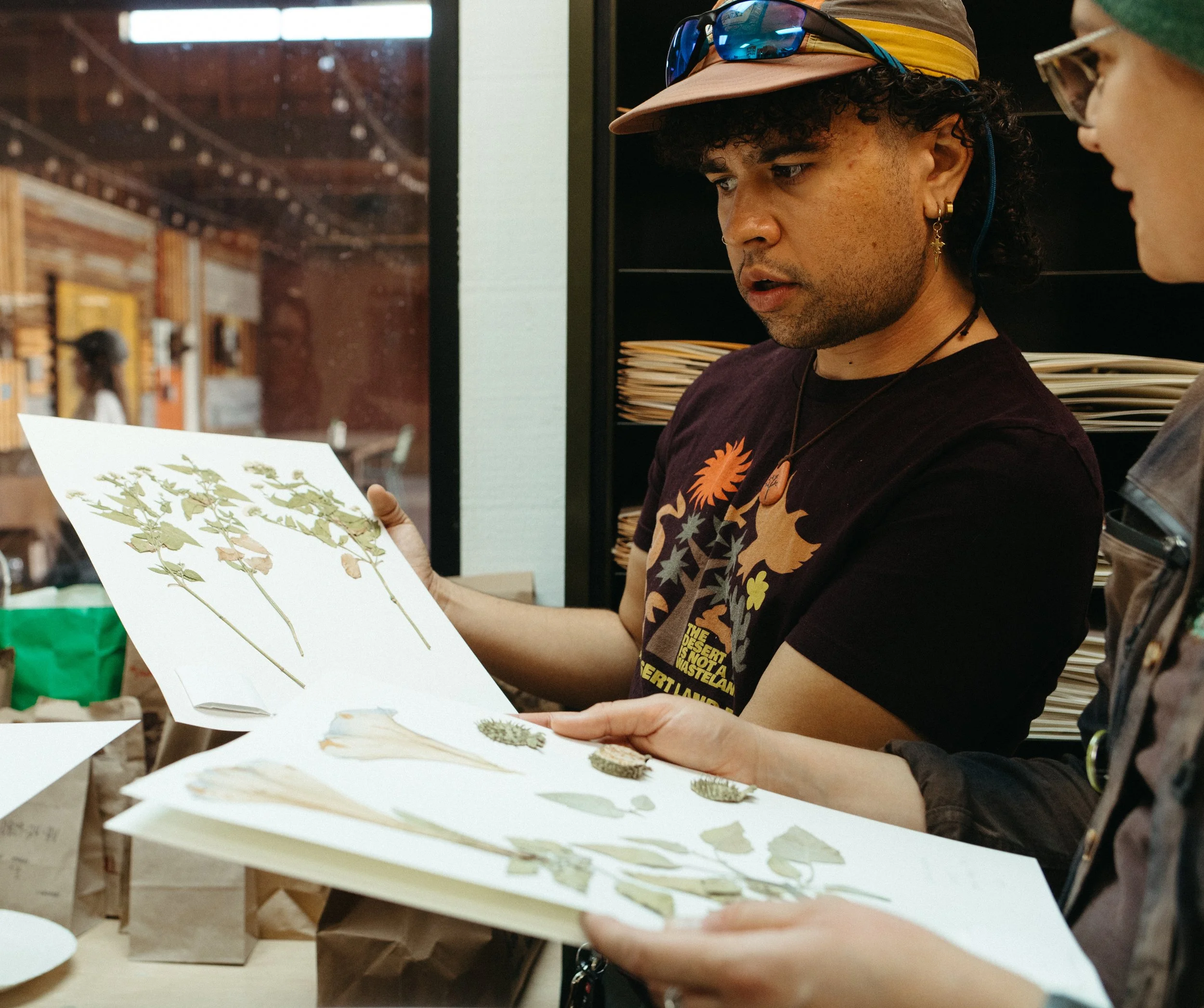
Seed Bank Technicians Anthony Rondon and Kyra Santa Cruz study herbarium vouchers in the Mojave Desert Seed Bank.
Cataloguing native flora of the California desert
MDLT’s herbarium was established in 2018 with the first specimens collected from our Mojave Desert Discovery Garden. Since then, we have collected over 500 specimens, spanning from the foothills of the southern Sierra Nevada Mountains to Chuckwalla National Monument. Each specimen is tied to the seed collections we make from MDLT’s wide network of preserves throughout the California desert, acting as a reference if further identification needs to happen back in the lab.
Collecting specimens
Seed bank staff are in the field most of the year, mapping species occurrence, assessing plant populations on the ground, and tracking phenology of seed collection targets. By the time seeds are ripe and naturally dispersing, the plants themselves have often started to senesce, no longer displaying their characteristic features necessary for identification (i.e. flowers, fresh leaves, etc.). These features are a vital component of herbarium vouchers, so the team collects specimens during scouting trips in advance of seed collection, or when they return to the population the following year when the species is flowering.
The collection of plant material is done conservatively to protect the health of the individual being collected and the population at large. Depending on the growth habit of the plant, the seed team may harvest an entire plant (limited to small grasses and forbs that occur in large populations consisting of thousands of individuals) to show the root architecture, or they will snip a piece from a larger plant that holds the main features and inflorescence.
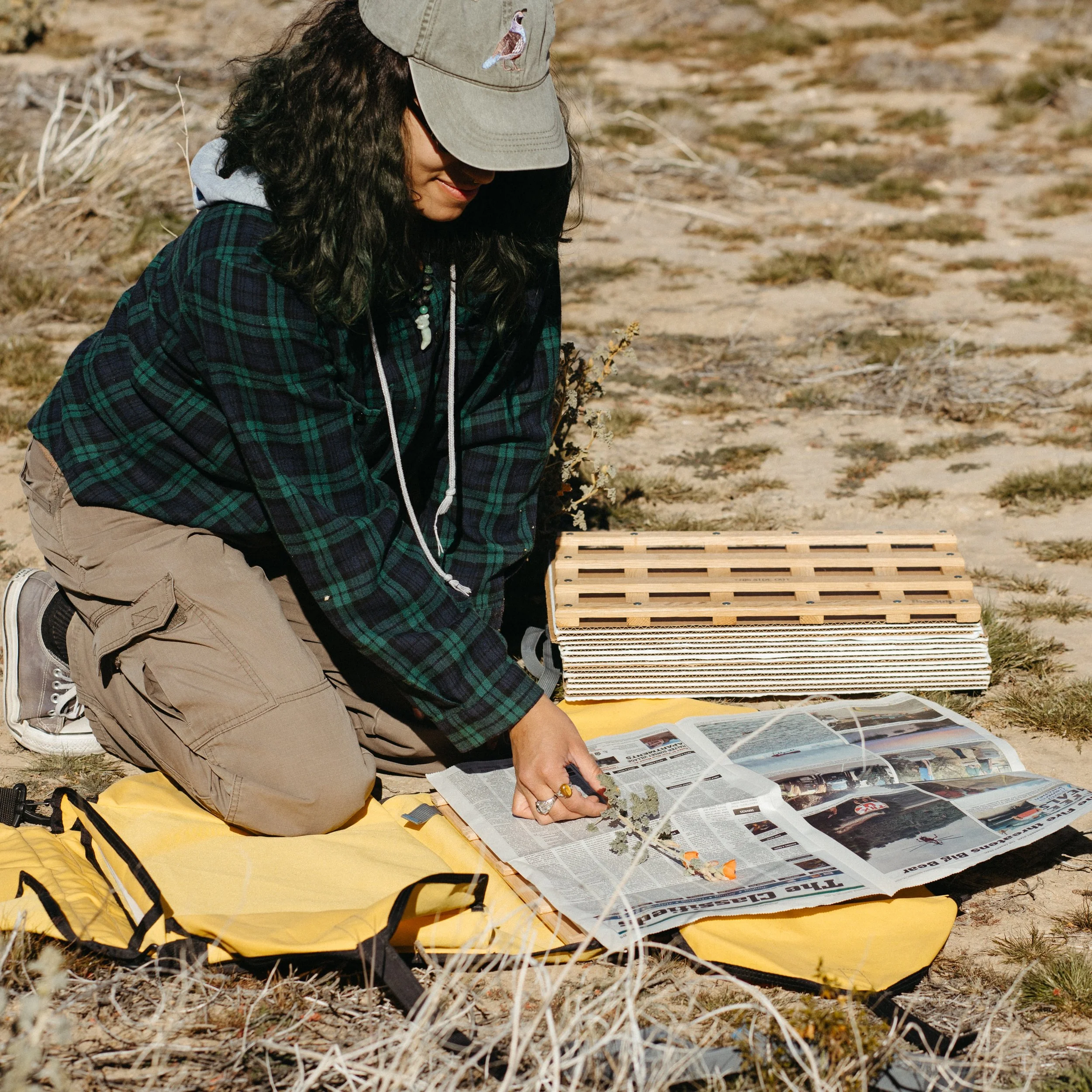
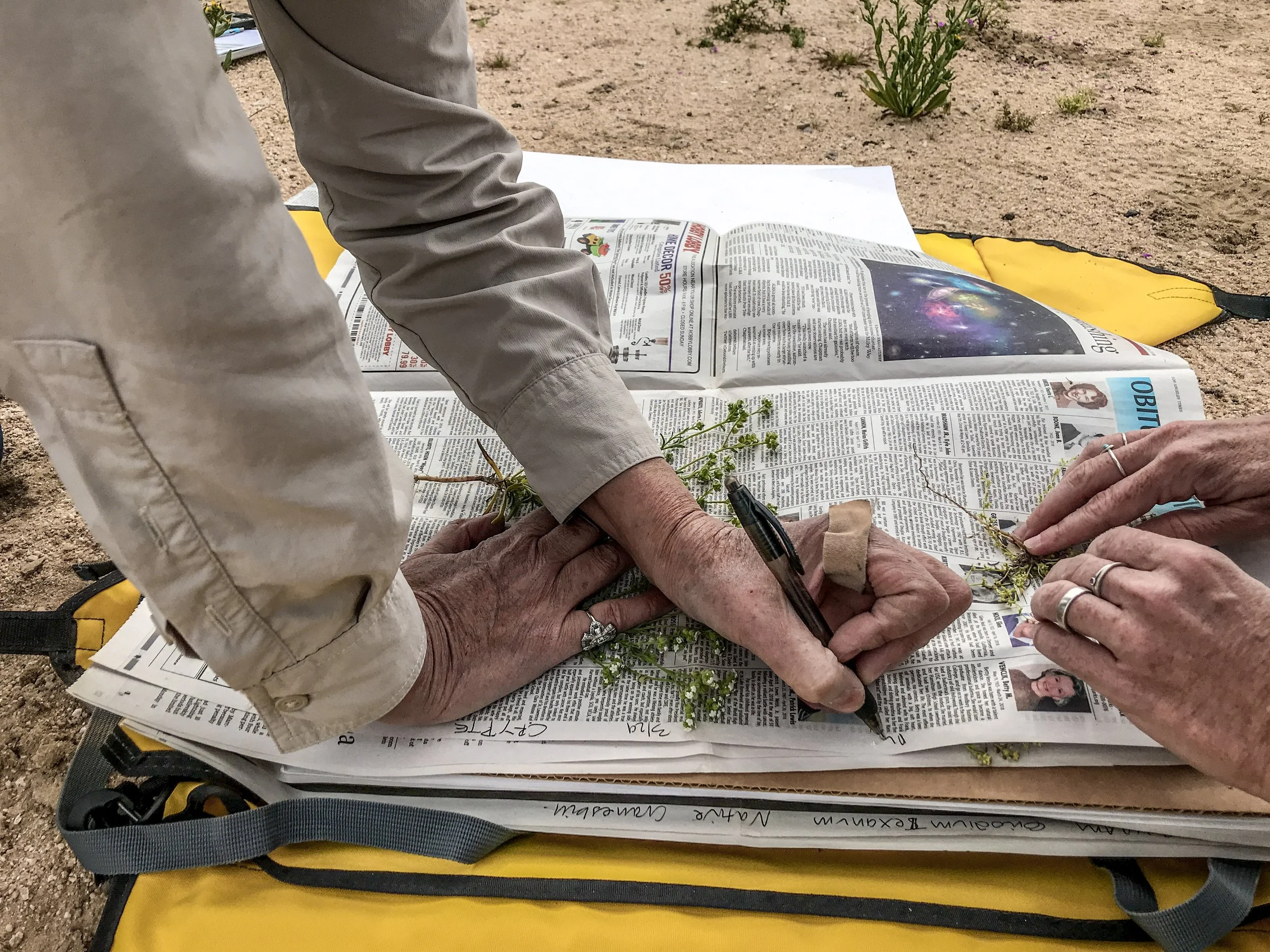
The collected specimen is carefully laid flat on a newspaper sheet—labeled with species, collector, and date—with their identifying features arranged to face outward, staging how it will look mounted on the herbarium paper. Population, location, and other metadata is recorded on digital data forms. The newspaper is then placed into a plant press where it is dried into a flattened form as the team continues their seed scouting and collecting efforts.
Preparation and mounting
Upon return to the lab, the plant press is placed in the office to continue drying. Once specimens are fully dry, they are ready for mounting. During the mounting sessions, staff remove debris and carefully secure the specimen with herbarium glue onto archival paper with a detailed label that includes a unique catalog number, the scientific name, date of collection, and location description.
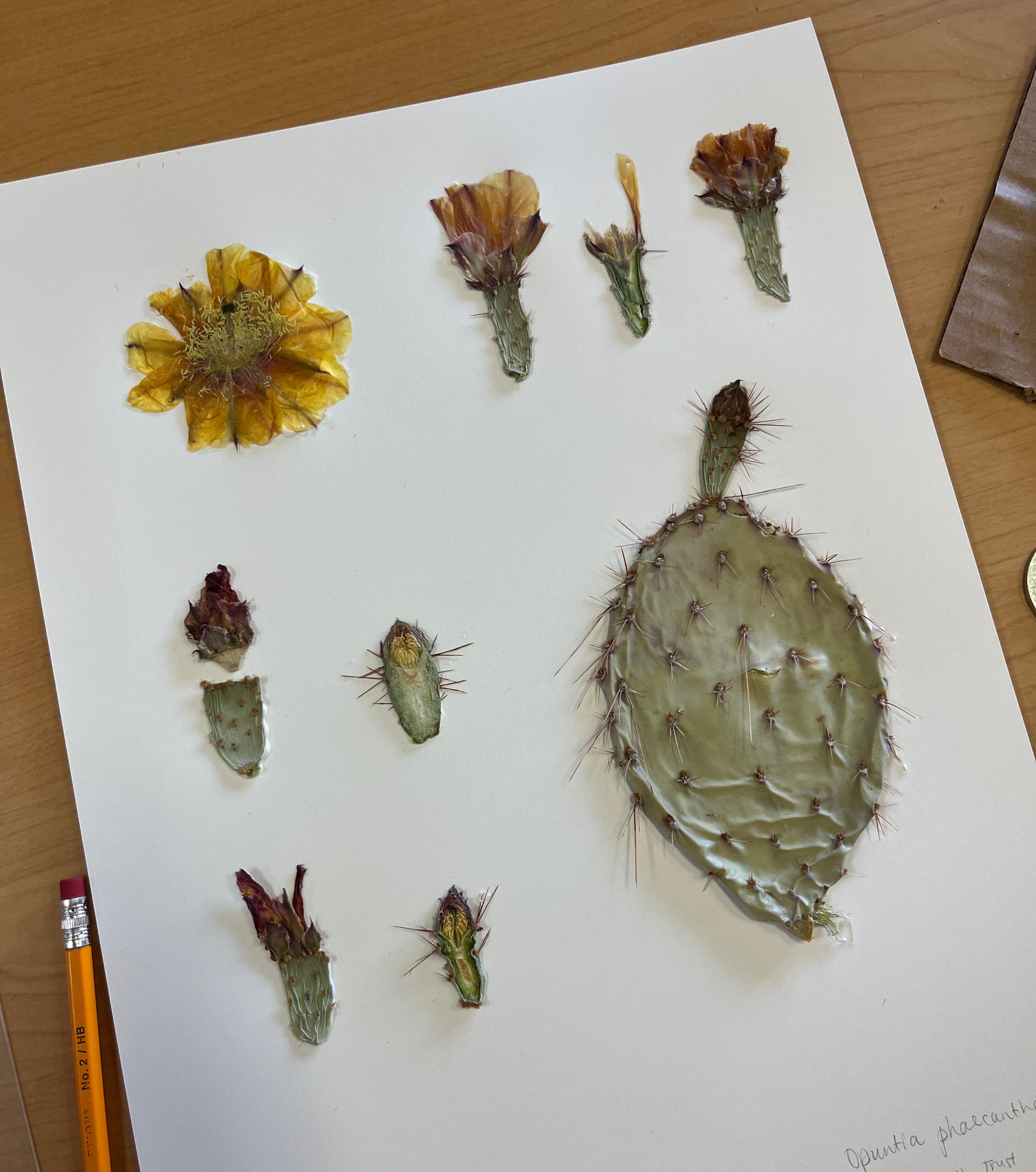
The vouchers are carefully stacked and dried before being placed in a freezer. This important step provides a non-toxic way to eliminate the eggs, larva, or adult pests that are potentially within the plant material, which could run amok and feast on our collections if left unchecked. After the vouchers are frozen, they are digitized and filed away in our herbarium cabinet. The scanned vouchers and associated metadata are then uploaded into the Consortium of California Herbaria web portal (CCH2).
Making data accessible online
For the first time, we have uploaded our herbarium data to CCH2, an internationally accessible database of California herbarium data. CCH2 contains a vast wealth of knowledge, in some cases dating back centuries, and is a critical resource for studying and understanding California’s native flora. Over 4 million plant records from over 60 collections are managed in CCH2, which feeds into other botanical resources like the Jepson eFlora, Calfora, iDigBio, and GBIF.
Due to their remote locations, most of the preserves that MDLT stewards have little human presence other than our staff. By developing our relationships to these lands and the plant communities within, we can make unique botanical observations and share details about these areas at a landscape and plant population scale, thus expanding our understanding of species distribution and the types of conditions these plants thrive under.
Special thanks to Mare Nazaire and California Botanic Garden for donating an HerbScan to our program, which we use to digitize our voucher specimens, and to the California Wildlife Conservation Board for supporting the work of the Mojave Desert Seed Bank and herbarium.
References