
Rare plant highlight: Cleomella palmeri
By Kyra Santa Cruz, Seed Bank Technician II
Photos: Kyra Santa Cruz and Anthony Rondon
While conducting late-season scouting efforts in the drainage basin between the Palen and Coxcomb mountains, MDLT’s Seed Bank Technicians wandered into a vast system of low-lying dunes with one goal: to find cool endemic plants.
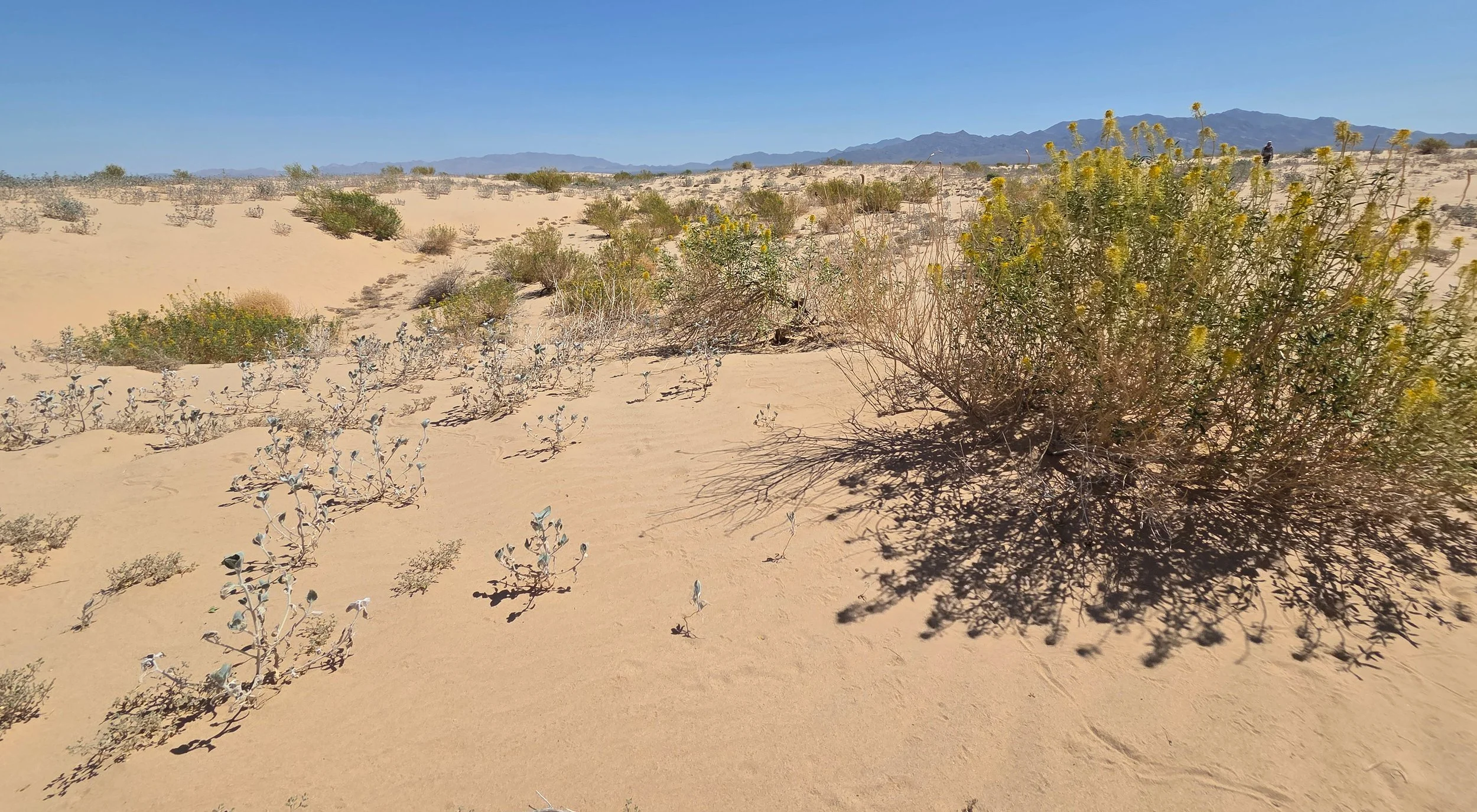
In the distance, the team caught a glimpse of a few shrubs dotted in yellow that seemingly multiplied into hundreds as their eyes focused in on the horizon. From afar they seemed to look like your standard issue Cleomella arborea; but upon closer inspection, the fruits were strikingly different.
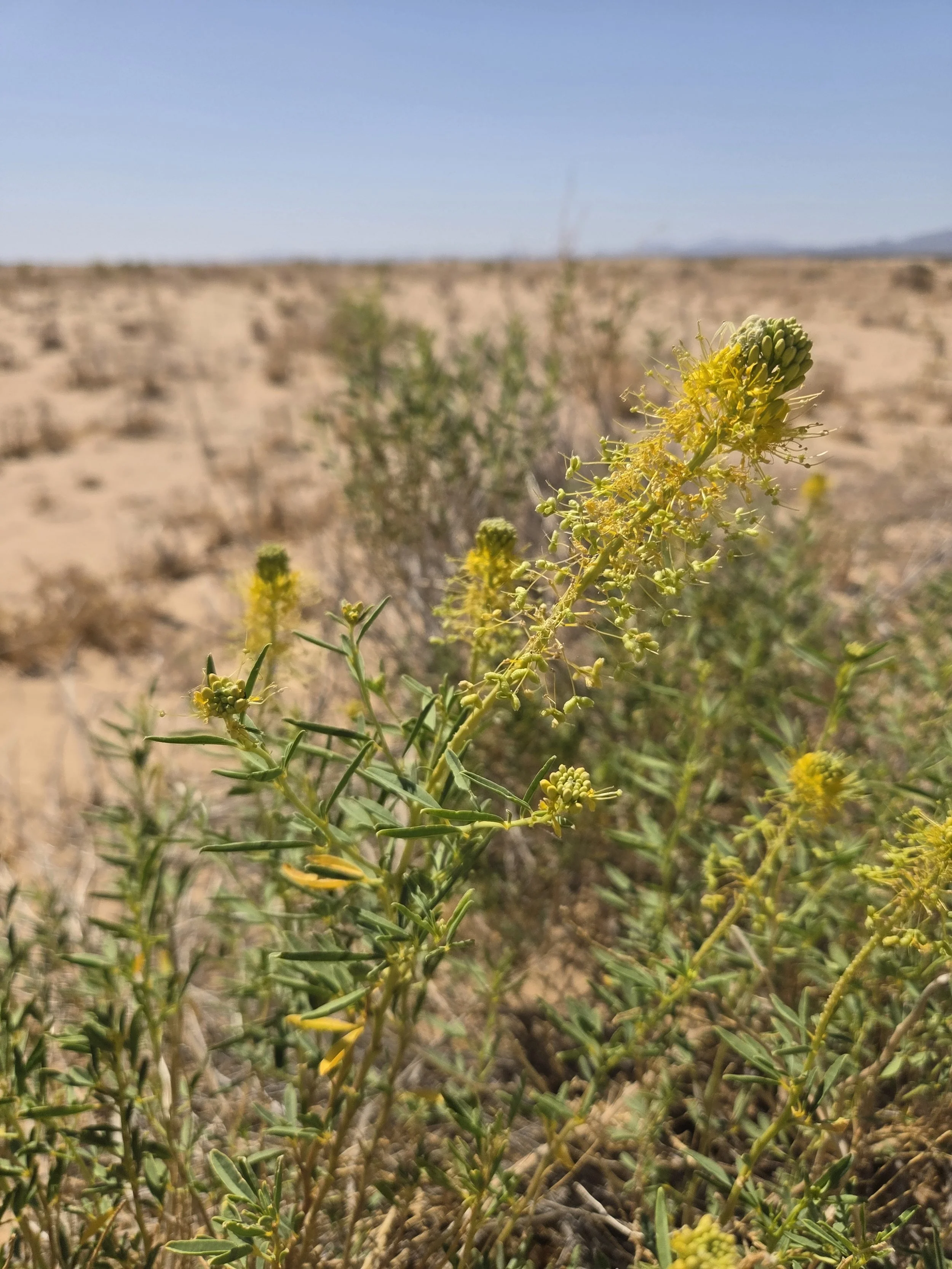
Meet Cleomella palmeri, Palmer’s Jackass-clover, apparently monikered for being a tasty snack to mules and for its clover shaped leaves. It is the rare sibling of the bladderpod, Cleomella arborea, everyone’s favorite musky smelling plant.
C. palmeri occurs in sandy Sonoran desert habitats below 130m in elevation, notably dune ecosystems. This plant has a California Rare Plant Rank of 2B.1. It is considered rare and seriously threatened in California, basically only known in two localities: one being the aforementioned Palen Dunes area, the other near Anza Borrego State Park around Borrego Springs. It is otherwise common in northwest Mexico.
Like bladderpod, Cleomella palmeri can grow quite large, up to 2 meters, with multiple long inflorescences that rise tall above the plant in a good year. The fruits are quite different than the typical inflated pods of Cleomella arborea; C. palmeri forms two small didymous (side by side) nutlet twins with a remnant, persistent style poking out between them. Almost like…the face of a mosquito?
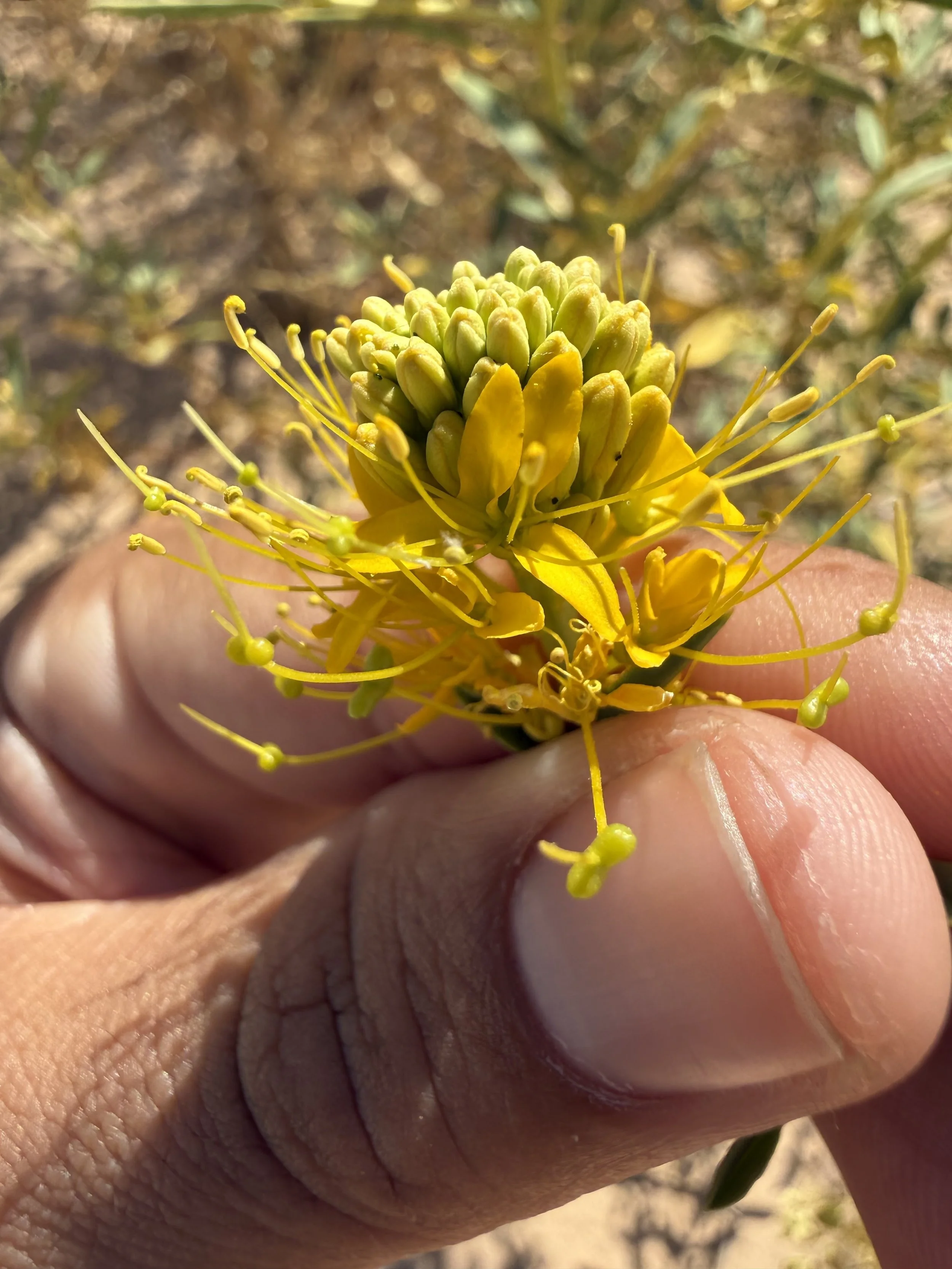
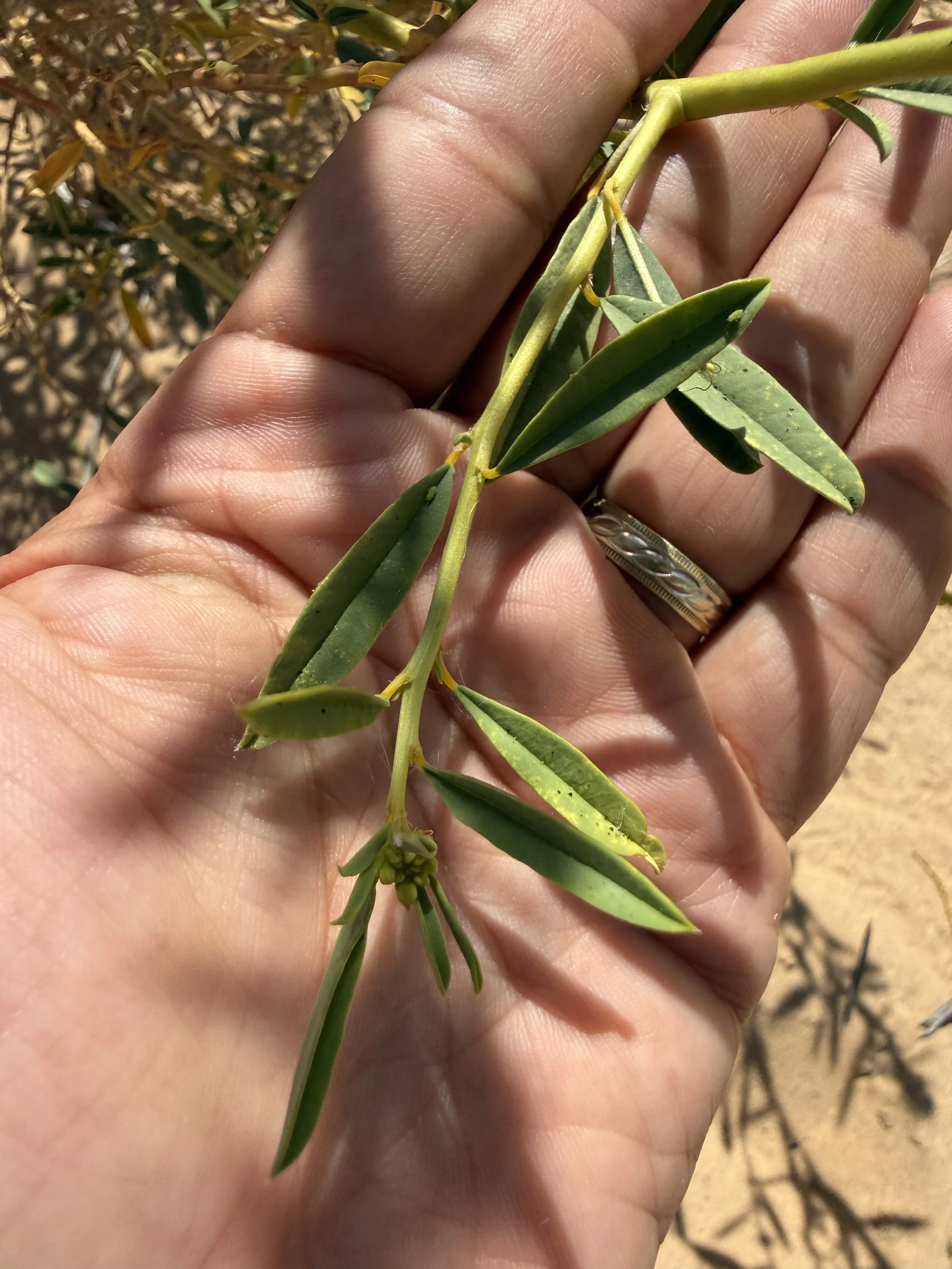
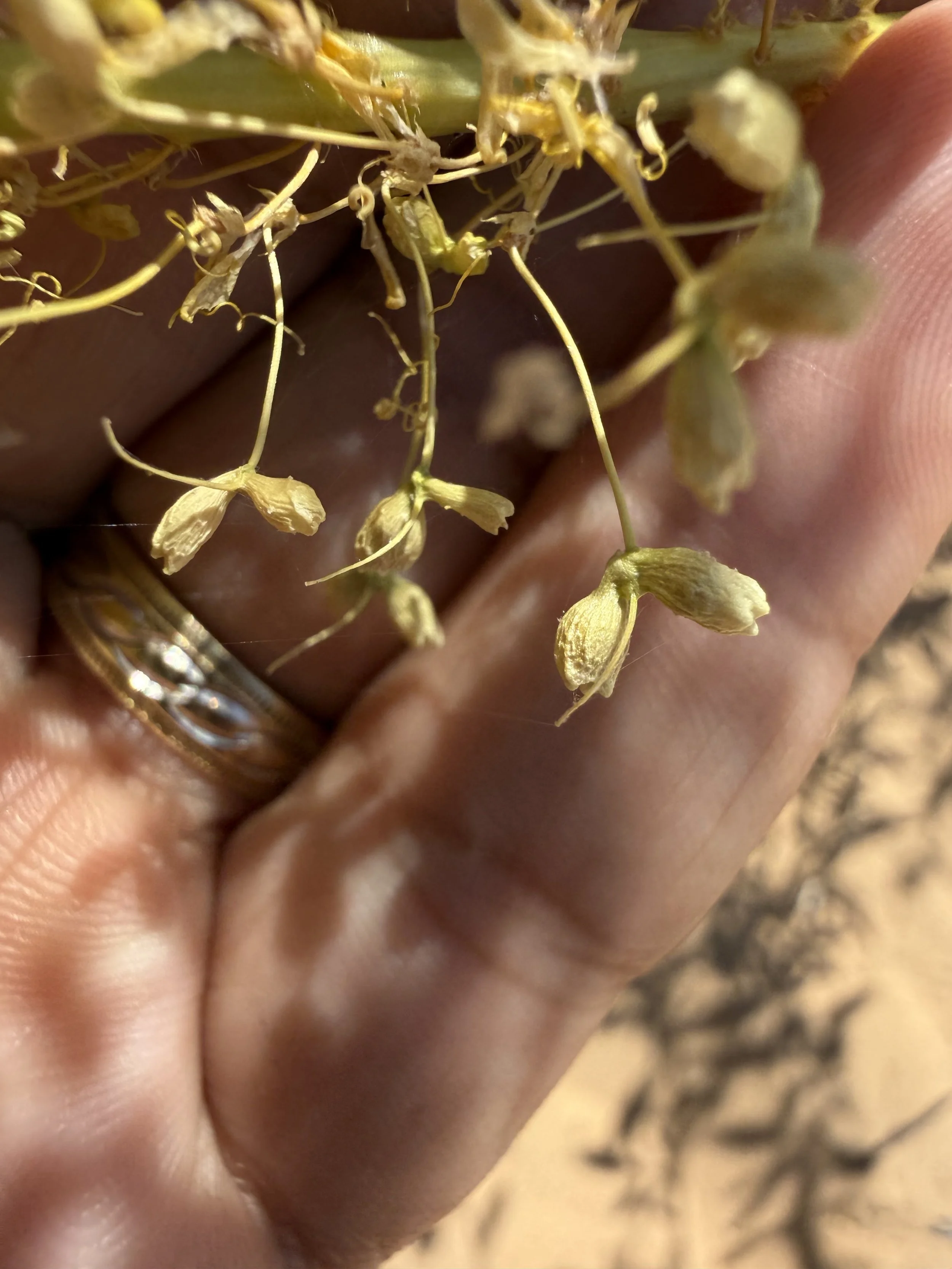
Cleomellas used to be in the caper family, Capparaceae, but now reside in Cleomaceae, the spiderwort family. It is most closely related to Brassicaceae, hence the unappealing (to many), pungent, sulfuric smell of their foliage. “Stinkweed” is a common name for members of genus Cleomella—not to be confused with stinknet, a prolific invasive.
Being one of few large shrubs encountered in the Palen dune system, C. palmeri provides stabilized substrate for burrowing critters, protective shade for creatures and young plants, and nesting spots for birds. It may have even aided in the creation of the dune system itself! Certain types of dunes, known as parabolic dunes, initially form around the base of vegetation creating hummocks that grow larger and larger over time.
Their abundance of flowers throughout the year provide rich nectar sources for pollinators, and being closely related to Brassicaceae, they are likely an important host plant for butterflies in the family Pieridae, including taxa in the genus Pontia. Many plants in the Cleomaceae family contain compounds including glucosinolates. These compounds are typically a toxic deterrent to insects, but entice Pierid butterflies to lay their eggs on the plant, which then provides everything their larvae need to achieve maturity.
Unfortunately, the seed team wasn’t able collect seed from Cleomella palmeri this summer. Plants appeared productive in the spring, sending out tons of inflorescences of bright yellow flowers covered with pollinators, but when it came time to collect, all the seeds were empty.
Plants don’t always produce viable seed for a variety of reasons whether it be lack of rain, an untimely heat wave, absence of the correct pollinators, pathogens and disease, or other environmental stressors. Climate change can further compound these effects, which is why it is crucial to conserve ex-situ seed collections of these threatened taxa.
MDLT’s seed team will continue to keep an eye on this large population of rare plants. With enough monsoonal activity or winter rains, another flush of flowers may bring an opportunity to collect viable seed next spring!
Resources:
The butterfly plant arms race, escalated by gene and genome duplications
Cabbage family affairs: The evolutionary history of Brassicaceae
http://www.worldbotanical.com/wislizenia.htm
World Botanical Associates: Wislizenia