
The biologist leading wildlife surveys for desert crossings
By Josh Jackson, Chief Storyteller
Christina Aiello carries many of her desert neighbors with her wherever she goes. Among the creatures inked across her body are a desert tortoise, horned lizard, roadrunner, and spotted skunk. Even the plants and bones surrounding them belong to the landscape: ocotillo, desert live forever, and a badger skull.
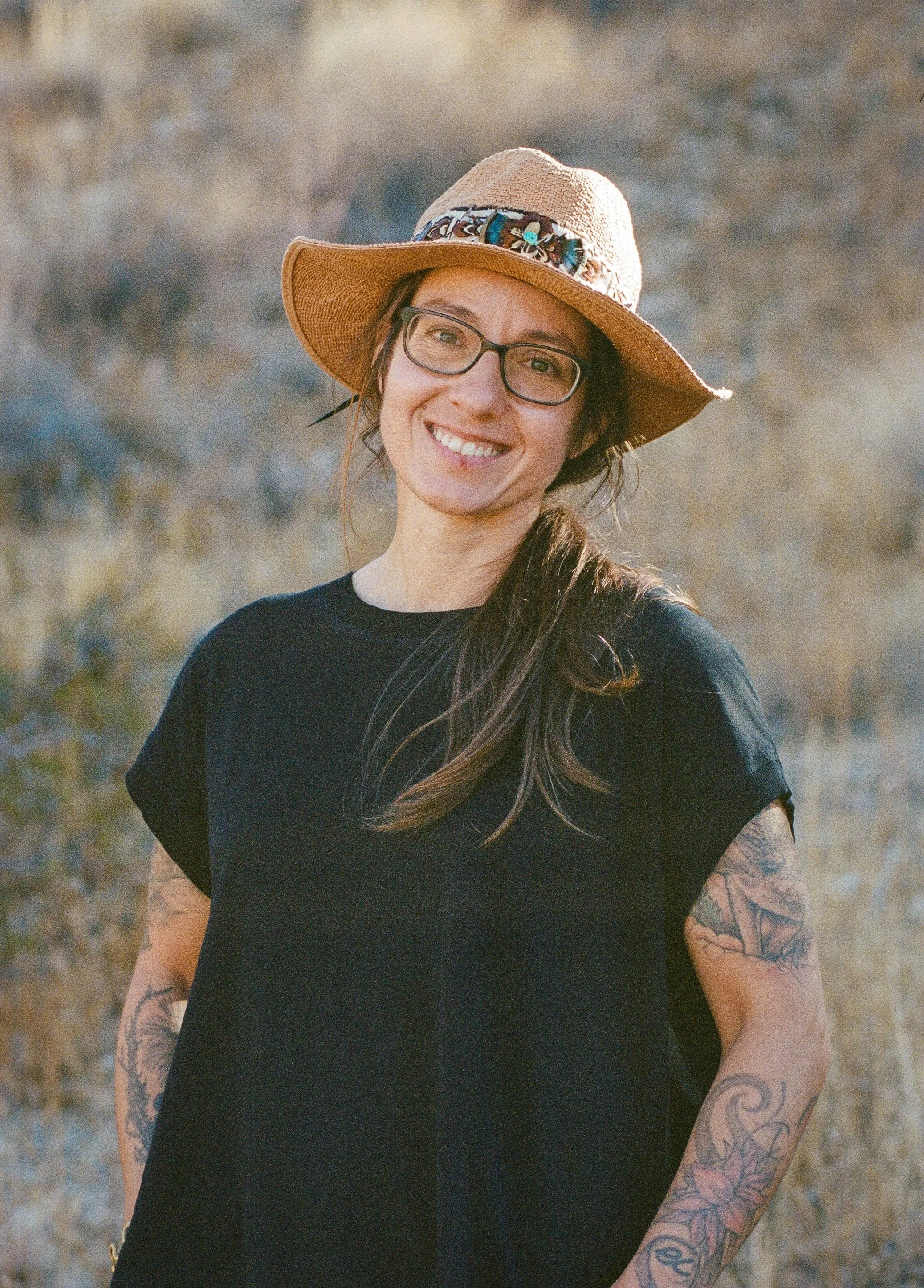
She is especially fond of the horned lizard, a desert reptile whose remarkable defenses are tailored to the predator it faces, whether an aerial hunter, a venomous snake, or a canine.
Her fascination with desert wildlife might seem unexpected for someone raised on the South Side of Chicago. Growing up, Aiello spent hours sitting on her family’s porch, watching the neighborhood pass by. Everyone knew one another, she remembered, and neighbors looked out for each other.
After college, a temporary job surveying desert tortoises in Utah introduced her to an entirely unfamiliar landscape. To her surprise, the desert immediately felt like home. Over the last fifteen years, she has studied tortoises, bighorn sheep, wildlife genetics, and the effects of highways on desert species, earning her PhD along the way.
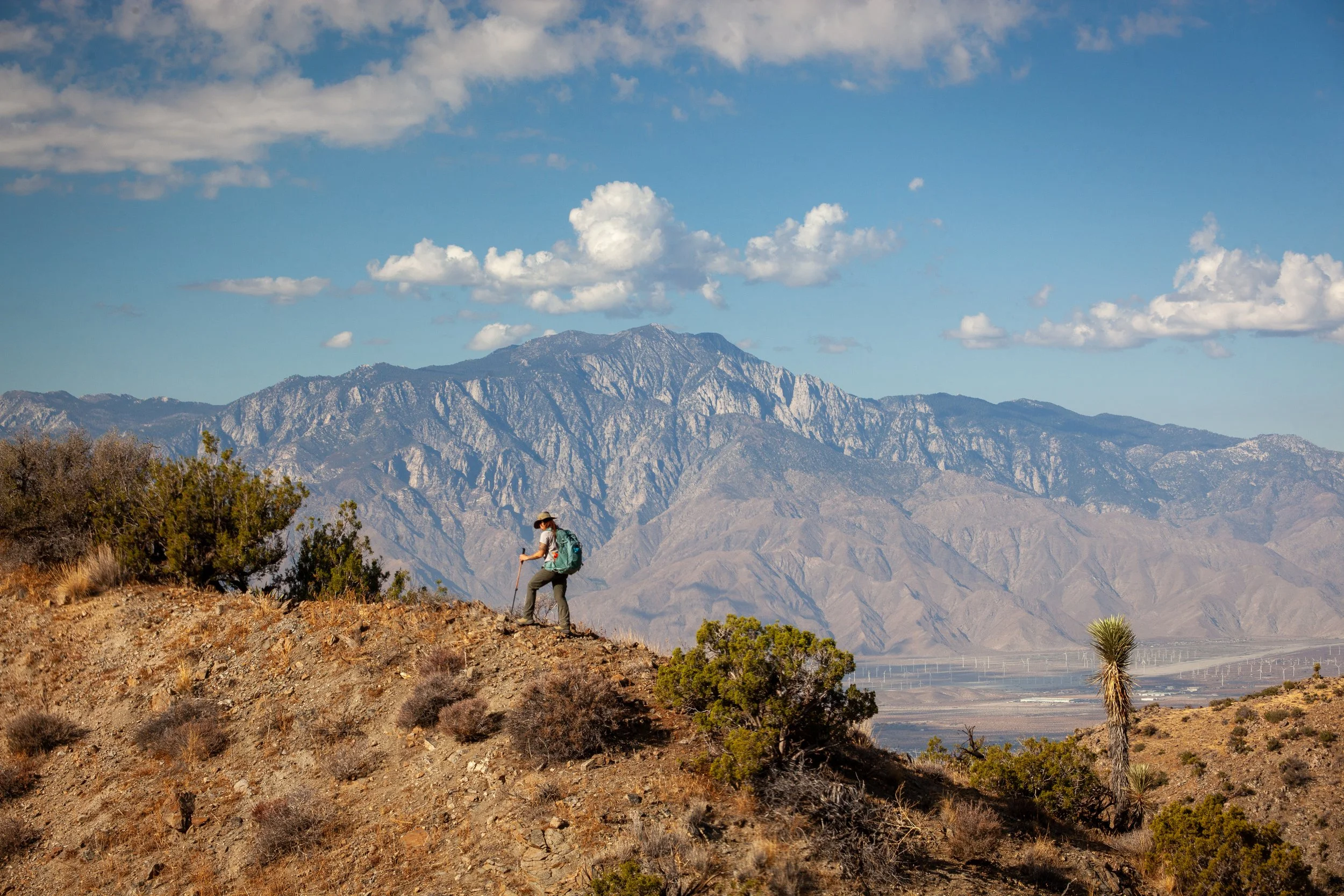
The day I joined Aiello in the field to search for bighorn sheep scat, she wore a t-shirt bearing a fitting message: “Connect or collapse.”
Now a California wildlife biologist with Wildlands Network, Aiello is conducting wildlife surveys for the State Route 62 Wildlife Crossing Project. Working with the Mojave Desert Land Trust and other researchers, she is gathering evidence for how animals move across the public lands on either side of the highway, helping strengthen the scientific basis for crossings that could reconnect long-divided habitat.
Aiello still spends time sitting on her porch, although her Joshua Tree neighbors now include coyotes, bobcats, roadrunners, tortoises, and even bighorn sheep. To her, the crossing project is another form of looking out for those who share her home.
“We’re just expanding who we consider our neighbors,” she said.