
By Sarah Bliss, Director of Community Conservation Initiatives
Photos by Joshua Jackson and Sarah Bliss
At the edge of the Sierra Nevada, where the mountains give way to the rolling hills and juniper-clad grasslands of the western Mojave, Caliente Creek has always drawn people to its banks.
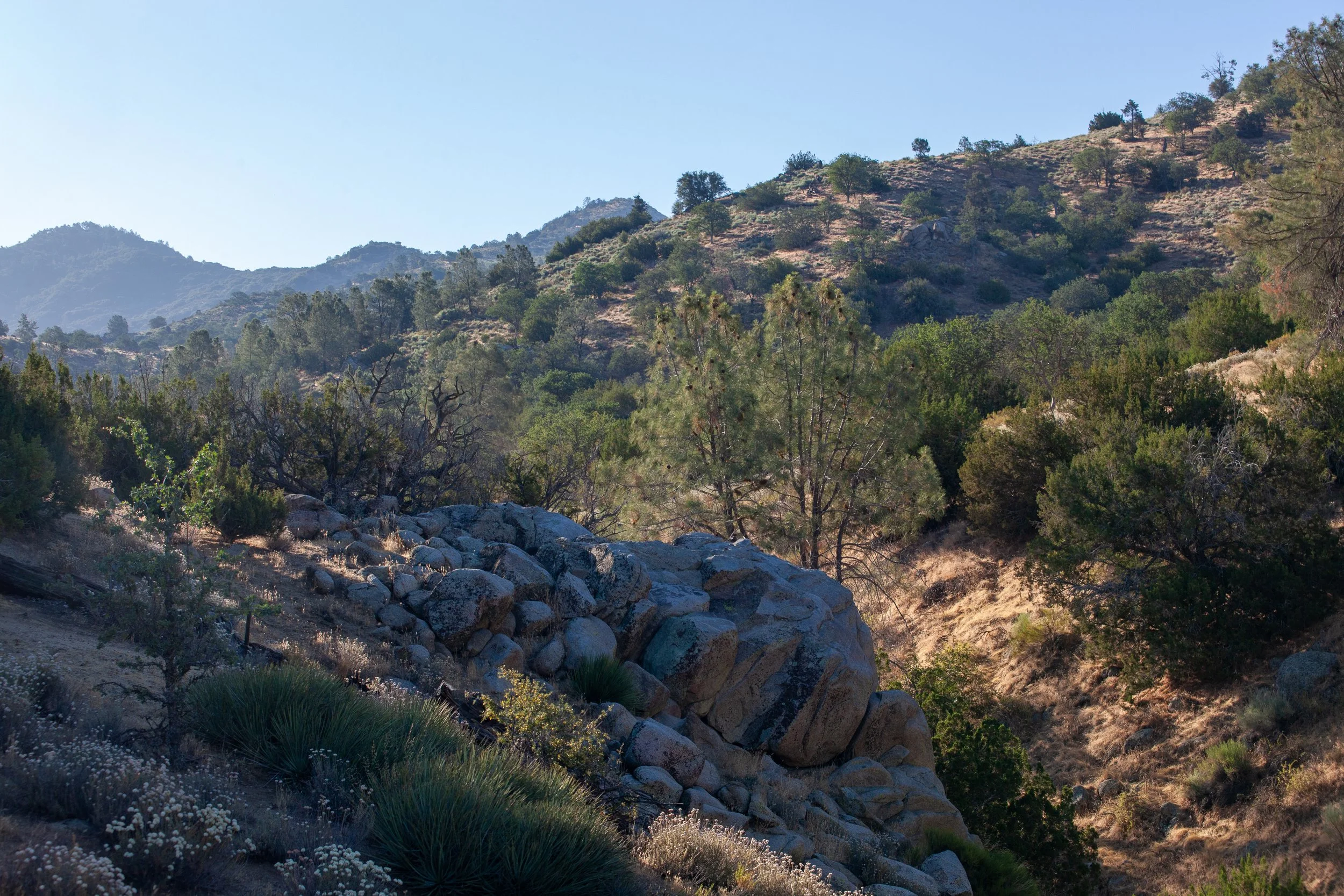
On a warm morning in early summer, I joined members of the Kern Valley Indian Community and fellow staff from the Mojave Desert Land Trust to walk the 1,440-acre preserve. We shared memories of the land, hopes for restoring stewardship, and reflections on a landscape that has long sustained both people and wildlife.
That morning reinforced something I've come to believe: conservation is, above all, about relationships. Over the past two decades, MDLT has worked to build partnerships with tribal communities across the California desert, recognizing that conservation begins with listening. Every acre we help protect carries a history that long predates our organization, and that history belongs first and foremost to the Indigenous peoples who have cared for these lands since time immemorial.
Over the years, I've come to realize that some of the most important lessons I've learned about this landscape haven't come from maps, management plans, or scientific reports. They've come from conversations with tribal elders and community members whose knowledge is rooted in lived experience. Those conversations have reshaped how I think about conservation—not as something we do for the land, but as something we build alongside the people who have cared for these places for countless generations. They've also convinced me that true conservation must center Indigenous ways of knowing—not simply as a complement to Western science, but as the foundation for how we understand and look after the land. When Indigenous knowledge leads the way, we create more meaningful outcomes for both people and place.
The need for those conversations has become more urgent. As California advances ambitious conservation goals through initiatives like 30x30, and as the Land Back movement gains momentum, opportunities to return conserved lands to tribal stewardship have become increasingly important.
Returning land is rarely straightforward. Legal frameworks, historical injustices, questions of access, and the interests of multiple tribal communities require patience, humility, and trust. There are no shortcuts—only a commitment to listening and working together. Today, that philosophy shapes MDLT's work, including the creation of the Community Conservation Initiatives department to deepen tribal partnerships and support tribal stewardship and land return.
We ended the day beside a spring on the preserve, our feet in the cool water. We talked about the buckwheat and phacelia we'd encountered during our walk, the jackrabbit that crossed our path, the challenge of managing invasive grasses across the preserve, and how ephedra has long been gathered and prepared. We broke open blades of salt grass and tasted the salt they carried.
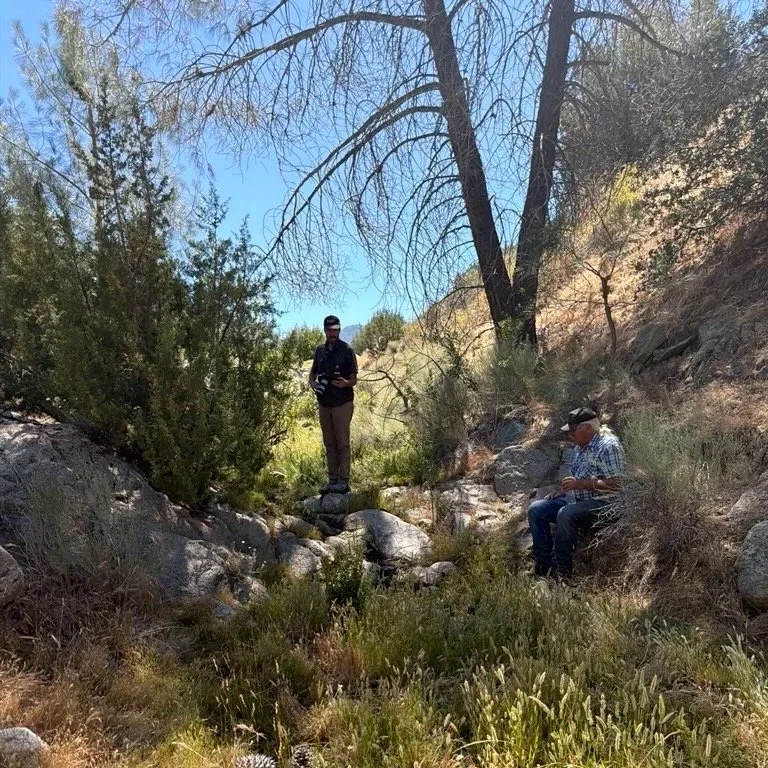
Days like this remind me that conservation is more than protecting land. These partnerships matter because trust is built by spending time together on the land—listening, learning, and sharing what each of us knows. This work is only one part of a much larger journey, but it's in these shared moments of respect and relationship that the future of conservation is being rewritten.
This essay was first published in October 2026 in ‘The Shape of Attention’, a magazine celebrating the 20th anniversary of the Mojave Desert Land Trust.