
By Josh Jackson, Chief Storyteller
Photos by Josh Jackson and Colin Barrows, Cactus to Cloud Institute
What does life feel like in the Mojave Desert in summer?
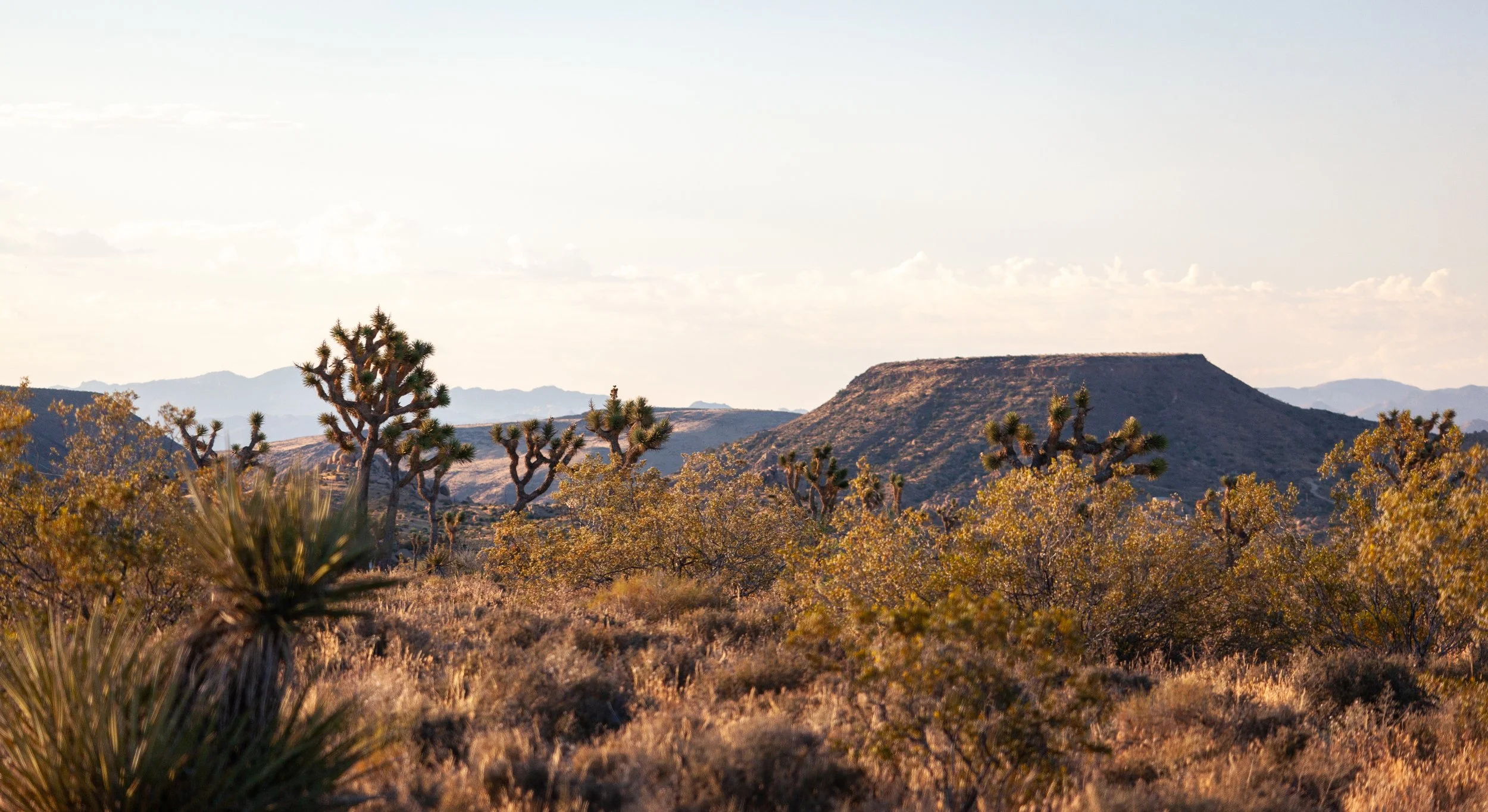
It’s a question I’ve been asking for years from my home near downtown Los Angeles. While we do get days when the air feels like the opening of an oven, the thermometer usually offers respite after dark, and stretches of temperatures in the mid-90s rarely last more than a week. But on the hottest afternoons, I often look toward the Transverse Ranges and wonder how everyone is faring on the other side as the dog days of summer settle over the Mojave.
I keep both of California’s desert national parks in the weather app on my phone, partly out of sheer curiosity and partly to keep our temporary Angeleno heat spells in perspective. Whatever we are facing here is always markedly worse out there. In Joshua Tree, the average summer high is 98 degrees. At Furnace Creek in Death Valley, it is a face-melting 113.
But numbers don’t tell us what it means to actually live in the midst of that heat. How does life rearrange itself when simply stepping outside can be dangerous?
I’ve posed this question to friends who live full time in the Mojave. Their answers usually begin with a long sigh and widening eyes, followed by some variation of the same response:
We get through it, they tell me, as if surviving summer were a collective undertaking.
Then they describe all the ways they manage the oppressive heat, which mostly revolve around swamp coolers, heavy curtains, cold showers, loose-fitting wardrobes, hydration, and migrating between air-conditioned environments when possible—all while living frugally to make up for the air-conditioning bill. Perhaps most importantly, they try to stay inside between dawn and dusk, practicing behavioral thermoregulation by becoming almost nocturnal.
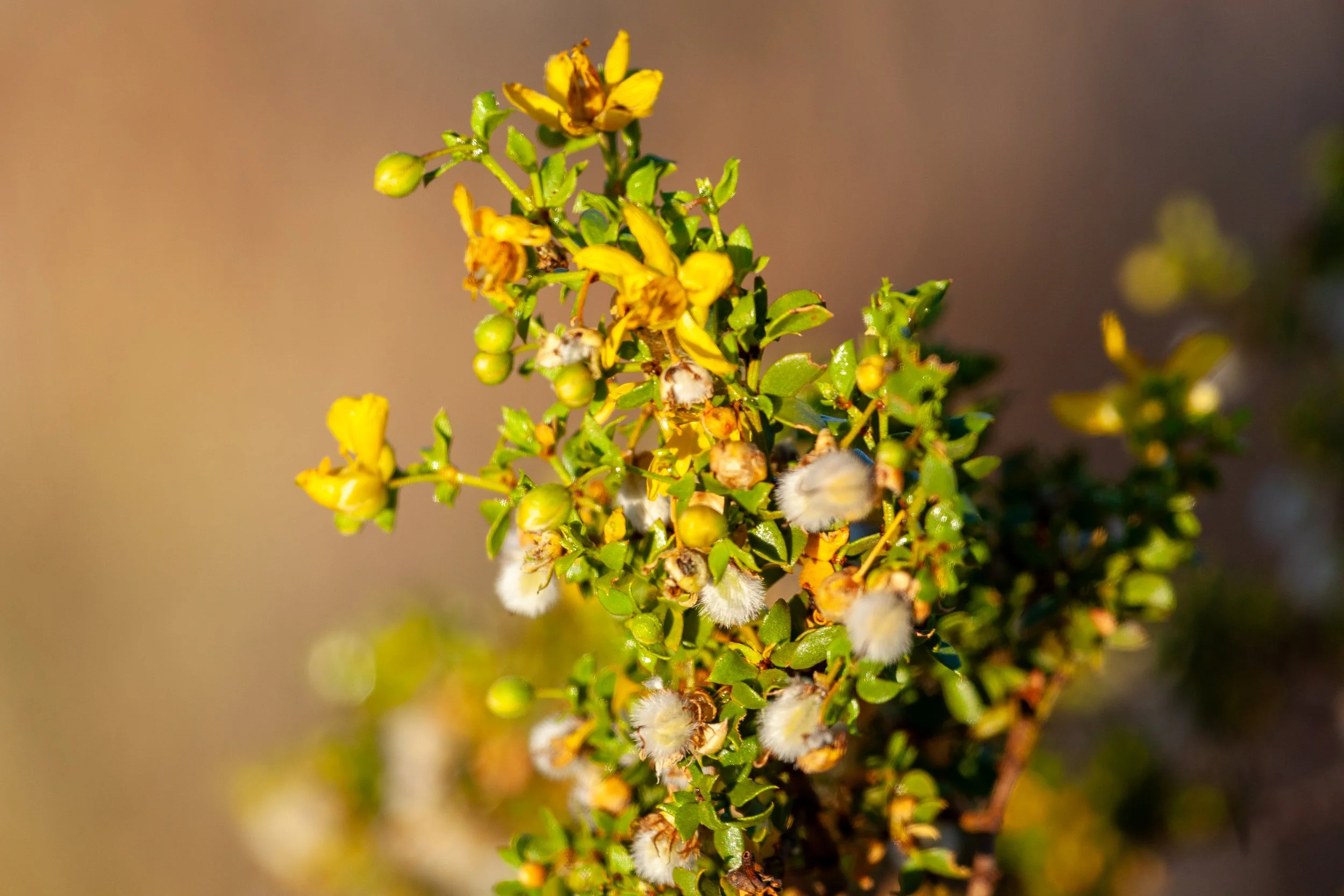
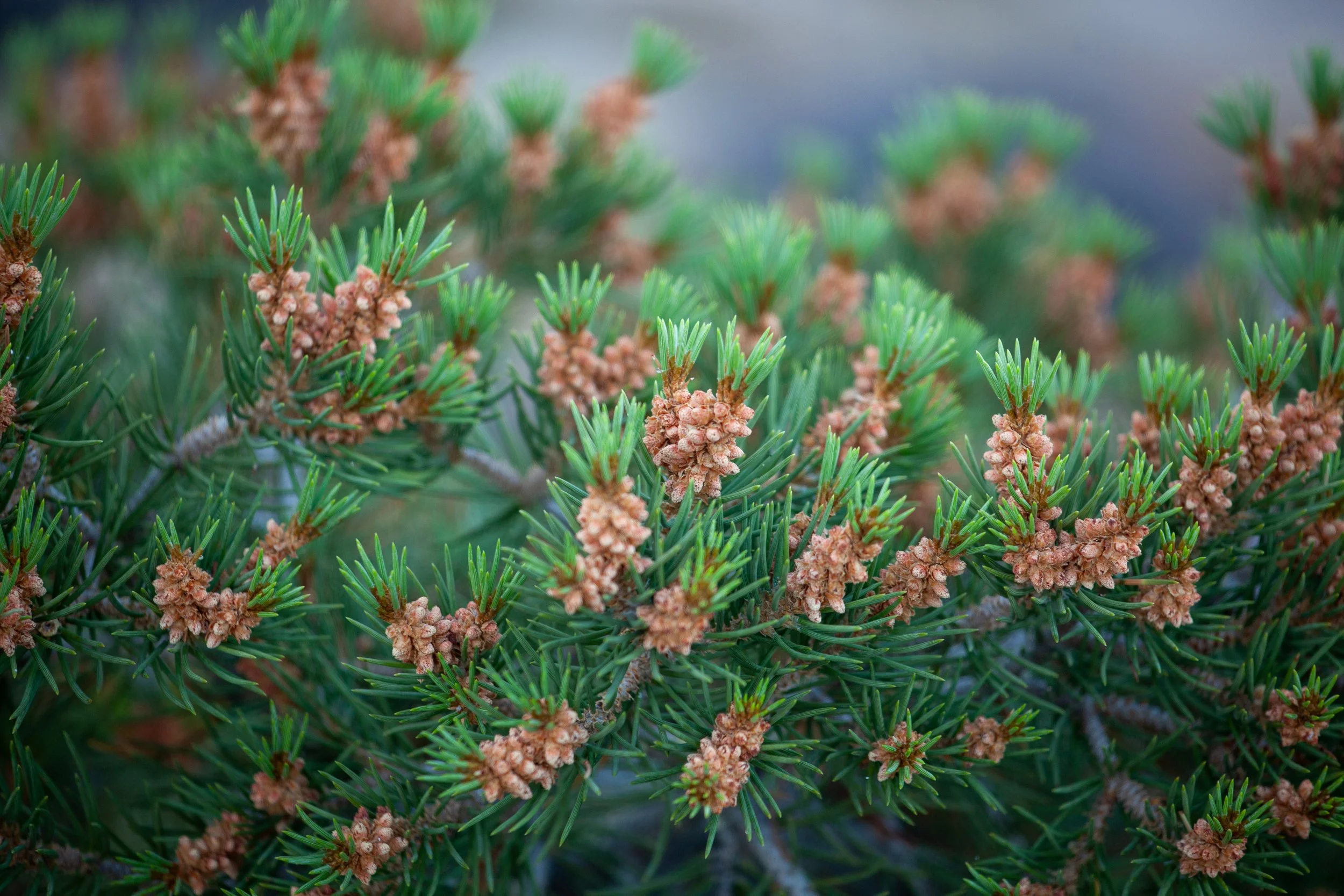
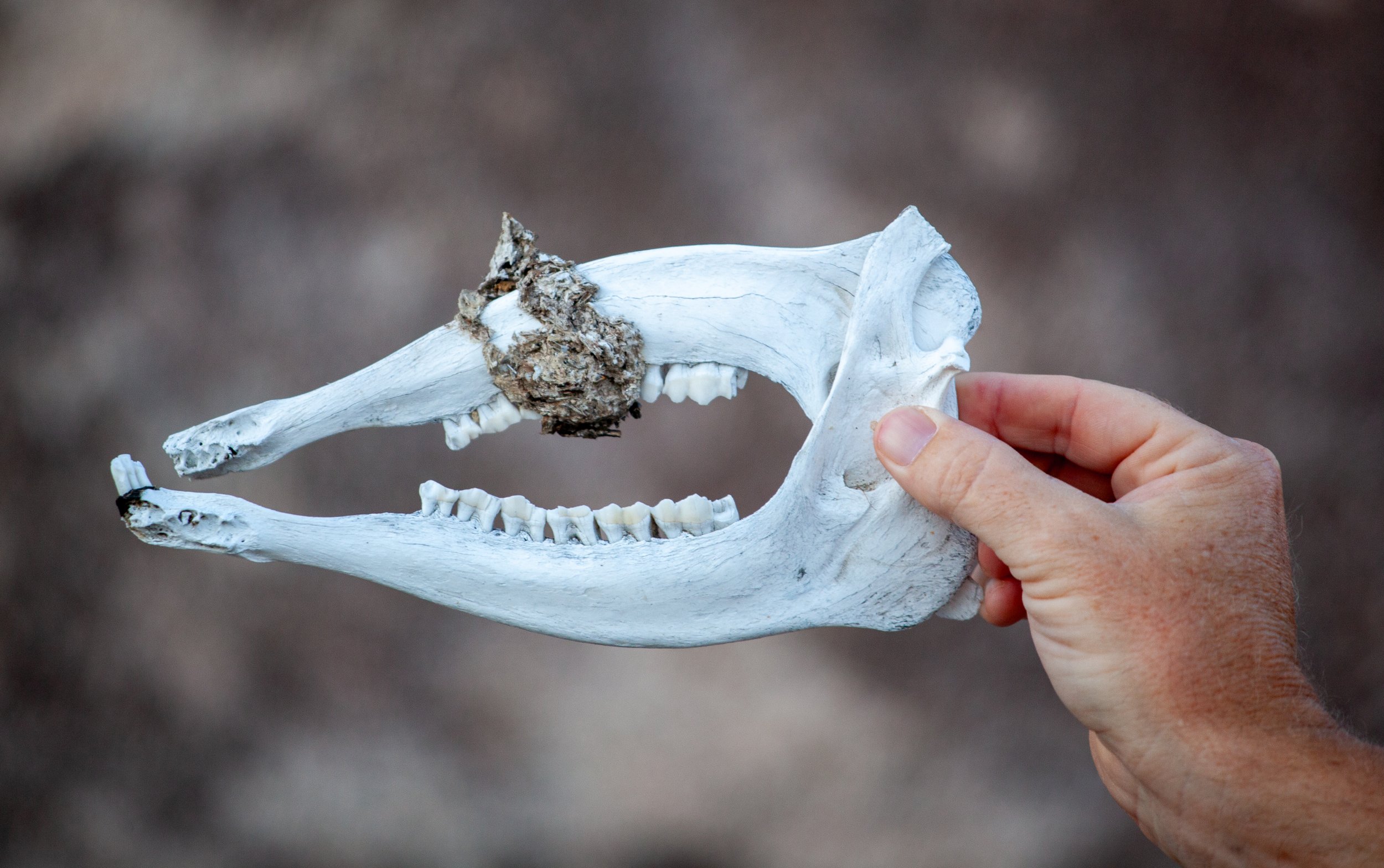
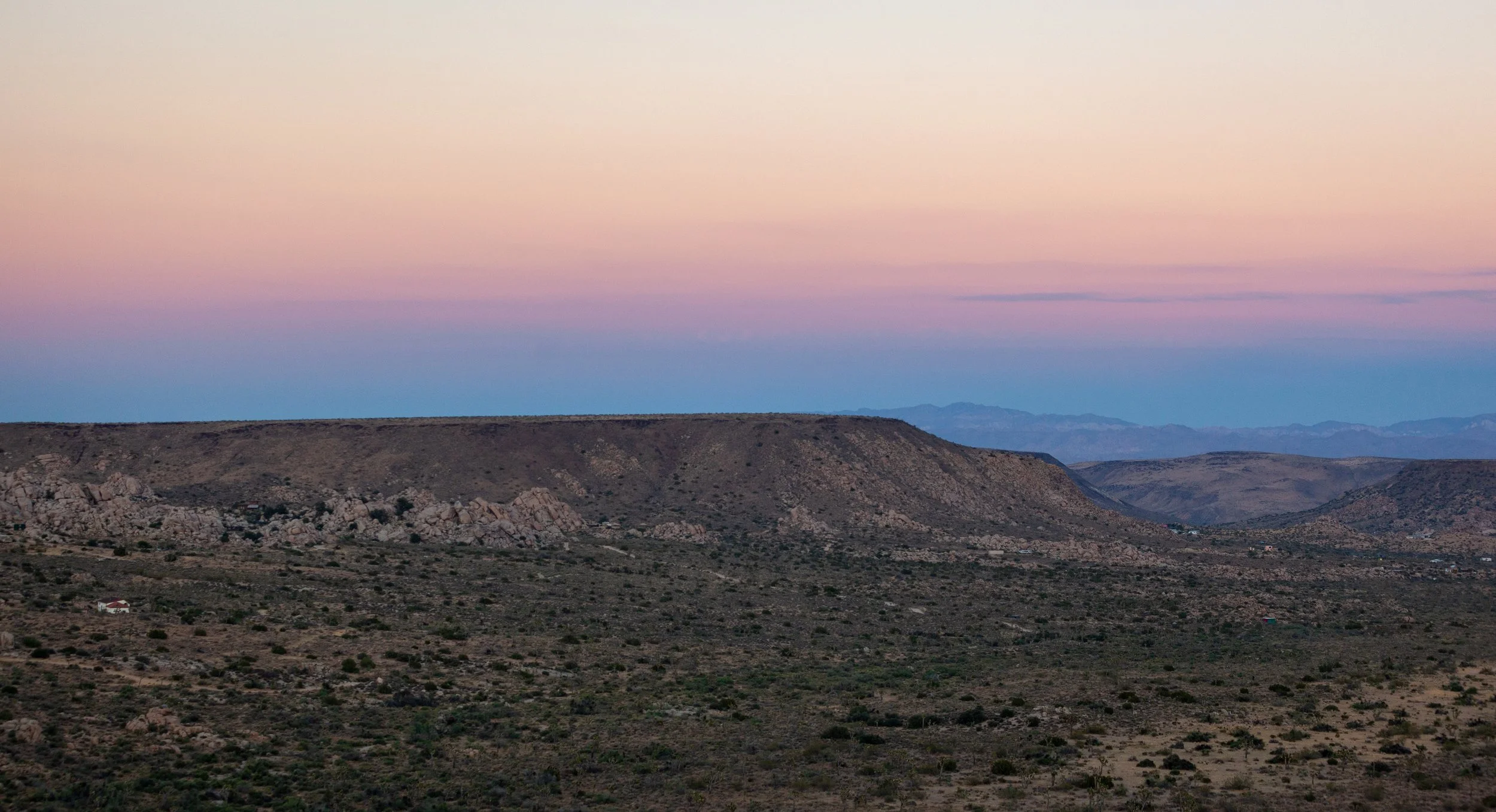
This summer, I crossed the mountains to spend three days near Black Lava Butte in Sand to Snow National Monument, intent on experiencing the heat for myself. I got what I came for: by midafternoon, the temperature had reached 97 degrees. At 4,600 feet, I climbed through boulder fields in an ecological transition zone where singleleaf pinyon and juniper mingled with Joshua trees. Everything seemed on full display as a heat shimmer rippled across the desert. Yellow blooms of cliff goldenbush and creosote competed for attention, and California buckwheat had dried to a creamy pink. A western kingbird kept me company at sunrise. I watched a black widow devour a moth. Between two rocks, I found the sun-bleached jaw of a mule deer.
Even at sunrise and sunset, a bandana caught the sweat pouring from my head. I walked in short bursts, drawn again and again toward whatever shade I could find. Eventually I succumbed to the sun and returned to my parked vehicle, anxious to start the engine and turn on the air-conditioning. Three days was hardly a summer, but I understood why my friends described it as something to get through.
Technology makes adapting to the summer heat easier for us humans. But what about the rest of the Mojave’s inhabitants?
Most of the desert’s fauna relies on a familiar strategy: hide, conserve, and wait. (The summer does bring one small consolation: far fewer humans walking and riding through their territory.) Flora, of course, have the disadvantage of being rooted in place. For many, survival means decreasing transpiration, storing internal moisture, and going dormant. But a fascinating 2025 study introduced me to a thermophilic plant that actually uses the heat to its advantage.
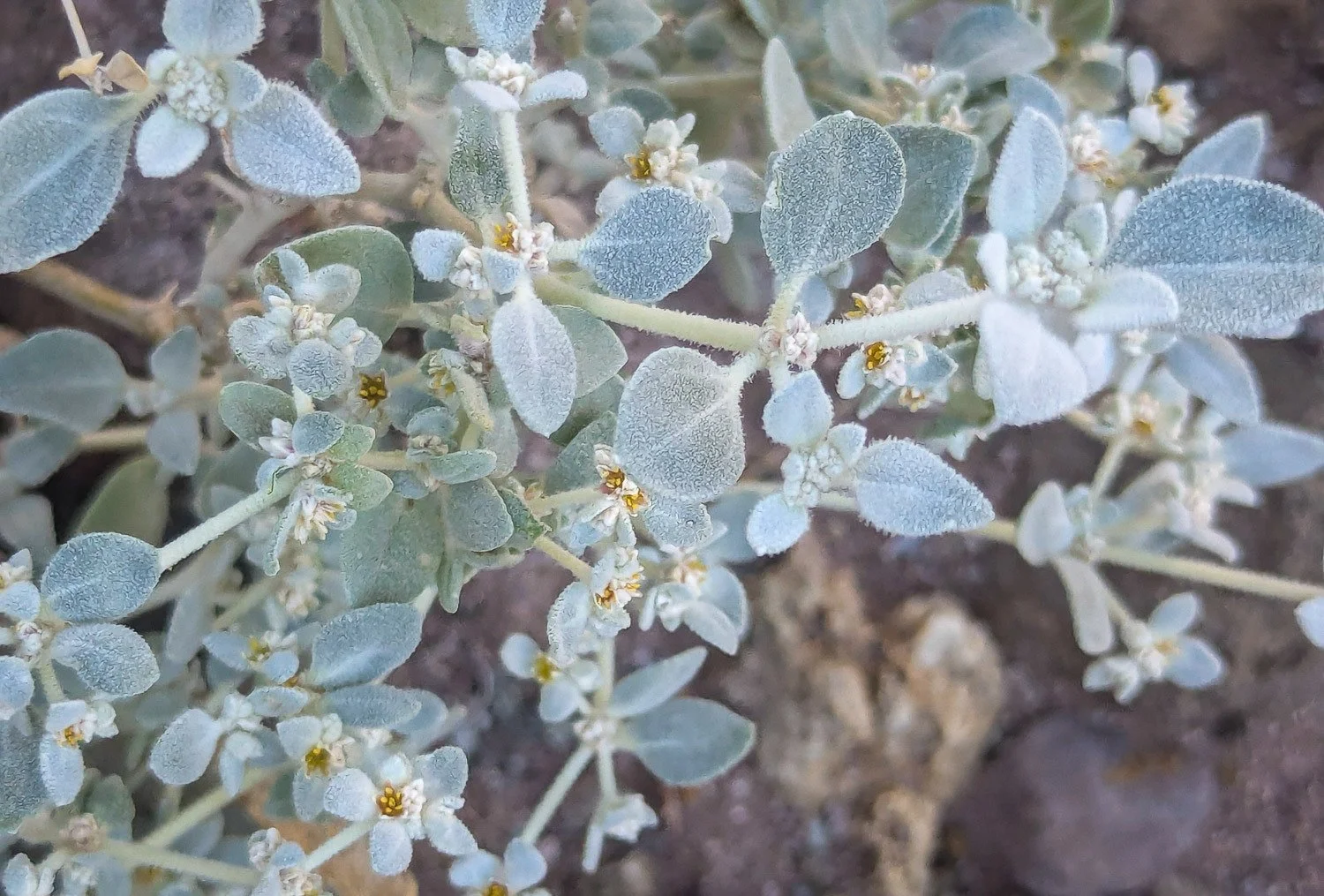
Arizona honeysweet (Tidestromia oblongifolia)
In the hottest place on Earth, Arizona honeysweet (Tidestromia oblongifolia) harnesses Death Valley’s extreme heat to fuel its growth, performing photosynthesis best at an astonishing 117 degrees. The honeysweet would be easy to miss: it hugs the superheated ground in a low sprawl of light-green leaves softened by dense silvery hairs, with tiny flowers tucked almost invisibly among them. In the 2025 study, researchers grew the plants under laboratory conditions and then exposed some to the light and temperatures of a Death Valley summer. After two days, the plants’ photosynthesis rates had increased, and over the next eight days, the plants tripled in size. The unassuming honeysweet, it turns out, is a botanical shape-shifter.
It’s not the only desert creature taking advantage of the heat.
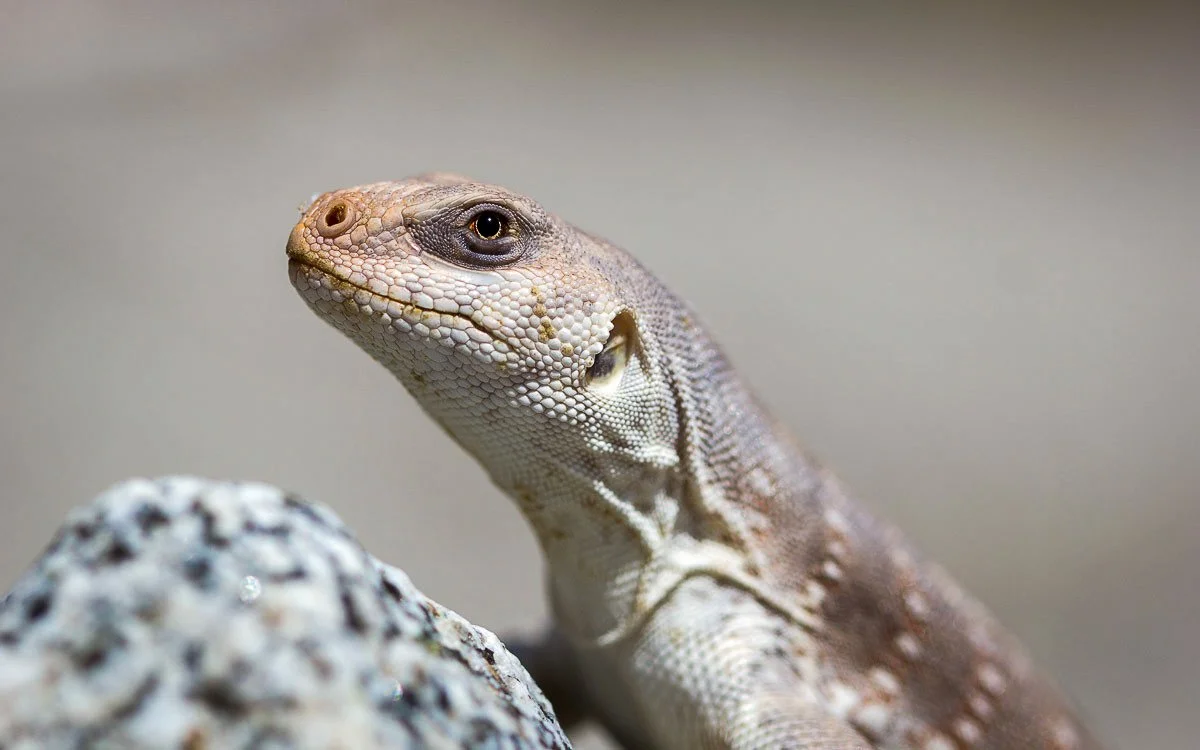
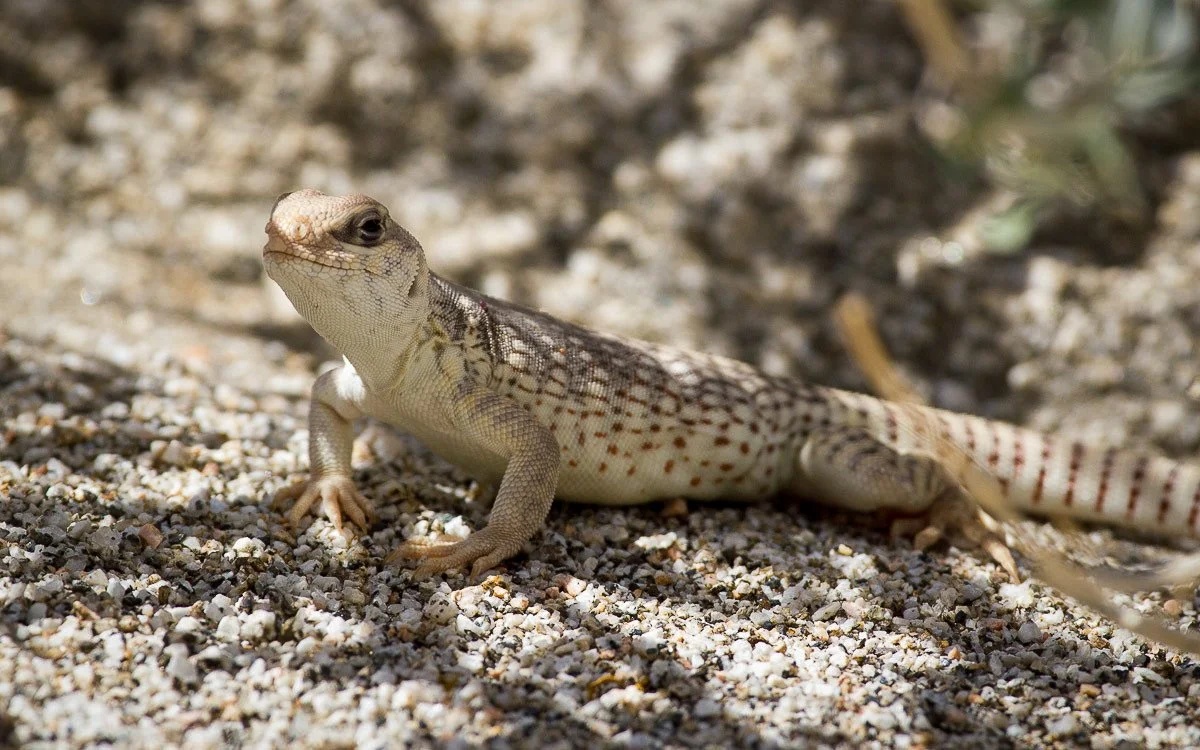
I’ve seen desert iguanas many times over the years and have always been enamored with their delicate appearance. Their sand-colored bodies are patterned with irregular, freckle-like spots, and their tapered tails bear dark bands that seem to echo those marking the stems of the ubiquitous creosote that helps sustain them. What I didn’t know was that the desert iguana is considered the most heat-tolerant reptile in North America, with recorded body temperatures as high as 113 degrees.
But they don’t just survive extreme heat. They lean into it. During the most punishing hours of the day, when fellow reptiles and predators have withdrawn from the heat, iguanas take advantage of the open terrain—like driving a busy freeway in the middle of the night—moving unencumbered among creosote bushes and feeding on the yellow flowers and resin-coated leaves that help the shrub conserve water.
In Zoë Schlanger’s wonderful book The Light Eaters, she writes, “Nature is chaos in motion. Biological life is a spiraling diffusion of possibilities, fractal in its profusion.” Arizona honeysweet and the desert iguana embody that endless profusion.
So what does life in the Mojave feel like in summer? For most, life rearranges itself in space and time: underground instead of above it, shade instead of sun, night instead of day. For a remarkable few, summer reverses the equation: heat becomes fuel, and exposure becomes opportunity. A Mojave summer changes the terms of living; radical adaptation is life’s reply.
Sources
Desert iguana
Arizona honeysweet
Creosote nodes
Weather