 Image 1 of 2
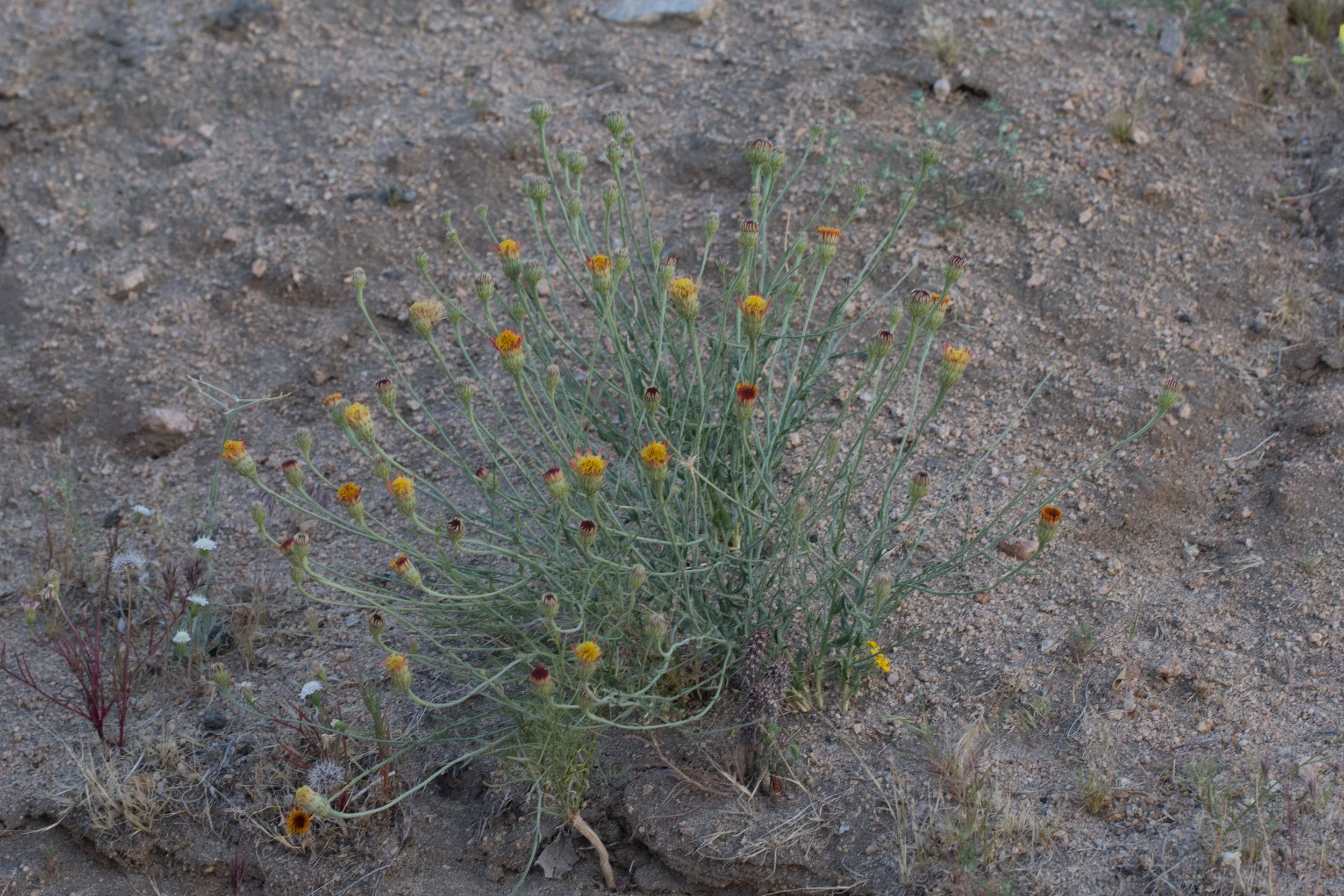 Image 2 of 2
Sold in a 1 gallon container.
Mature size: 8 in–1.5 feet H x W
Sun exposure: Full sun
Soil: Sandy and well-draining
Water use: Drought-tolerant to moderate
Cold hardy to: 10 degrees F
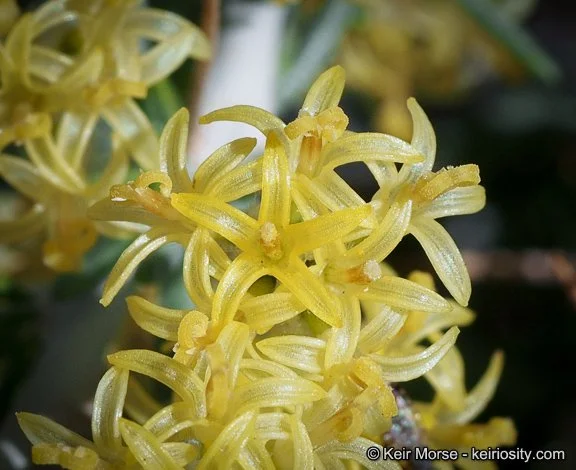
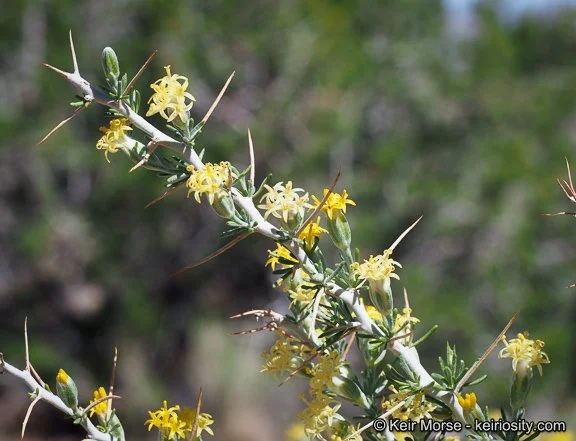
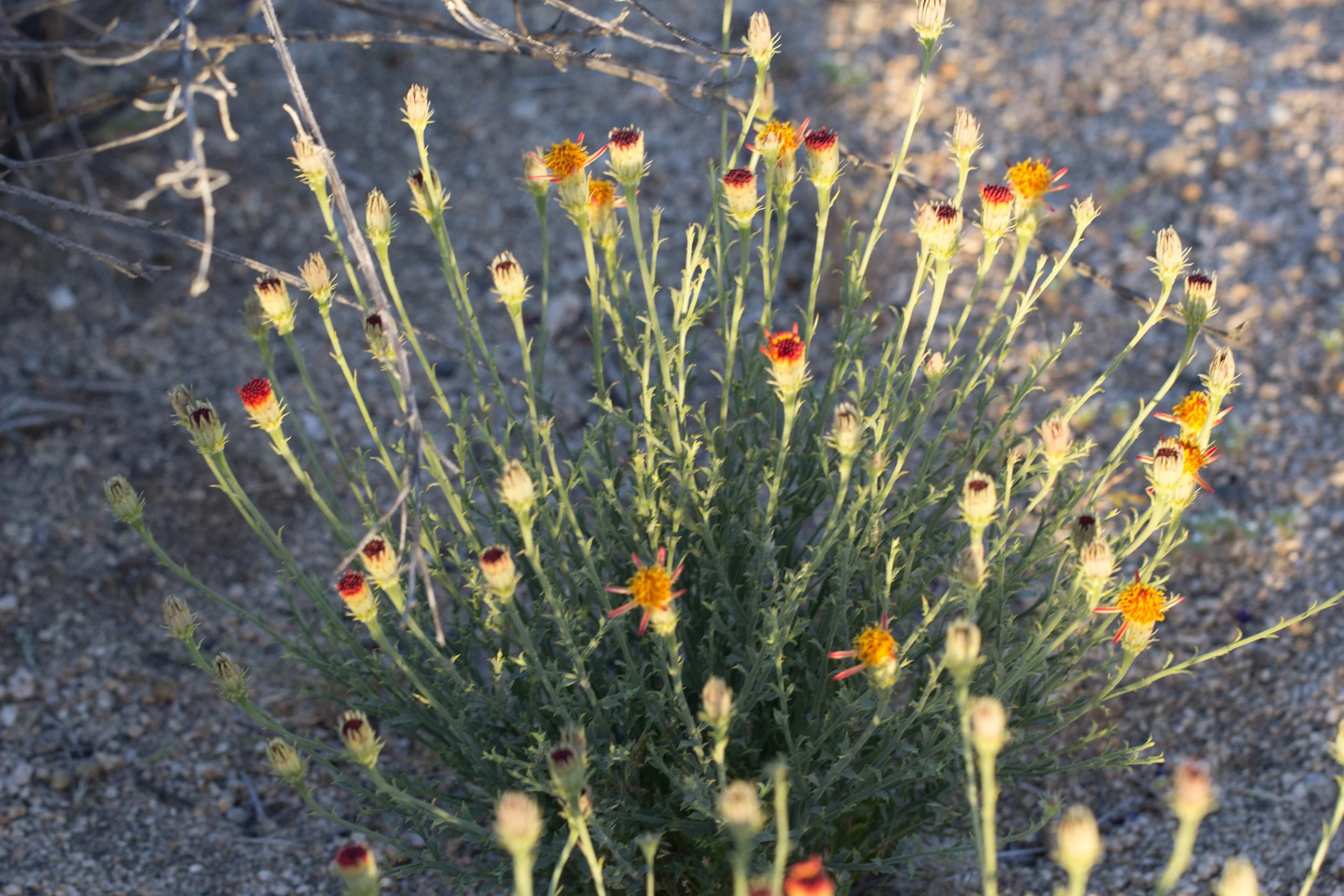
Flowers: Yellow, yellow-orange to red-orange during spring, occasionally fall
Native to: California, Arizona and Nevada
Elevation: 1,475–5,250 feet
Cooper’s glandweed/dogweed is a perennial in the sunflower family. It has rigid stems and a woody base and the leaves are coarsely lobed or toothed. It tolerates alkaline soils and is found in washes, alluvial fans, and occasionally rocky slopes in creosote bush scrub and Joshua tree woodland. The plant is fairly common in the eastern Mojave Desert and can often be found with ephedra (Ephedra sp.).
Cooper’s glandweed is named such because the oil glands in the leaves emit a turpentine-like odor. The oil is one of the plant’s natural defenses against foraging wildlife and extended periods of drought. When touched, the plant will release a strong smell that some people find displeasing, while others find it to be one of the enchanting characteristics of the desert.