 Image 1 of 4
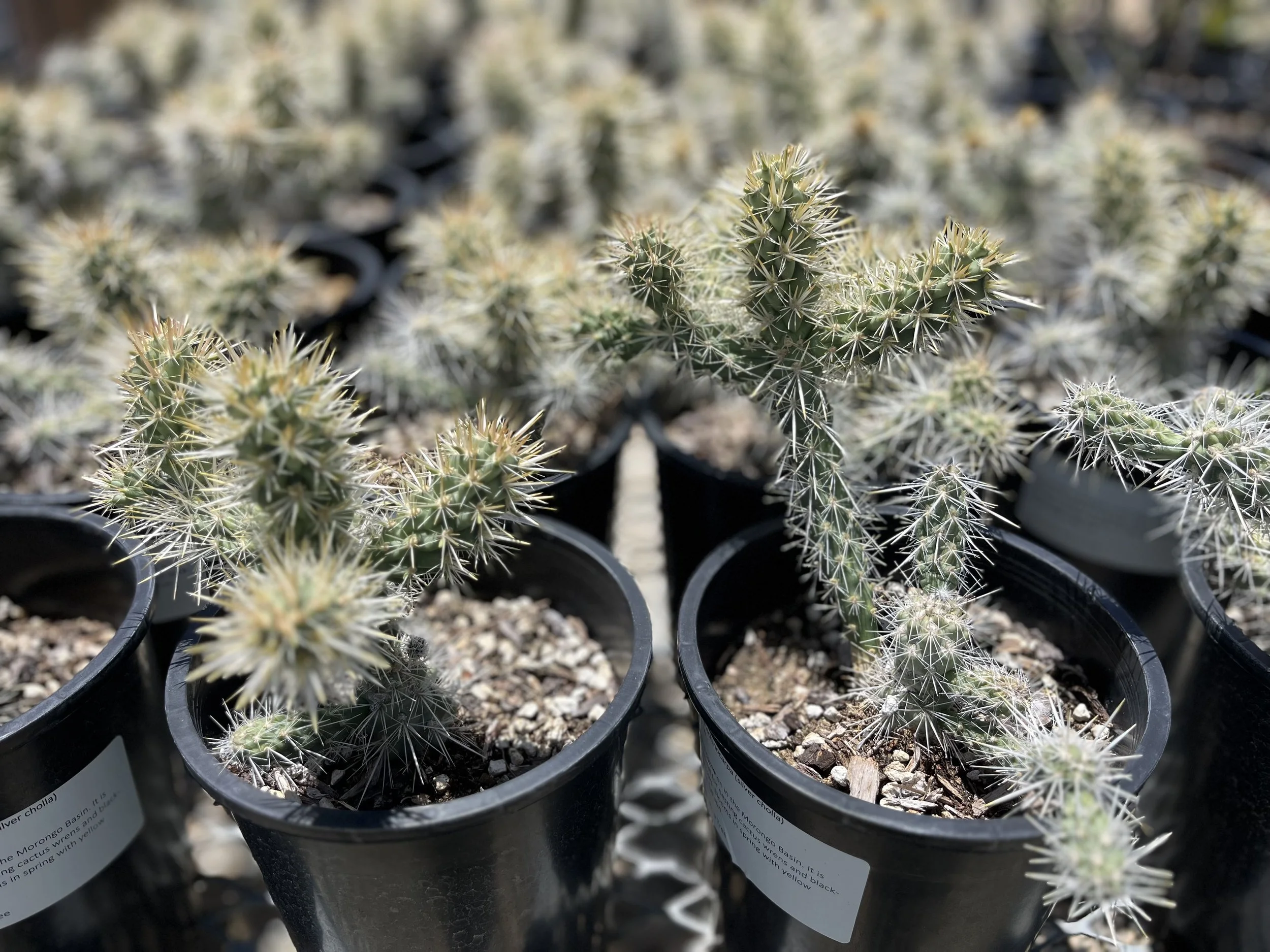 Image 2 of 4
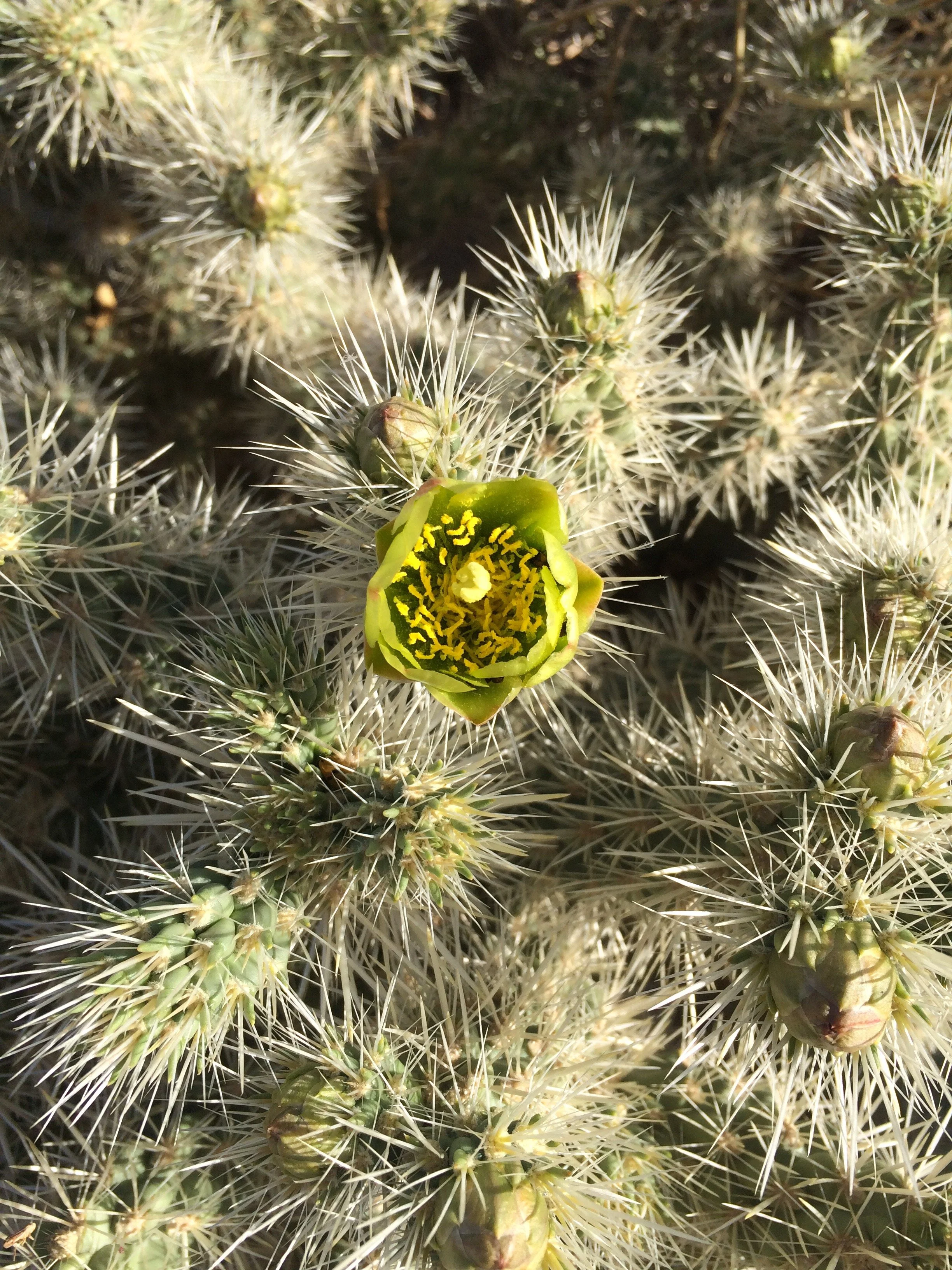 Image 3 of 4
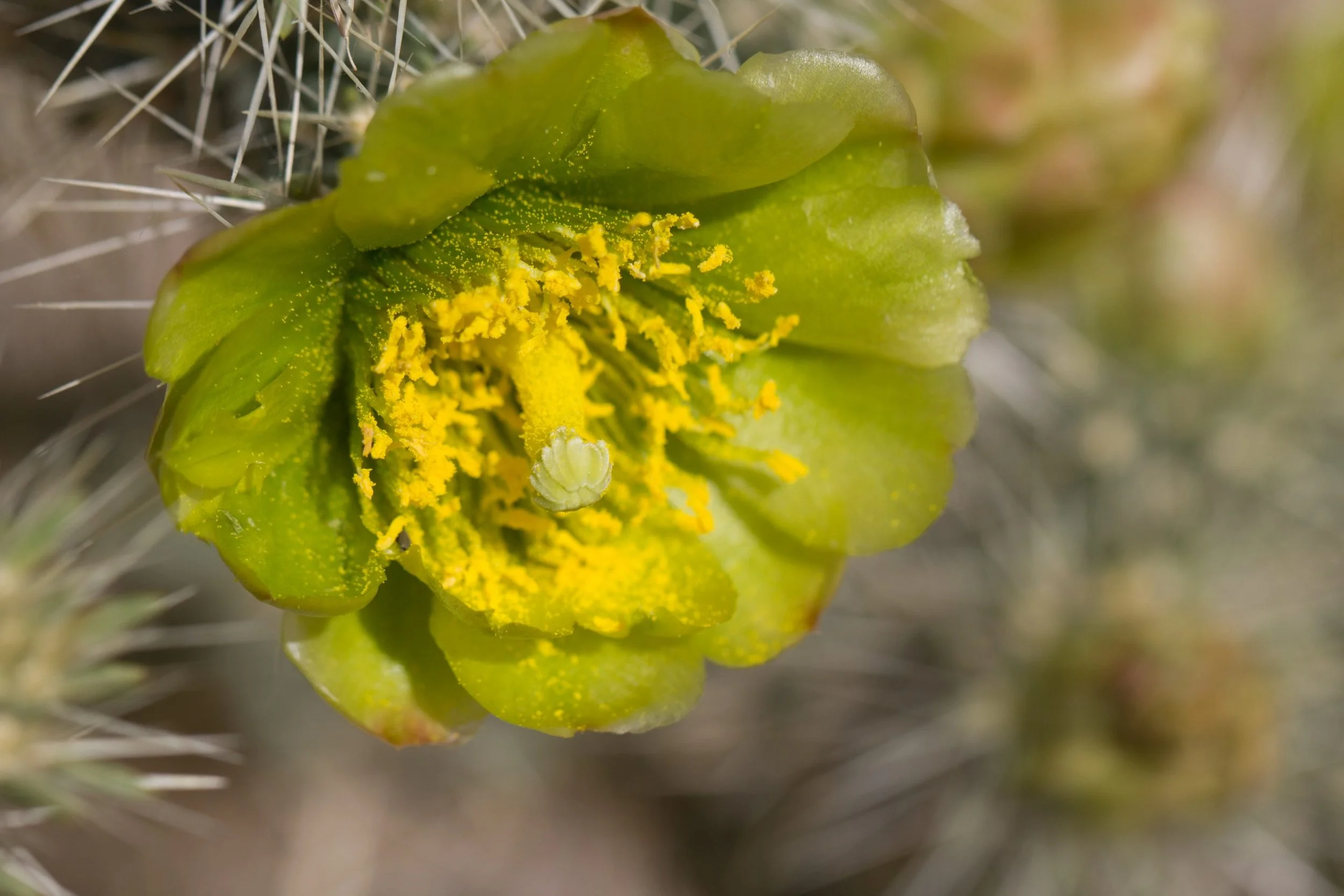 Image 4 of 4
Sold in a 1 gallon container.
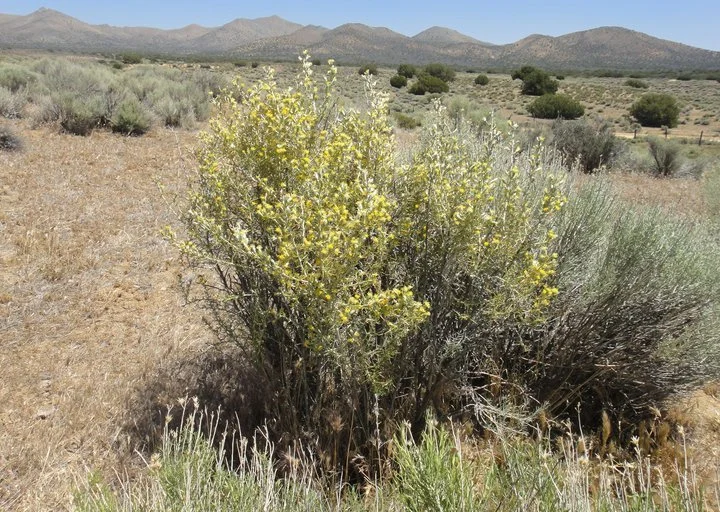
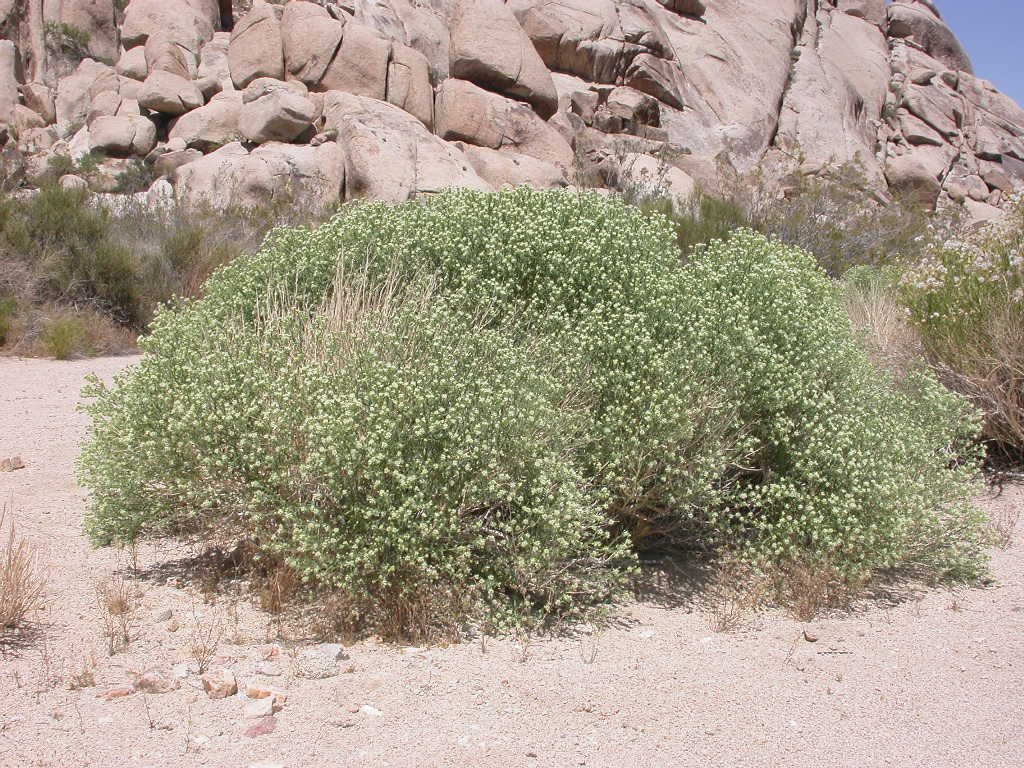
Mature size: 4-6 feet H x 3-4 feet W
Sun exposure: Full sun
Soil: Sand and gravel
Water use: Very low
Cold hardy to: 15 degrees F
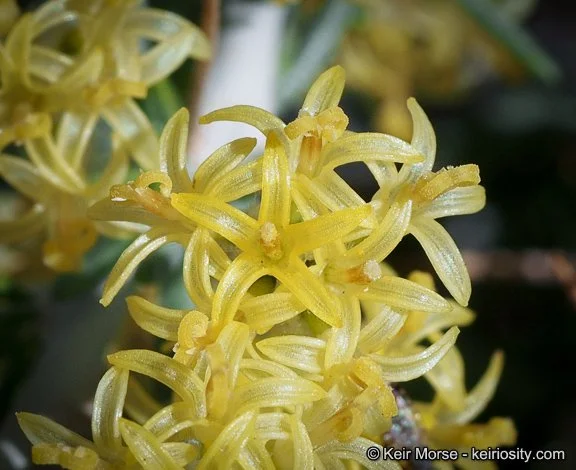
Flowers: Yellow-green in spring and early summer
Native to: California deserts, Utah, Arizona, northern Baja California
Elevation: 980-5,200 feet
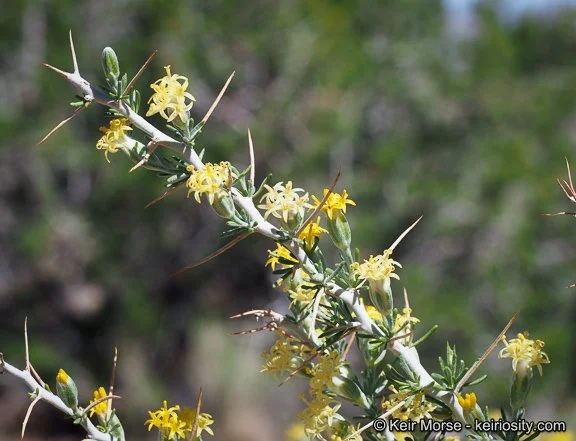
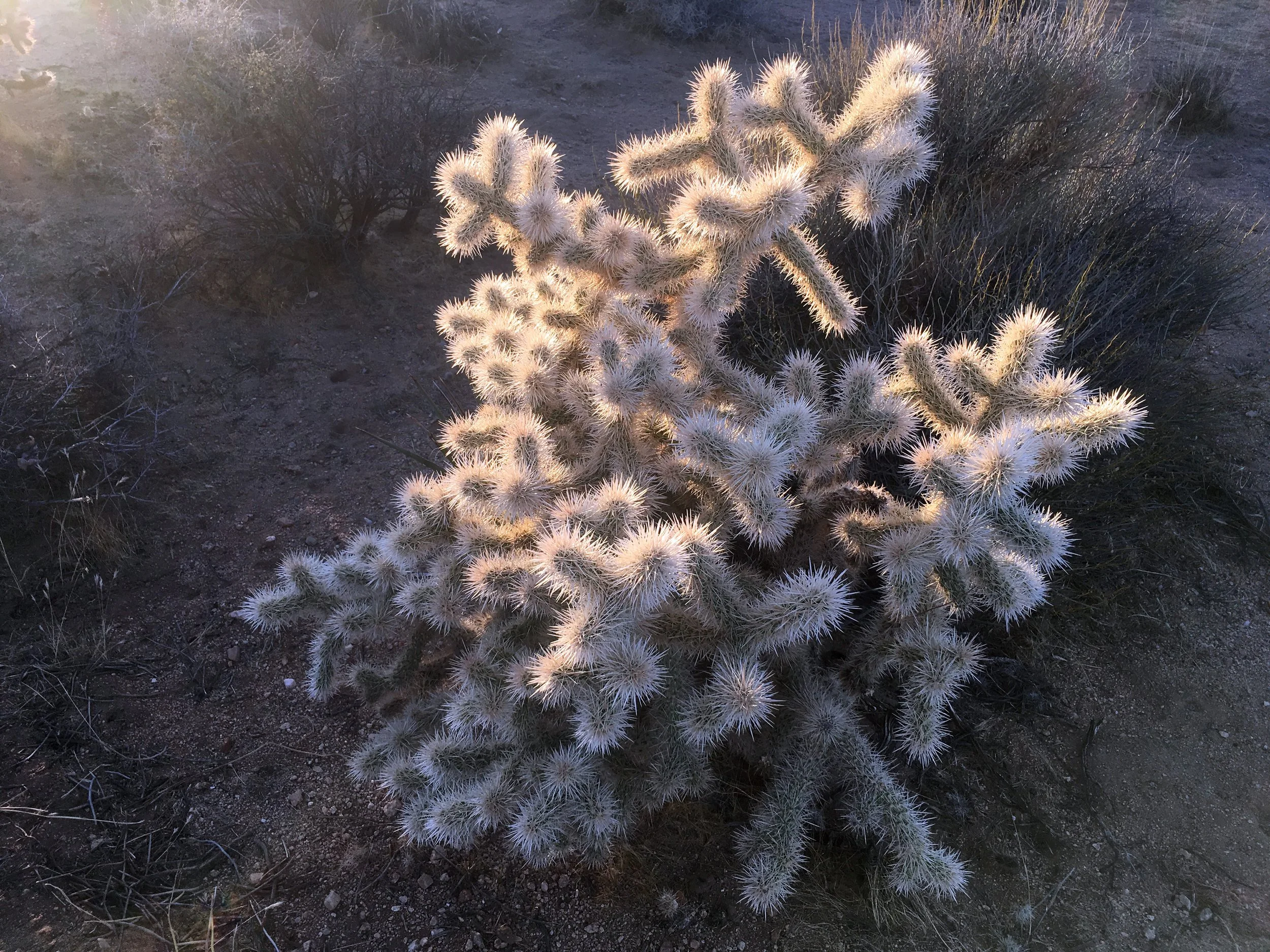
Silver cholla has a narrow upright central trunk with many short branches that spread and curve upwards. The spines appear pale grey to translucent yellow due to a papery sheath that covers the spine. The flowers are bright yellow-green and attractive to many native pollinators. The spines have a slight hook at the end, which helps distribute the spine covered fruit that attaches to the coats of animals. Another interesting way that chollas such as this one can reproduce is through the rooting of detached stem segments.
Silver cholla is disliked by many due to its spines. However, it is an important part of the desert ecosystem. It provides food and protection for wildlife. Cactus wrens and Scott’s orioles are known to make defensible nests in cholla branches.