 Image 1 of 1
Sold in a 4×6 container.
Mature size: 5-16 feet H x 5-10 feet W
Sun exposure: Full sun
Soil: Well-draining
Water use: Very low
Cold hardy to: 15 degrees F
Flowers: Cream to purple in spring and summer
Native to: Southern California and Baja California
Elevation: Up to 8,000 feet
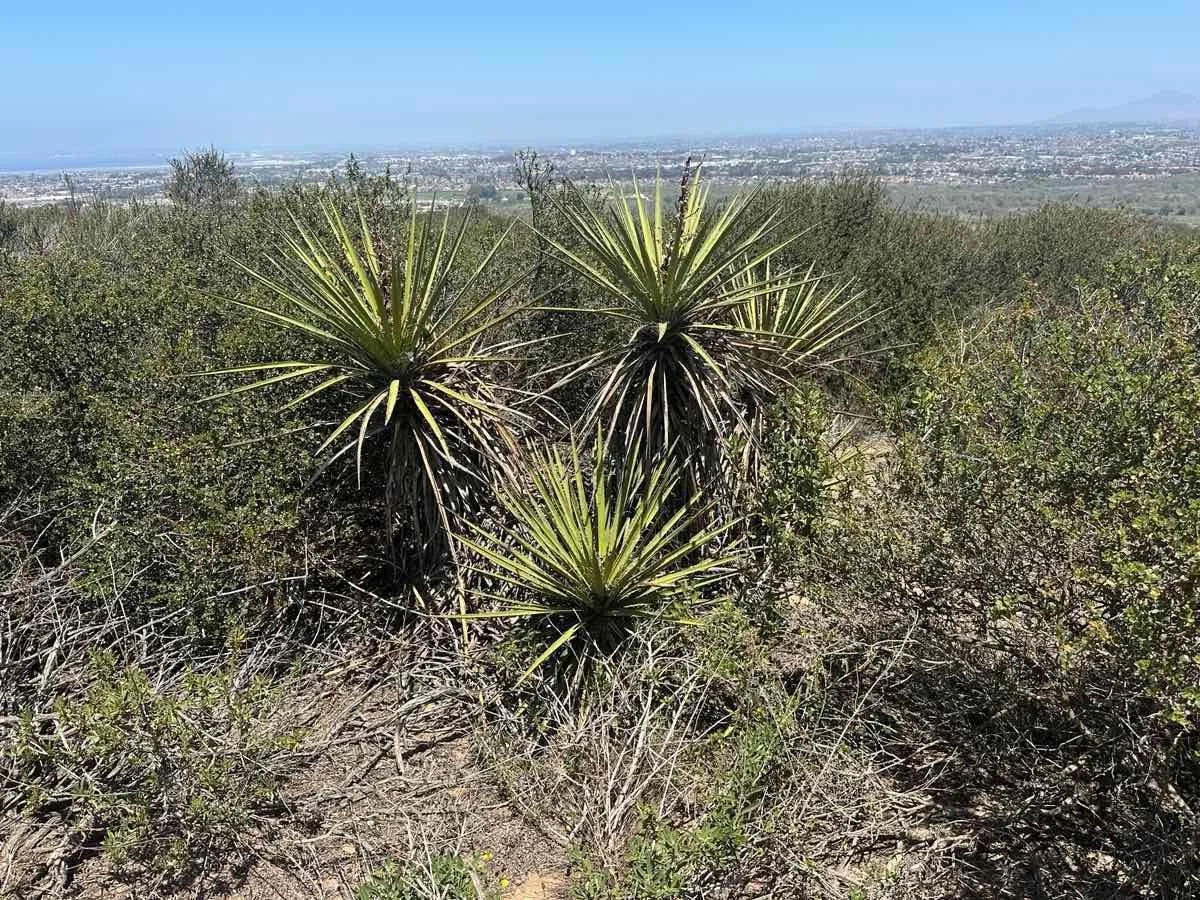
Mojave yucca is a large yucca with rosettes of stiff spine-tipped leaves. It is similar to the Joshua tree but is shorter and lacks branches. Over time, plants form large clusters of 2-5 off sets. Mojave yucca is often combined with cacti, dudleya and palo verde in desert-style rock gardens.
Mojave yucca is native to dry and rocky slopes and flats in creosote bush scrub and Joshua tree woodland in the southern and eastern Mojave Desert as well as the coastal areas of Southern and Baja California.
It is the larval food plant for the yucca giant-skipper butterfly. Its pendulous flowers are pollinated by a yucca moth.