
By Ashley Soto, Seed Bank Technician
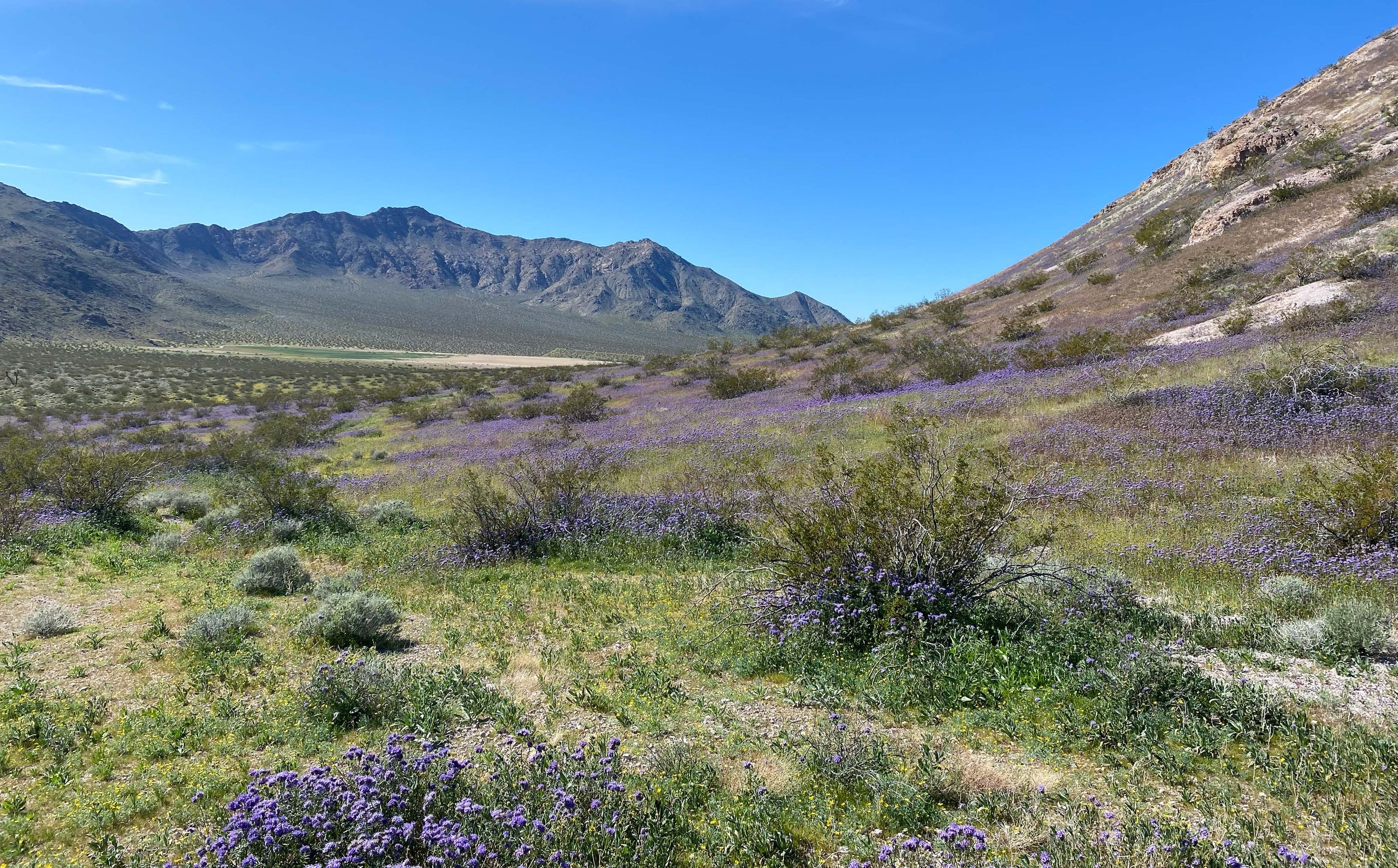
Fields of flowers near the Fremont-Kramer Area of Critical Environmental Concern.
Each year that California experiences a wet winter, the buzz of a spring superbloom arises. Everyone seems to be asking: what exactly is a superbloom and did we get enough rain this year to bring one? As ecologists, we know that wildflower germination is dependent on more than just rain. Back in December, we were already noticing many germinants (seedlings) springing up in Chuckwalla National Monument in the Colorado Desert thanks to the rain we received in November 2025. While this gave us hope for a good year for annual species, we knew that the timing of the rain was just as important as the quantity for keeping these little germinants alive. Germinants require multiple precipitation events, spread out in time, to prevent them from drying out.
On top of this, seeds of most desert species have evolved complex dormancy mechanisms that limit germination to years when conditions are just right. A variety of cues such as temperature cycles, soil moisture, light vs. dark conditions, or even chemical signals influence breaking seed dormancy. For example, a species that we have seen in abundance this year is Arizona lupine (Lupinus arizonicus), which requires seed scarification for germination. In other words, the seed coat needs to be weakened to allow the seed to imbibe water and germinate. This is known as physical dormancy.
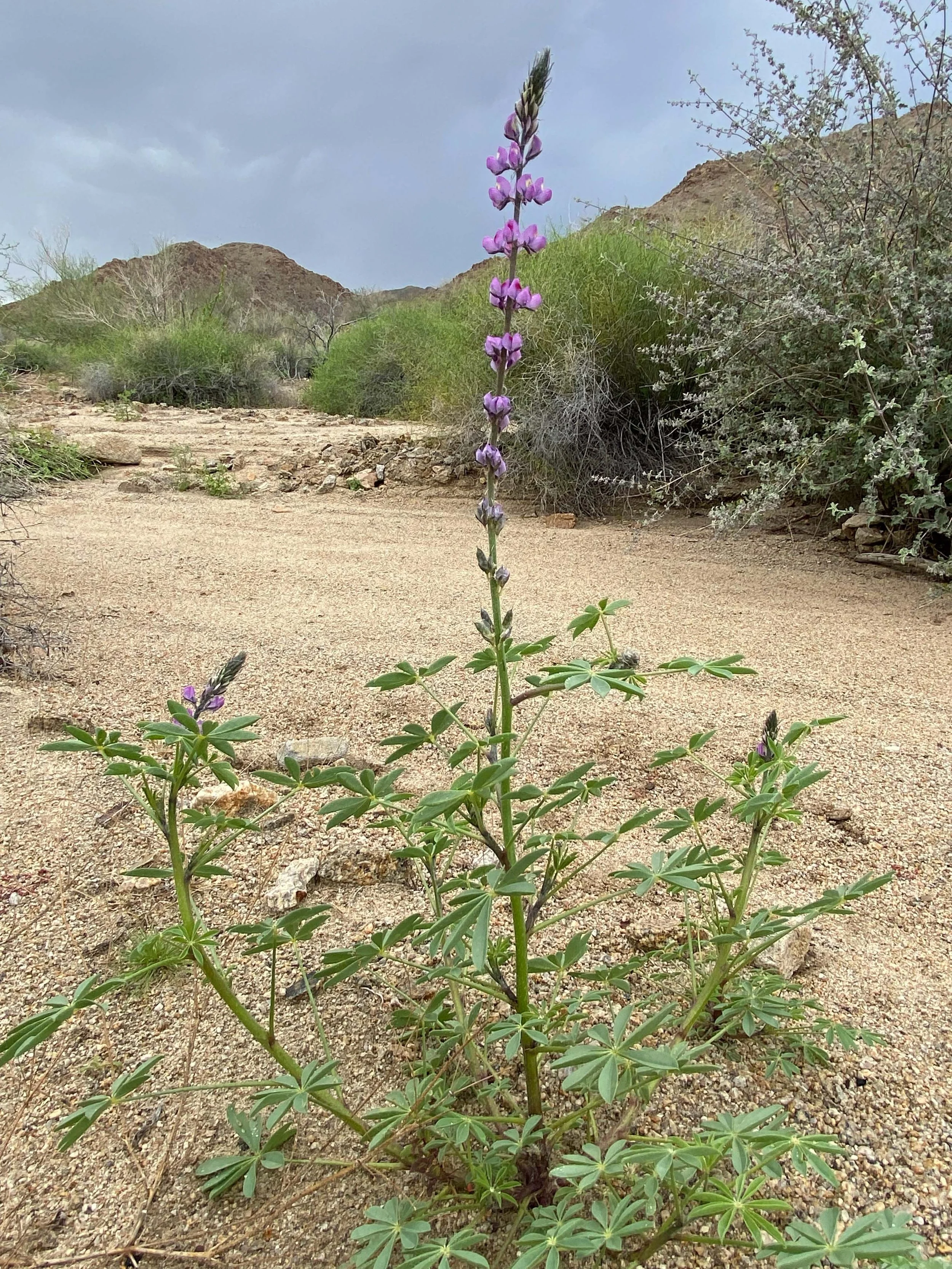
Arizona lupine (Lupinus Arizonicus)
Another species we observed in abundance is bristly fiddleneck (Amsinckia tessellata). This common annual exhibits physiological dormancy. This means that the seed is permeable to water, but its embryo contains a physiological mechanism that prevents germination. In the lab, to break this dormancy we would use a temperature treatment to stimulate germination. Essentially, we put the seeds in a temperature-controlled chamber to simulate the cold or hot temperature conditions the species would experience in nature that signal to the embryo that germination conditions are met. Other species we have encountered with this type of dormancy include woolly easter bonnets (Eriophyllum wallacei) and hairy desert sunflower (Geraea canescens).
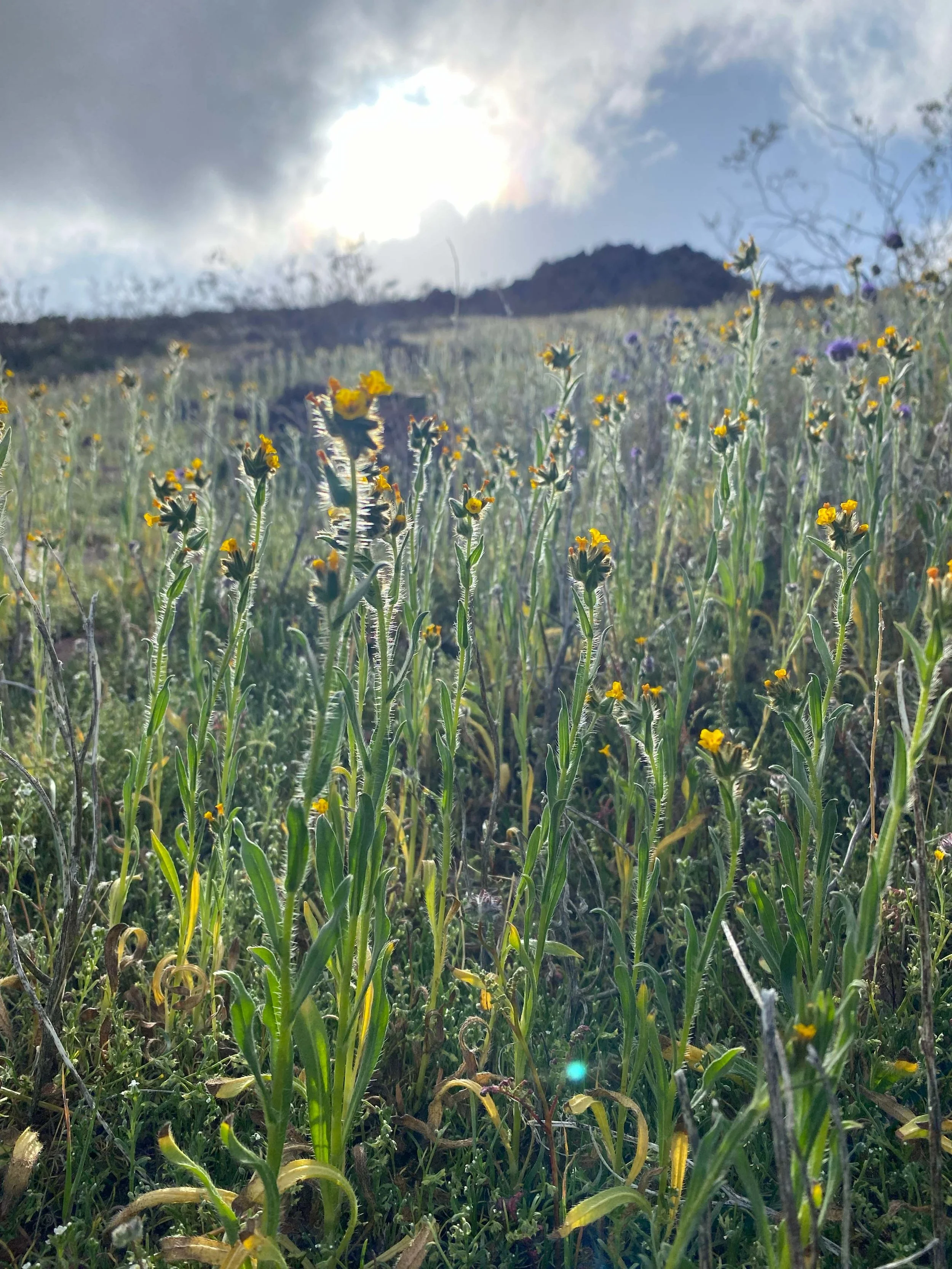
Bristly fiddleneck (Amsinckia tessellata)
Not every desert species has a form of seed dormancy, some are considered non-dormant such as the enigmatic Joshua tree (Yucca brevifolia), which germinates readily at a wide range of temperatures, as long as sufficient moisture is present. Chia (Salvia columbariae) is another species that germinates readily without any special pre-treatments.
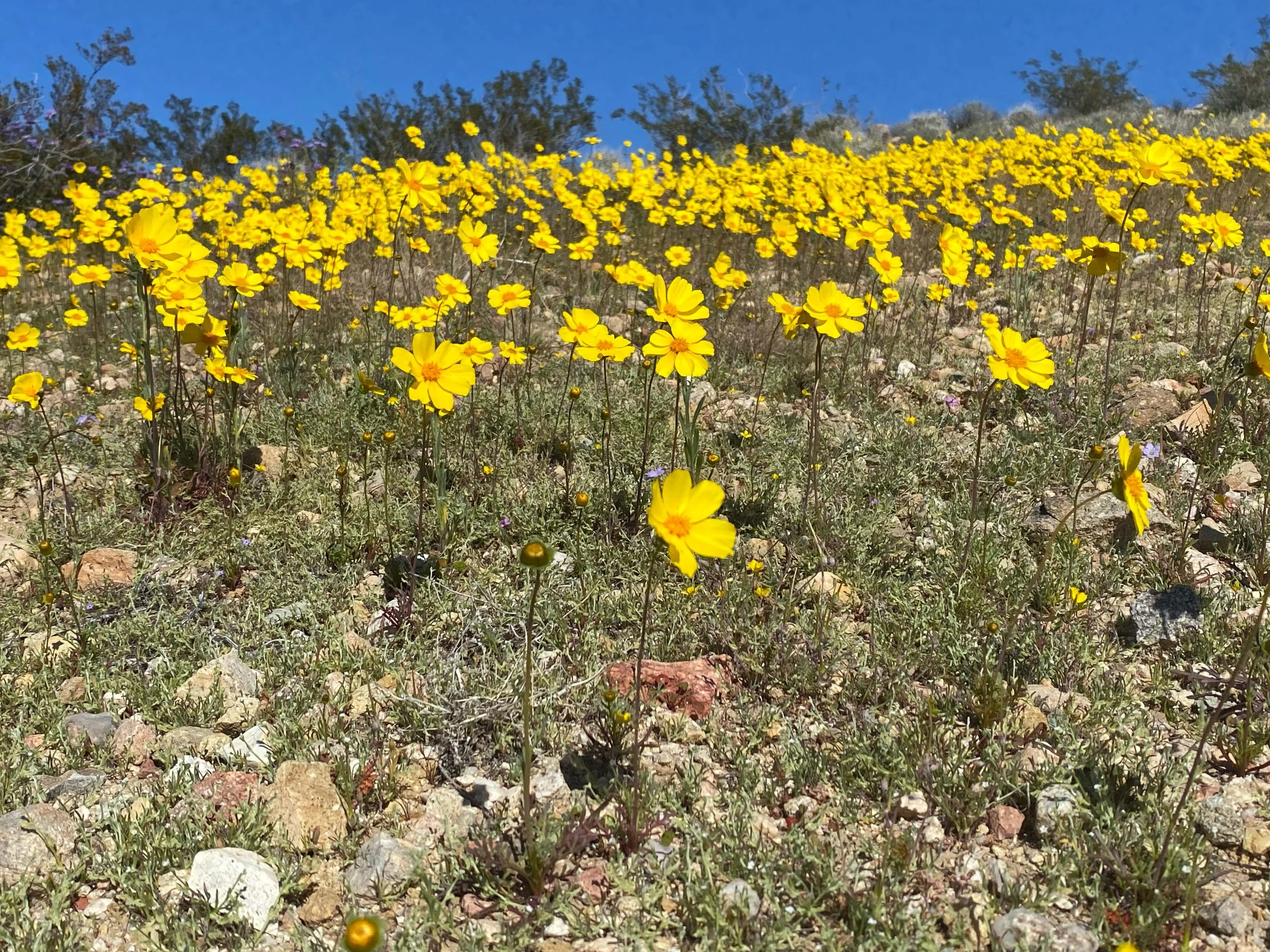
A field of Bigelow coreopsis (Leptosyne bigelovii).
Seed dormancy is a complicated subject that requires extensive experimentation to understand. We haven’t even mentioned all the other types of seed dormancy that exist! Taking this into consideration, what does it matter if this year is considered a superbloom? Just get outside and admire the pretty flowers as they arrive! And reflect on all the obstacles the seeds had to overcome to germinate and display their beautiful colors to the world.