By Barry Scanlan, Mojave Desert Land Trust volunteer and Marine Corps veteran
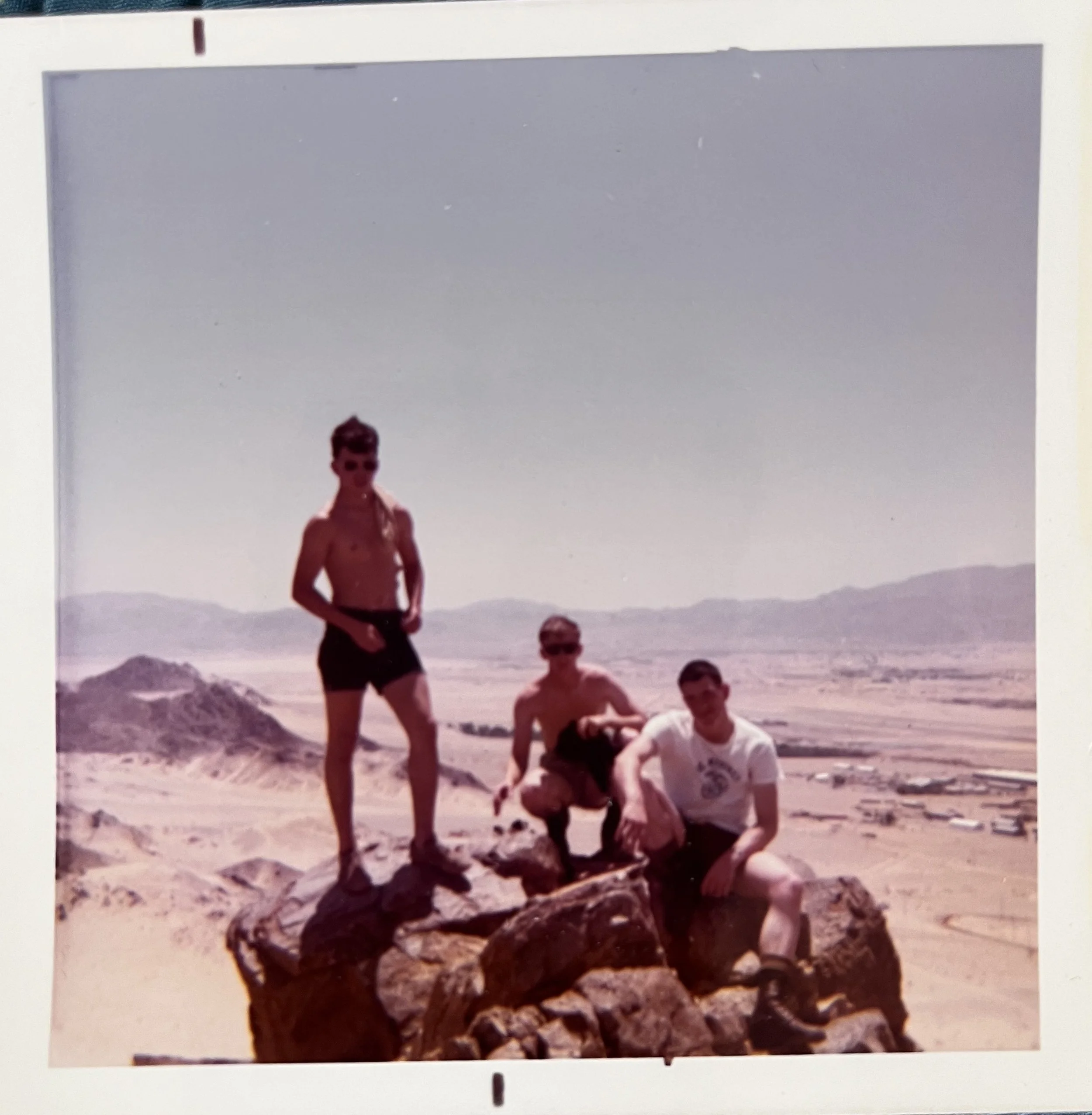
Barry with friends on a rock outcropping overlooking 29 Palms.
I was stationed at the 29 Palms Marine Corps Air Ground Combat Center in the early 1970s. I grew up on the East Coast, so the desert was completely new to me—and I fell in love with it pretty quickly.
Back then, I used to round up some of my fellow Marines, grab a few beers, and head out to hike around what was then Joshua Tree National Monument. We climbed rocks, wandered the trails, and kept an eye out for lizards, snakes, and desert tortoises. My buddies started calling me “Scanlan of the Mojave.” It was a special time for all of us, and it’s when I really came to appreciate being out on the land, unspoiled by human development.
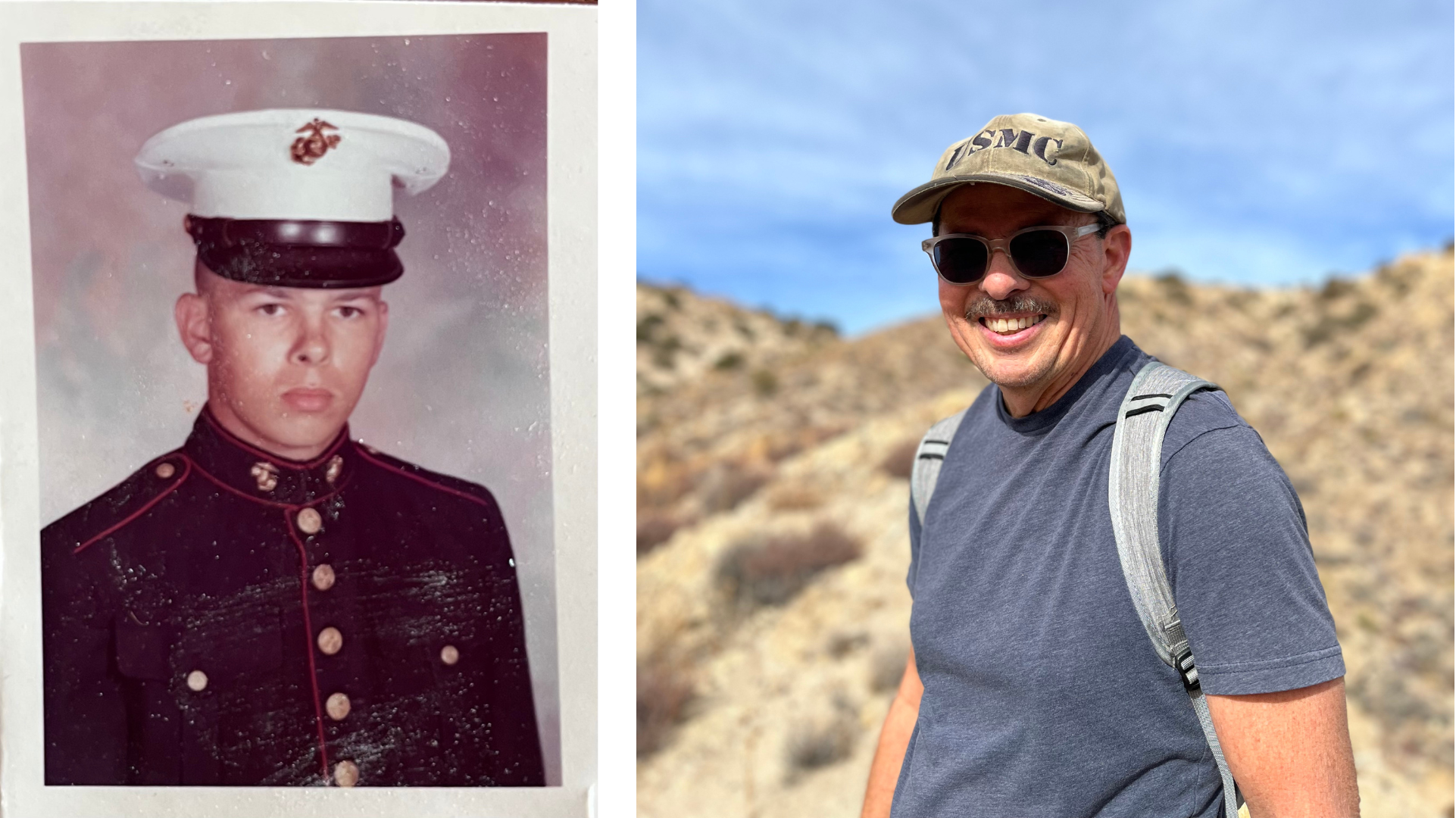
Then and now. As a young Marine, and today, on a hike around Joshua Tree National Park.
As a veteran, I learned the importance of protecting our country. Fifty years later, that idea still drives me. These days I advocate for veterans and work to protect the very land that once helped prepare me to serve.
My wife and I now live just down the road from the 29 Palms marine base and near the national park where you can experience the unique environment of the Mojave Desert. It’s a place worth taking care of.
As with many beautiful and unique natural spaces, there is an interest in seeing the high desert developed. To me, that would be a mistake—for the plants and animals that live here, and for us too.
Through my work with the Mojave Desert Land Trust, I get to learn from some incredible plant experts. I’ve always considered myself a lifelong student, and I feel fortunate to be part of a group that’s working to protect wild areas and public lands.
“Conservation isn’t political; it’s patriotic.”
Protecting the desert also matters for our military today. There are six military installations in the desert regions of Southern California, represented by the Air Force (Edwards Air Force Base), Army (National Training Center & Fort Irwin), Navy (Naval Air Weapons Station-China Lake) and Marine Corps (29 Palms - MAGTFTC/ MCAGCC, Chocolate Mountain Aerial Gunnery Range, and MC Logistics Base Barstow). The open land around them acts as a buffer, protects essential water, air, and natural systems, and provides wildlife corridors. If that land gets sold off and developed, it can interfere with the bases’ missions. My experience has shown me that desert conservation isn’t separate from national defense—it’s part of it.
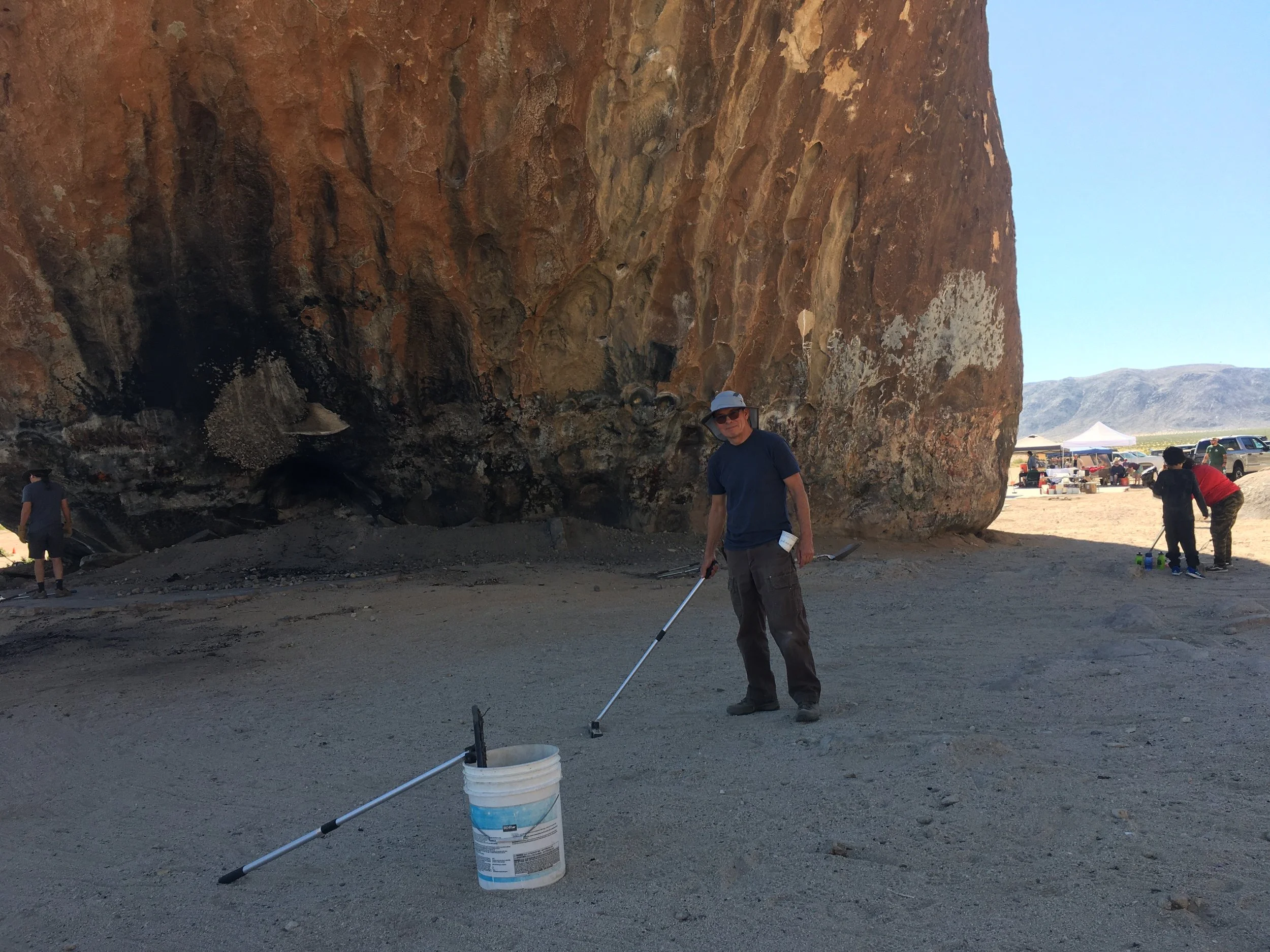
At a community clean-up at Giant Rock.
There’s also a lot of significant military history on the public lands that we need to preserve. Chuckwalla National Monument includes the old Desert Training Center, where General Patton trained tank troops during World War II before they were sent to North Africa. You can still find remnants out there—old buildings, an airfield, even a chapel. Over a million soldiers trained in that desert. There’s a good chance someone in your family—or mine—was among them.
We know that many veterans turn to public lands for healing and restoration. Even a short hike can be restorative. I also serve on the board of Mil-Tree Veteran Advocacy, a non-profit with programming allowing veterans, service members, and the community to participate in events and retreats to end veteran isolation. Mil-Tree connects veterans with the community through activities like hikes, art, and writing.
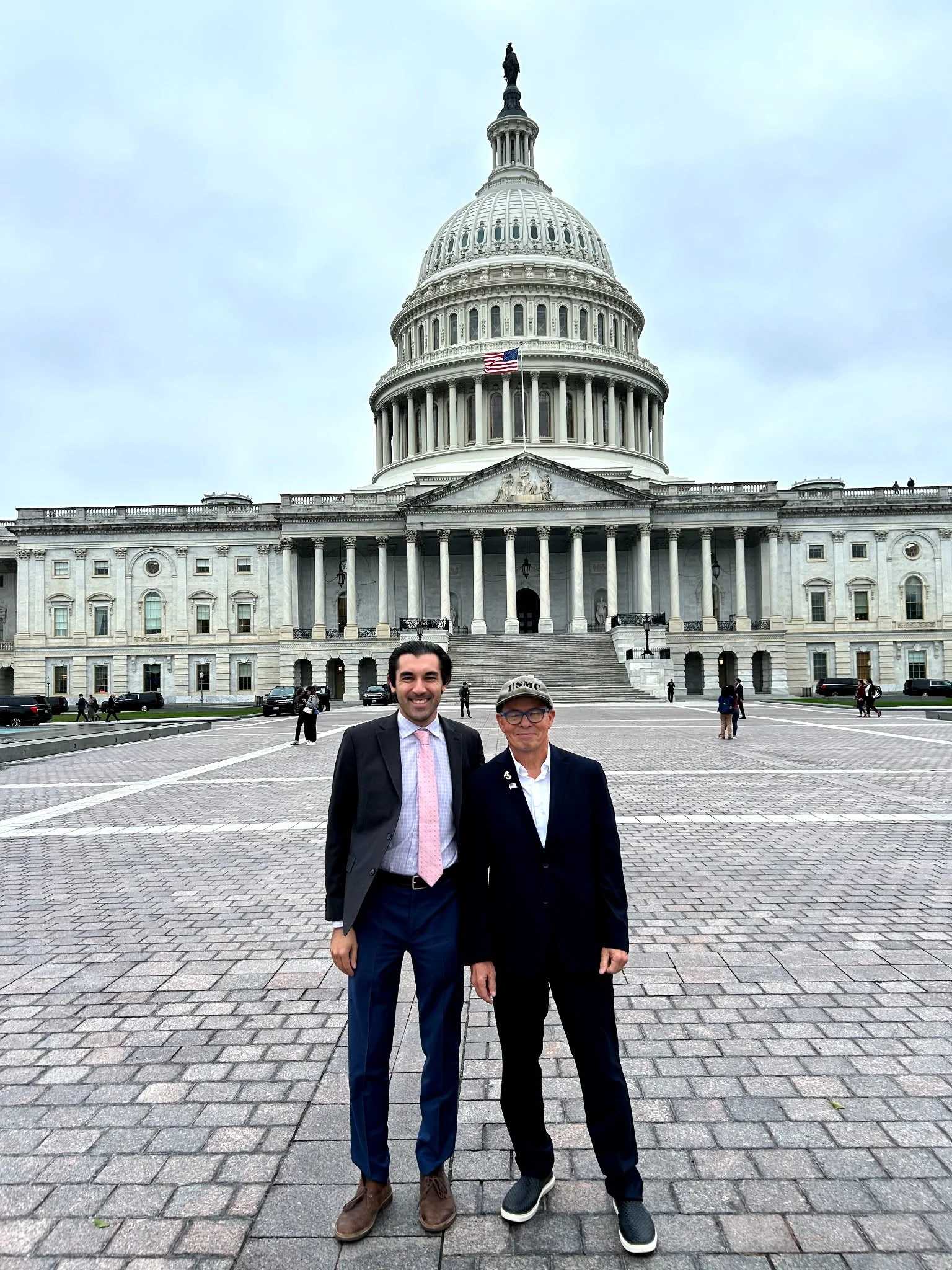
Pictured with MDLT Public Policy Officer Krystian Lahage during a desert delegation trip to Washington D.C. in 2025.
Conservation isn’t political; it’s patriotic. When I served, I stood beside Marines who came from all walks of life. We were united in serving our country. And now as a volunteer at the Mojave Desert Land Trust, working to protect this land, I feel that same sense of service again.