
Notes from the field: Propagules and precipitation
By Anthony Rondon, Seed Bank Technician
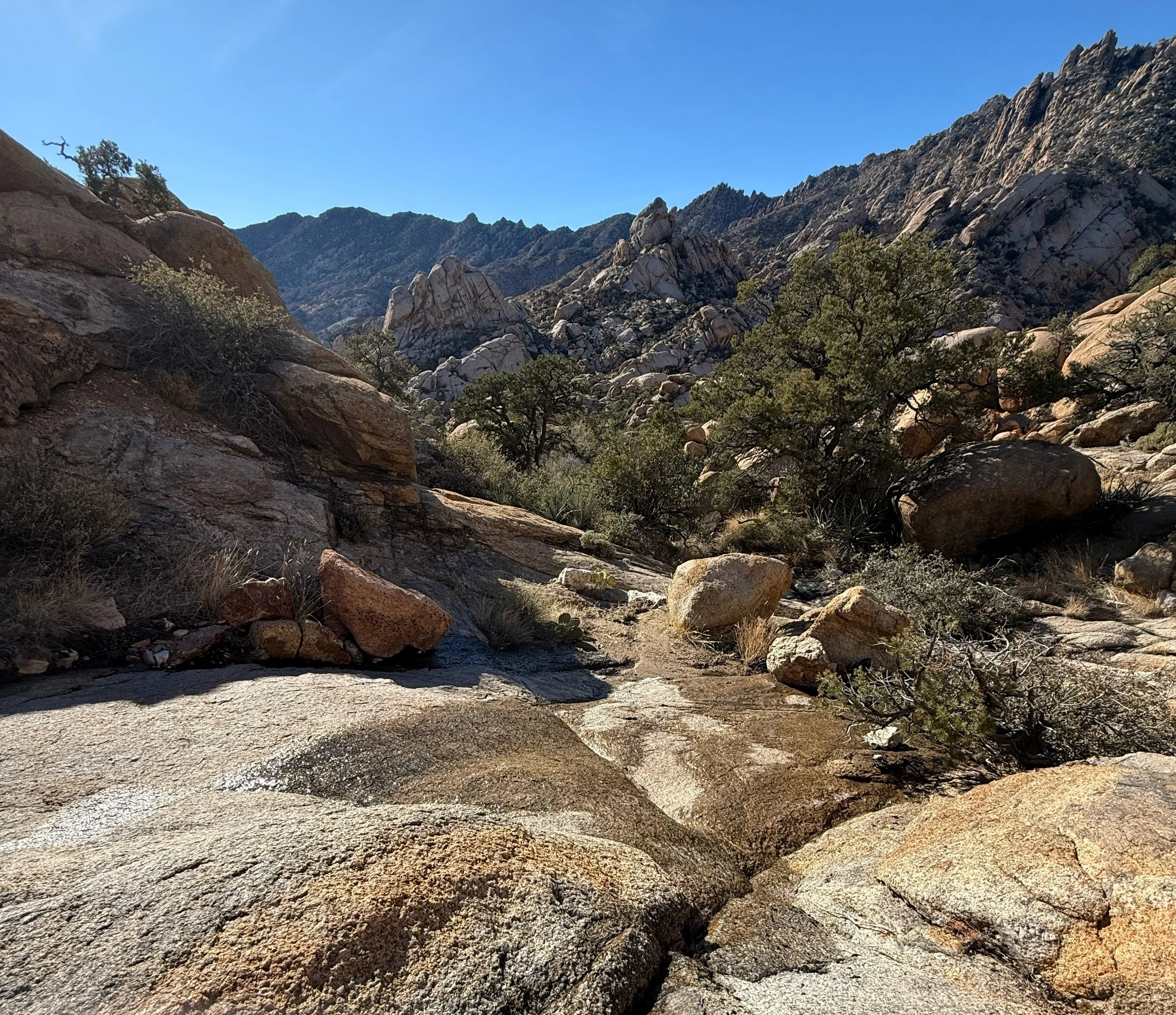
Water trickles down from the New York Mountains in Mojave National Preserve.
Water is the most precious resource for life on Earth, and nowhere is the importance of water greater exemplified than in dry ecosystems like here in the Mojave Desert. MDLT’s Seed Bank Technicians always have their eyes on regional precipitation data to help us identify areas with the potential of supporting large, hardy plant populations. According to the National Oceanic and Atmospheric Administration (NOAA) California Nevada River Forecast Center, precipitation totals ranged from as little as half an inch to as much as 6 inches across the Mojave in November 2025. For context, annual precipitation ranges from about 3.5 inches at lower elevations to up to 10 in the desert mountains. Precipitation—and more broadly, climate—greatly impact plant survivorship, growth rates, flowering times, and reproduction. So when the team noticed an uptick in rainfall, they leapt into action.
From October through December 2025, we added 51 collections to the Mojave Desert Seed Bank, including 33 taxa brand new to our repository.
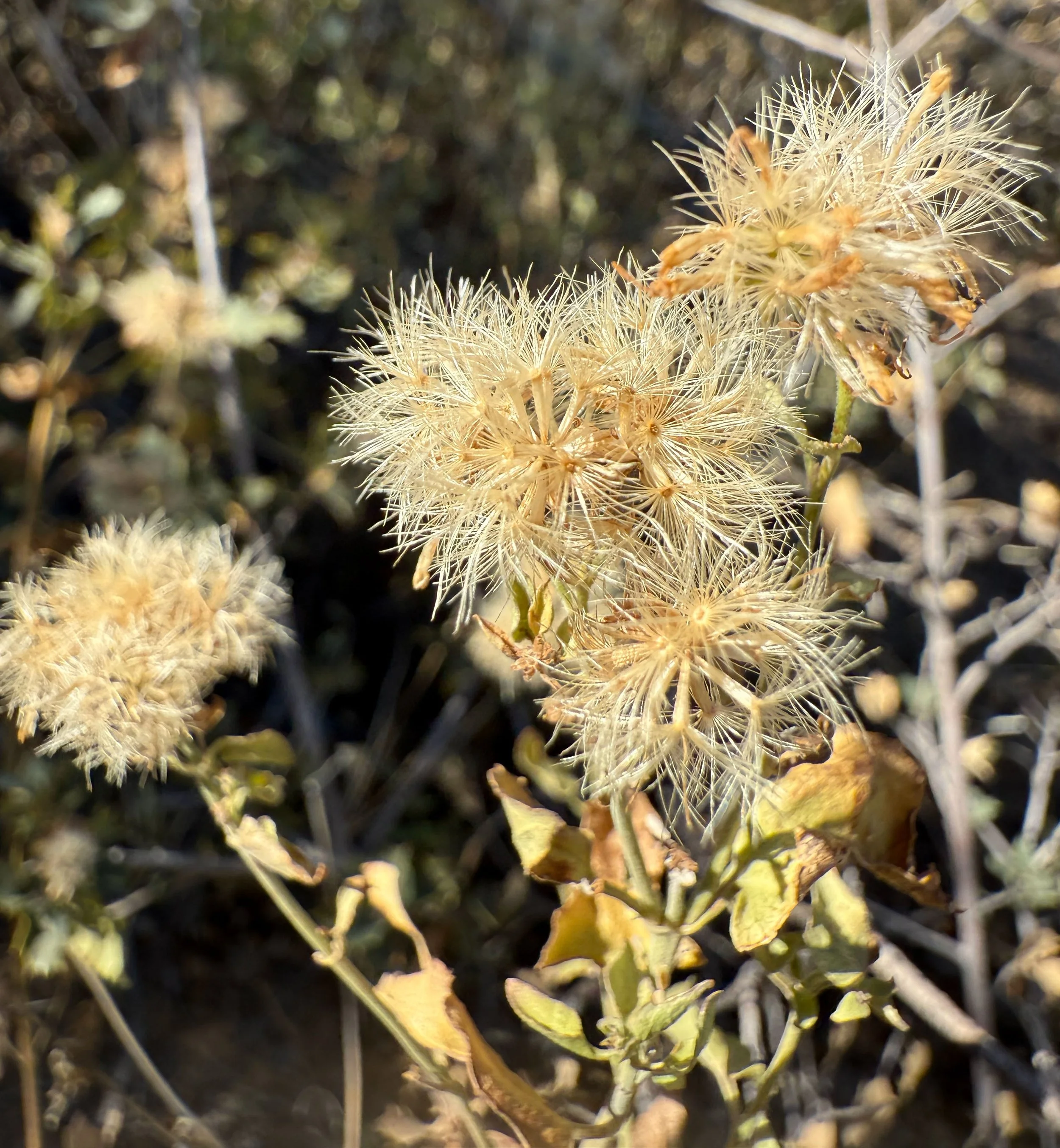
New to the Seed Bank for 2025: Fragrant snakeroot (Ageratina herbacea).
One such species, Abert’s creeping zinnia (Sanvitalia abertii), is an annual aster that is considered fairly threatened in the state of California but common elsewhere (California Rare Plant Rank 2B.2). Other rare species added to the seed bank include fragrant snakeroot (Ageratina herbacea; CRPR: 2B.3), black gramma (Bouteloua eriopoda; CRPR: 4.2), slender goldenweed (Xanthisma gracile; CRPR: 4.3), and burrograss (Scleropogon brevifolius; CRPR: 2B.3).
These collections were made from several trips across our service area. A large number came from MDLT properties within Mojave National Preserve, which received an average of 2 inches of rainfall in November across the Preserve’s approximate 1.6 million acres. When visiting, our team was greeted by beautiful flowering perennials such as the warm orange blooms of desert globemallow (Sphaeralcea ambigua), golden yellow of whitestem paperflower (Psilostrophe cooperi), and the brilliant purple (hence the namesake) of purple sage (Salvia dorii).
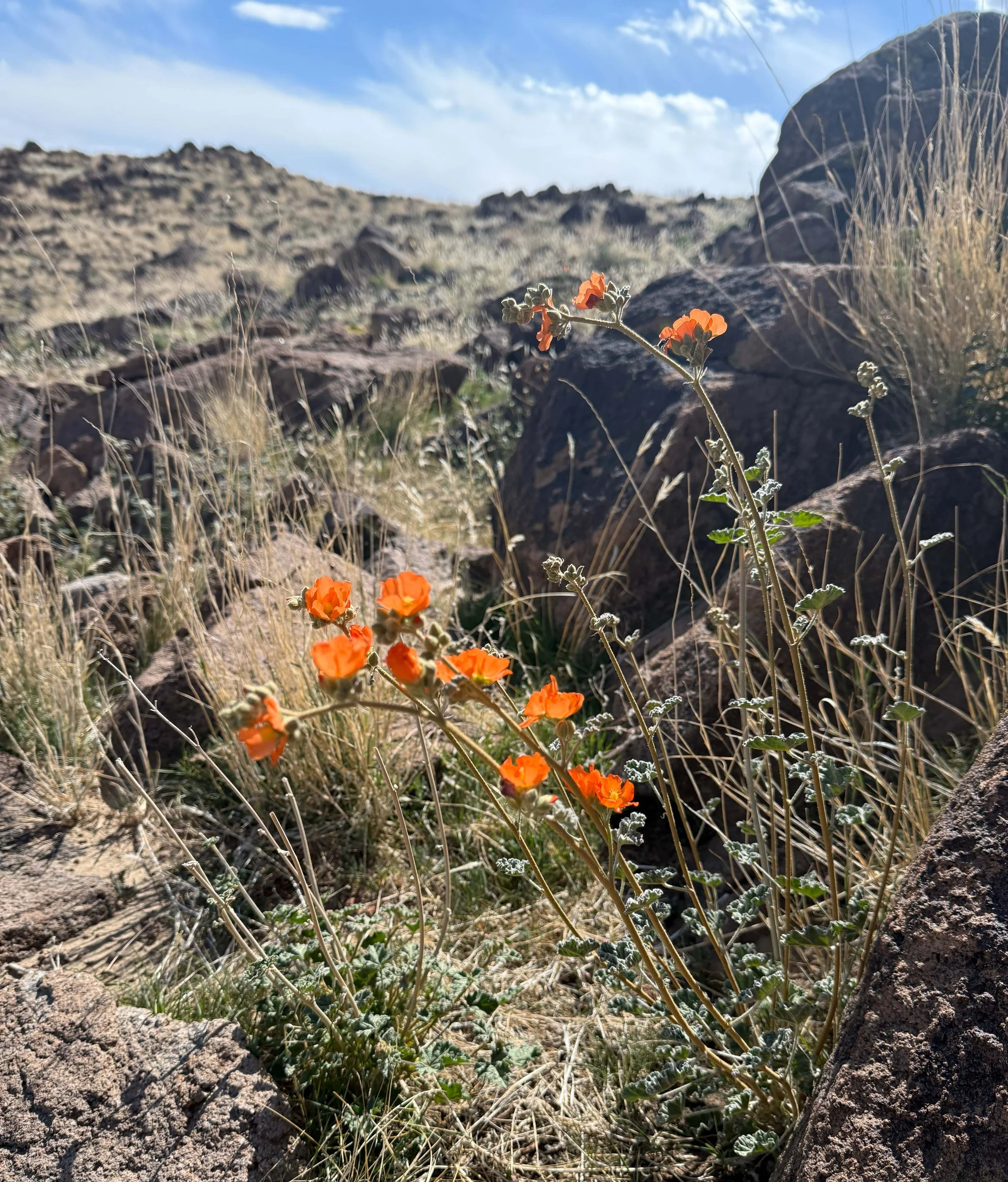
Desert globemallow (Sphaeralcea ambigua), also known as apricot mallow.
The beauty did not stop with the flowers; there was also a beautiful bounty of seeds. The gorgeous white fluffy fruits of winterfat (Krascheninnikovia lanata), a perennial shrub in the goosefoot family, were aglow thanks to a little help from the desert sun. The field team gently massaged these glowing white inflorescences, catching the fluff and all the seed it contains in their paper bags. A truly breathtaking sight to behold!
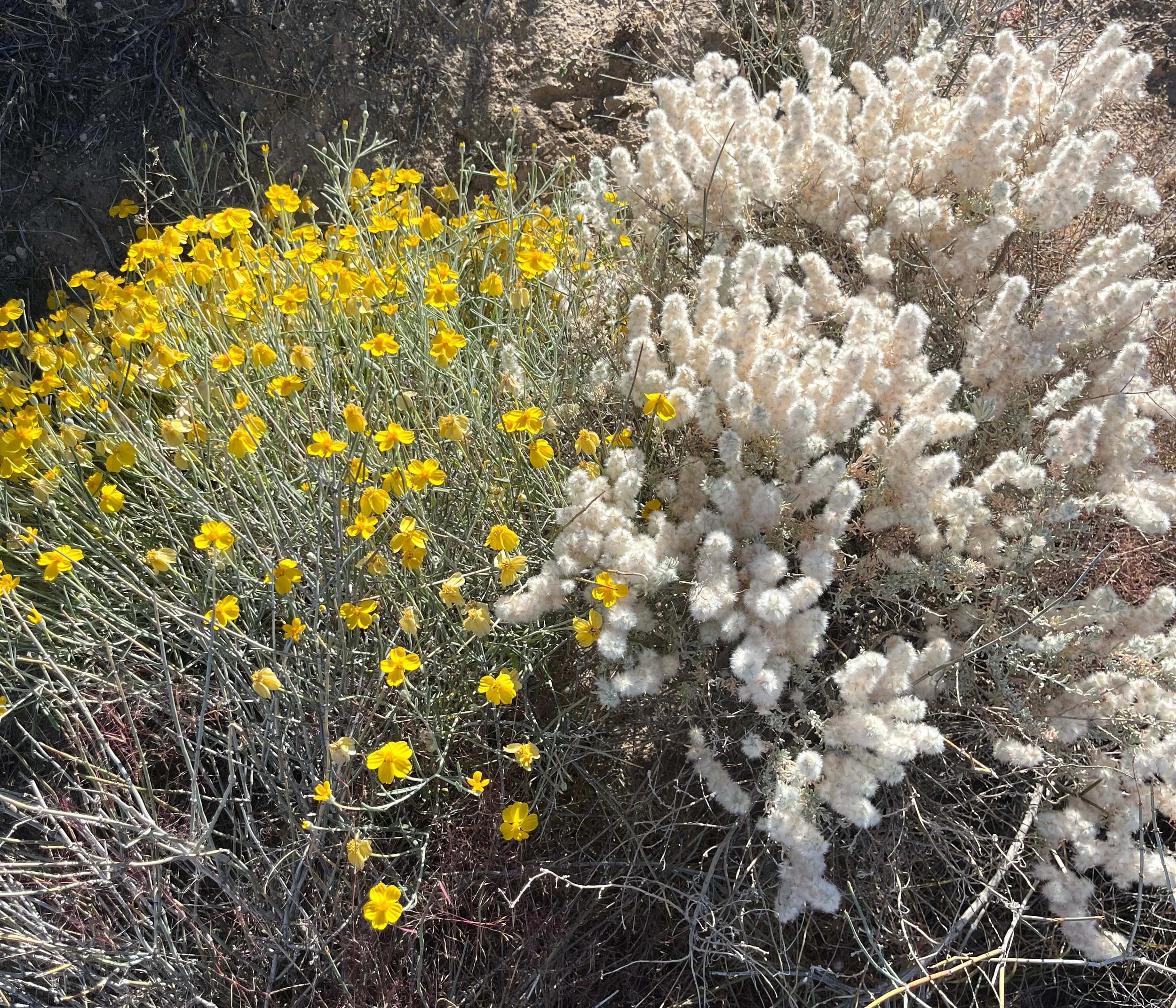
From left: Whitestem paperflower (Psilostrophe cooperi) and winterfat (Krascheninnikovia lanata).
Through the end of our 2025 field season, our team focused on late season perennial shrubs and grasses and scouted for germinating winter annuals which provide precious clues into what this upcoming spring may have in store for us. As always, we’ll continue to monitor precipitation data regularly and hope to see a few more desert showers, giving the flora of the Mojave the resource boost they need to survive and succeed in 2026.
Photos: Anthony Rondon