
The Western Joshua Tree Conservation Act
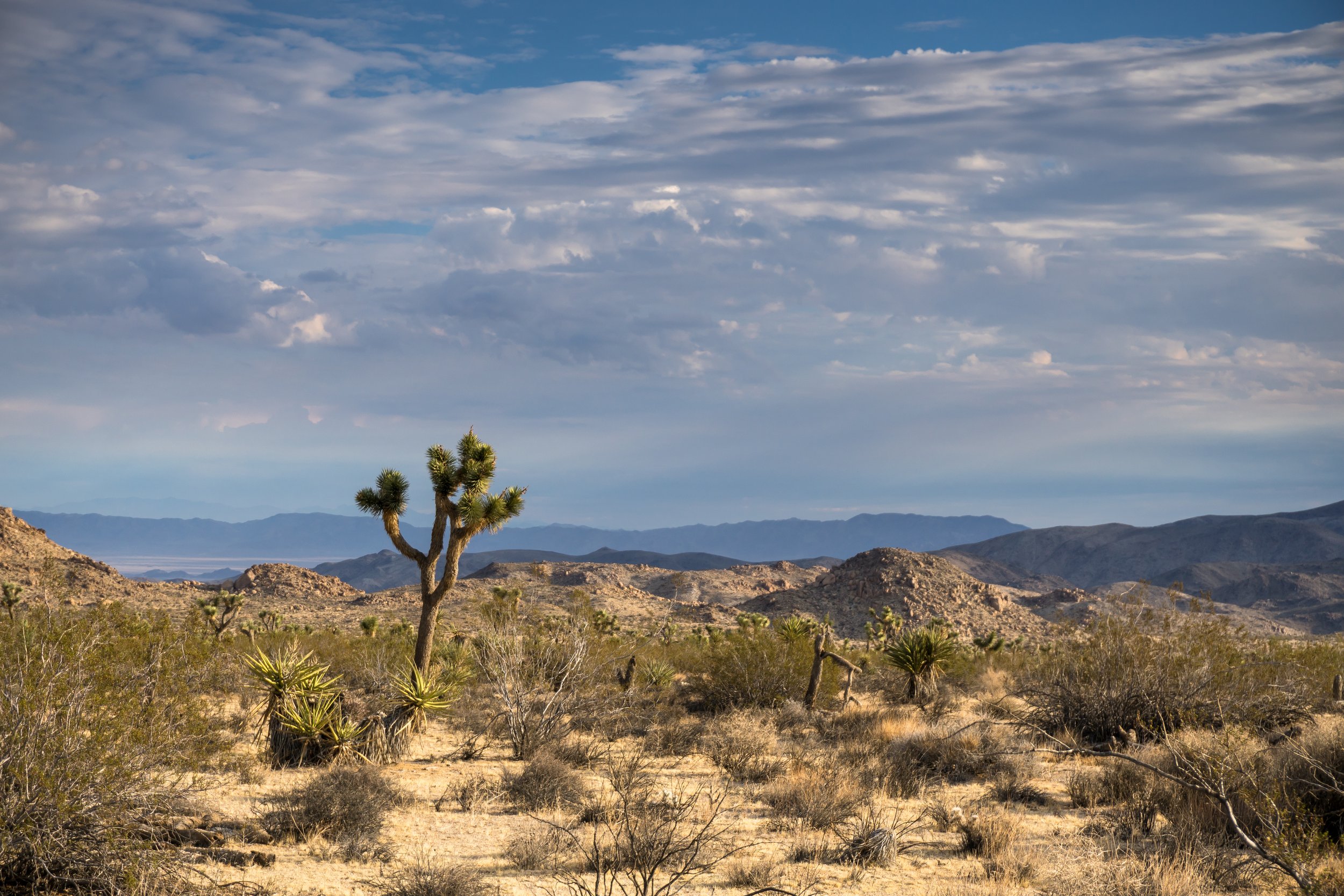
The western Joshua tree (Yucca brevifolia) was granted legislative protection through the passage of the Western Joshua Tree Conservation Act as part of the state’s Public Resources Trailer Bill (Senate Bill 122) on July 10, 2023. Section 5, Chapter 11.5 of the bill outlines the Western Joshua Tree Conservation Act. Legislation was developed following the western Joshua tree’s candidacy for listing under the California Endangered Species Act (CESA).
Can the western Joshua tree still be listed under the California Endangered Species Act?
The western Joshua tree has retained interim protections since it was made a candidate for listing under CESA in October 2020. With the passage of the Western Joshua Tree Conservation Act, the California Fish and Game Commission may take one of three actions on the current listing petition: (1) keep the western Joshua tree as a candidate species for up to 10 years; (2) deny the petition for listing; or (3) list the western Joshua tree as threatened. If the Commission either keeps this species as a candidate or denies the listing, the new law will remain in effect. If the Commission decides to put the western Joshua tree on the endangered species list, the current law will no longer apply and the full protections of the California Endangered Species Act will become the new standard of protection for this species. Keeping the western Joshua tree as a candidate species for the foreseeable future would allow scientists to determine if the new conservation act adequately protects the species from current threats.
What does the Western Joshua Tree Conservation Act do?
Assigns the California Department of Fish and Wildlife (CDFW) a central role in issuing permits to authorize the “take” (also described as “removal”) of a western Joshua tree based on various criteria including height, impact, mitigation, and relocation.
Requires CDFW adopt guidelines and protocols based on the best available science to successfully relocate western Joshua trees.
Allows the Department to enter into an agreement with any county or city to authorize the taking of the tree under specific conditions.
Mandates fees for all takes based on both location and height.
Authorizes the Department (or potential county/city) to issue permits for either removal or trimming of dead western Joshua trees or the trimming of live western Joshua trees (please see section 1927.4 for additional details).
Continues the Western Joshua Tree Conservation Fund (formerly the Western Joshua Tree Mitigation Fund) for acquiring, conserving, and managing western Joshua tree conservation lands and completing other activities to conserve the species.
Mandates the development of a western Joshua tree conservation plan in collaboration with the California Fish and Game Commission, governmental agencies, California Native American tribes, and the public.
Requires that the Department submit to an annual report assessing the conservation status of the tree as of 2025.
Requires that the Department present the effectiveness of the legislation at a public meeting every 2 years, including assessing and making recommendations to amend the conservation plan to ensure the conservation of the species.
Requires that the Department review and adjust the fees to ensure the conservation of western Joshua tree every three years as of 2026.
Allows a county or city to adopt more stringent ordinances or regulations to provide additional protections for the western Joshua tree.

FAQs

Where can I get more information about permits?
CDFW is now accepting WJTCA Incidental Take Permit Applications.
To apply for a WJTCA ITP:
Assemble and submit documents to your regional office.
Where do I go to report violations of the Act?
To report a possible violation, the first point of contact is the California Department of Fish and Wildlife CalTIP service: https://wildlife.ca.gov/enforcement/caltip
Phone: (888) 334-CalTIP/ (888) 334-2258
Documentation of violations is helpful to law enforcement. Some details that could be helpful include:
The date and time of the violation
Vehicle descriptions and/or license plates
Details of the violation – the size of the area and number of trees, is it ongoing or after the fact
Photographic or video documentation
Your safety is paramount and you should not put yourself in danger. If there is any potential for confrontation, we recommend you do not gather information/evidence, but instead, that you call law enforcement from a safe location and that you give them the location and a description of what you saw. If you can wait, meet them when they arrive, answer any further questions they have, and give them directions to the location of the violation.
Timely reporting of violations is important. If a wildlife or code enforcement office can reach the scene while the violation is taking place, it makes it much easier to prove and support.
What is the Mojave Desert Land Trust’s position on the new Act?
Read our statement about the Western Joshua Tree Conservation Act.
Additional resources
MDLT neither recommends nor endorses the individuals or firms shown here. The list is maintained as a courtesy to the public. If you would like your firm added to this list, please contact info@mdlt.org.
-
The Landscape Center
[Arborist/Tree Mover]
Attn: Dillon Reynolds
9505 Cleveland Avenue, Riverside, CA 92503
(951) 352-8383 -
Greg Ainsworth, MCRP [Biologist/CEQA/NEPA/Permitting/Arboriculture/Restoration/Compliance-Construction Monitoring]
Natural Resources and Forestry Director
Rincon Consultants, Inc.
Environmental Scientists | Planners | Engineers
805-644-4455 x3061
818-564-5544 - mobile
805-465-9091 - direct
rinconconsultants.comArbor Tech Services
Warren Miller ISA #WE-2001A [Arborist]
(760) 322-2234
PO Box 2509
Palm Springs, CA, 92263
www.arbortechservicesps.com
Serving: Entire Coachella Valley, Yucca Valley, Joshua TreeRandy Arnold, Principal & Senior Biologist
RCA Associates, LLC.
15555 Main Street, Suite D4-235
Hesperia, California 92345
760-956-9212
rca123@aol.comMitchel Beauchamp [Biologist/CEQA/Joshua Tree Planning]
Pacific Southwest Biological Services, Inc.
P.O. Box 985
National City, CA 91951
619-477-5333
mitch@psbs.comEnvicom Corporation [Botanist/Biologist/Arborist/NEPA/CEQA/Land Planning/Environmental Constraints/Development Suitability/GIS/Permitting and Compliance] [CA Fish and Wildlife]
28328 Agoura Road
Agoura Hills, CA 91301
818-879-4700Kay J. Greeley [ISA Certified Arborist/Civil Engineer/Joshua Tree Preservation Plans]
284 Valley Gate Road
Simi Valley, CA 93065
805-577-8432Mark Hagan
[Wildlife biologist/Botany/CEQA/Joshua Tree Preservation Plans]
44715 17th Street East
Lancaster, CA 93535
661-723-0086
661-433-9956 - cell
Wnaturelover1@aol.comRichard Ibarra [Consulting Arborist/Joshua Tree Impacts]
Trees, Etc.
P.O. Box 4583
Thousand Oaks, CA 91359
805-558-8733Tip Top Tree Arborists [Arborist]
Attn: Tom Baal
P.O. Box 2107
Lancaster, CA 93539
661-942-5501
661-810-3772 - cellMarinna Wagner [Consulting / Reporting,
ISA Certified Arborist]
#WE-13354A
408-307-2545 (email preferred)
marinnawagner@gmail.com
Yucca Valley, CAAltec Land Planning / Altec Engineering, Inc.
Randy Coleman [AICP, Certified Arborist, Certified Wildlife Biologist, CDFW: Scientific Collecting Permit #11586, PE #36292, PLS #5413, QSD/P]
Ginger Coleman [MPA, Director of Environmental Planning]
Chad Martin [Project Manager for Surveying/Topography and Grading Plans]
Planning Office: (760) 242-9917
Engineering Office: (760) 242-9900
P.O. Box 1175
Model Home:
19531 Highway 18
Apple Valley, CA, 92307Gene Jennings [Consultant/Environmental Review and Compliance: CEQA, NEPA, MSHCP/Pre-Project Agency Consultation/Project Development/Technical Studies and Reporting]
35414 Acacia Ave Yucaipa, CA
(909) 534-4547
gene@jennings-environmental.com
www.jennings-environmental.comRocks Biological Consulting
Keoni Calantas
(619) 769-4415
www.rocksbio.com(1) Desert native plant specialist means: (A) An arborist certified by the International Society of Arborists; or (B) An individual with a four-year college degree in ecology or fish and wildlife related biological science from an accredited college and at least two years of professional experience with relocation or restoration of native California desert vegetation; or (C) An individual with at least five years of professional experience with relocation or restoration of native California desert vegetation.
