
For immediate release
January 7, 2026
Contact: Jessica Dacey, Director of Communications
Phone: 760-366-5440 ext 239. Email: Jessica@mdlt.org
OPTIMISTIC OUTLOOK FOR CALIFORNIA DESERT AFTER 6,000 ACRES PROTECTED IN 2025
JOSHUA TREE, CA - The largest intact ecosystem left in the contiguous United States received a conservation injection in 2025 with the protection of 6,066 acres over the year by the Mojave Desert Land Trust. The land acquisitions reflect the Trust’s work to preserve the California desert’s remarkably diverse landscapes, from dunes and mountains to historic mining sites. Stewardship by the Trust will ensure the lands in national parks, wilderness, and wildlife habitat are cleaned up and restored, including a hazardous derelict illegal cannabis grow structure and a scenic viewshed plagued by dumping.
Deep in the West Mojave in a region with some of the most significant habitat for the Endangered desert tortoise, the Trust acquired nearly 1,000 acres identified as species recovery focal units. In one 80-acre parcel, dangerous poles and ripped plastic scatter the landscape on the site of a former illegal cannabis grow, posing a threat to wildlife. While visiting, Trust staff found fresh tortoise scat and burrows here. One 126-acre parcel has become a dumping ground where hazardous items and windblown trash are problematic for the soil and ecosystem health. On another site, a large tire dump needs to be removed. Both off-highway vehicle recreation and desert conservation are part of the mixed-use remit of this area, and the Trust’s work with local Bureau of Land Management helps minimize impacts to flora and fauna.
“MDLT has conserved lands that pose a larger threat or impact to tortoises, such as sites with solid waste dumping which are a nuisance attractant for predatory ravens, dumping, illegal cannabis grow sites, and undesignated recreational routes that can be restored. MDLT will clean up the dumping, debris and the illegal grow-house infrastructure and chemicals to improve habitat. Along with restoration and signage, these lands will become part of a larger, comprehensive management plan,” said Cody Hanford, Director of Conservation Strategy.
Elsewhere, the panoramic viewshed at the entrance to Mojave Trails National Monument, long plagued by boulder graffiti tagging, trash dumping, and habitat degradation, was protected with the acquisition of a 640-acre parcel that sweeps up from washes to a 2,485 feet-high point in the Sheephole Mountains. Its proximity to one of the few travel routes through the national monument has resulted in a significant amount of dumping of items such as mattresses, tires, building materials, and hazardous materials. An illegal camp location included a makeshift toilet and bench.
The Trust’s land conservation work also helped piece together national parks and national monuments in 2025 through the acquisition of privately-owned parcels from willing sellers.
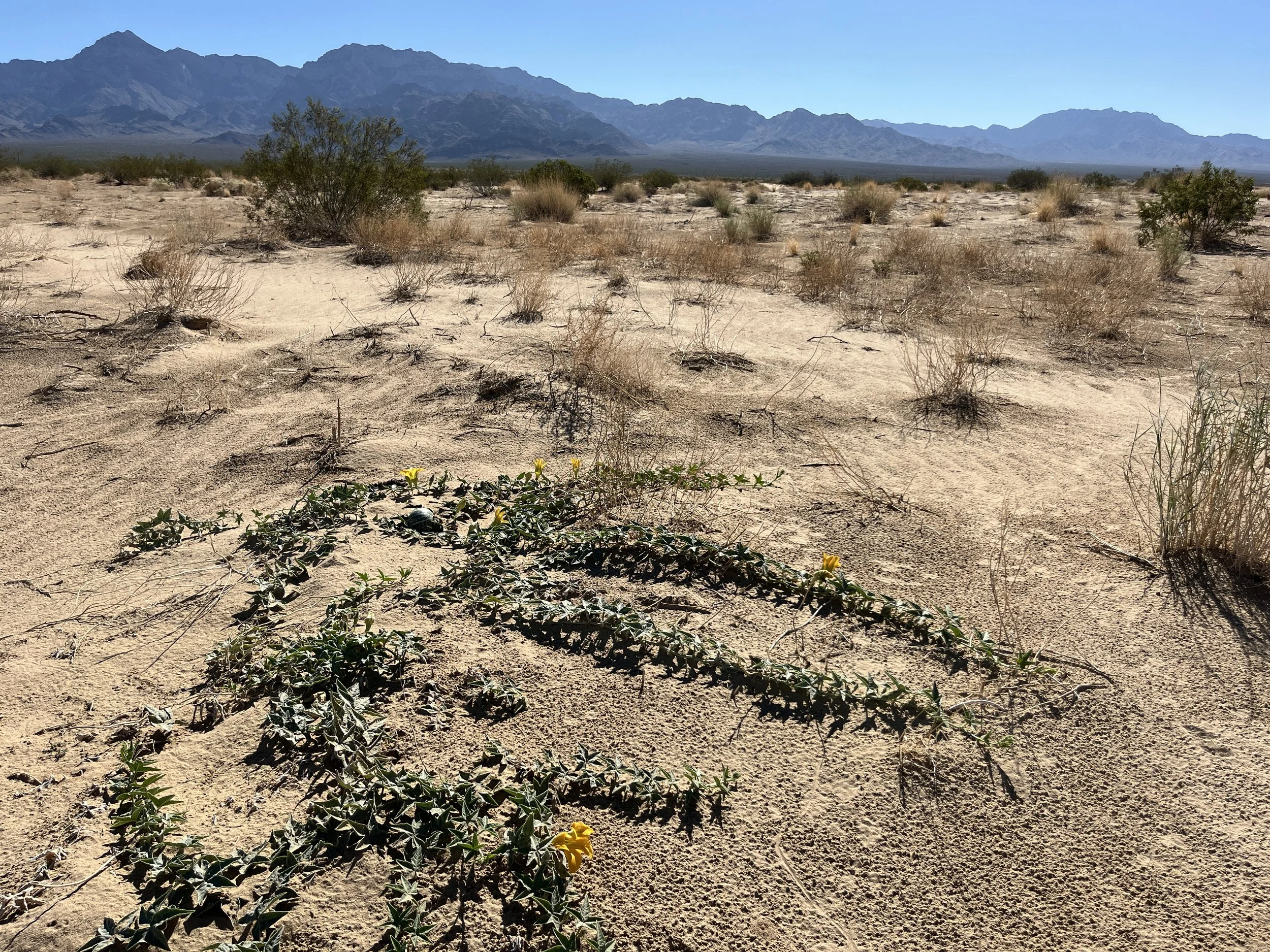
800 acres (pictured) were protected in Mojave National Preserve in the Trust’s largest single acquisition in this national park unit to date. The property includes part of the Kelso Dunes system and has an abundance of native plants. The Trust has conserved 28,982 acres in Mojave National Preserve since 2006.
Further north in Death Valley National Park, lands belonging to the Big Bell Mine family have been protected with the goal of one day returning this historic spot to the National Park Service. At a location of 4,385 feet, these 54 acres surround the mine and feature numerous adits, mineshafts and prospects. There are also established hiking trails around and through the properties. The Big Bell Mine was operational between 1911 and 1941 and was a source of ore. According to one newspaper report, it was once known as “one of the biggest propositions in the country”.
Within Sand to Snow National Monument, 617 acres of federal wilderness along a rugged, eastern slope of the San Bernardino Mountains was protected, along with the historic watershed of the Big Morongo Canyon Creek. In Mojave Trails National Monument, a 153-acre acquisition preserves part of the ancient volcanic fields of Amboy Crater National Natural Landmark—around 11,000 years ago basaltic lava poured out over 24 square miles. Illegal off-highway vehicle tracks and habitat disturbance have been reported here and the historic Route 66 passes through the property.
Many of the Trust’s acquisitions will help promote future wildlife connectivity. One 160-acre property in the proximity of Joshua Tree National Park will bolster habitat for movement of species including mule deer, bobcat, and mountain lion. South of the Trust’s Palisades Ranch Preserve near Victorville, a 47-acre acquisition protects more of the Mojave River basin. Recent surveys at Palisades Ranch detected it serving as a haven for over 40 special status species.
Of the total land protected in 2025, 960 acres were in national parks, 2,691 in national monuments and wilderness, and 2,414 in habitat, linkages, and other conservation areas. Since 2006, the Trust has conserved 132,347 acres.
“These landscapes are among the most evocative places in this extraordinary region and represent a sense of hope, not just for the future of the many wildlife and plant species found there, but for the people who love to connect with all the California desert offers. We are thrilled to start 2026 with the knowledge that, together, it is possible to preserve the desert’s most significant landscapes,” said Cody Hanford, Director of Conservation Strategy.
Ends/…
Note to editors:
Contact the media team to organize site visits and interviews.
For more information and interviews, please contact:
Mojave Desert Land Trust
Jessica Dacey, Director of Communications
Phone: 760-366-5440 ext 239. Email: jessica@mdlt.org
The Mojave Desert Land Trust (MDLT) is a 501(c)(3) non-profit organization with the mission to protect and care for lands with natural, scenic, and cultural value within the Colorado and Mojave Deserts. Since its founding in 2006, MDLT has conserved approximately 130,000 acres, conveying more tracts of land to the National Park Service than any other nonprofit. MDLT established a conservation seed bank to ensure the preservation of native species and operates an onsite nursery at its Joshua Tree headquarters which has grown over 130,000 native plants for restoration projects and community landscaping. MDLT educates and advocates for the conservation of the desert, involving hundreds of volunteers in our work. For more information, visit mdlt.org.