
Help protect endangered bighorn
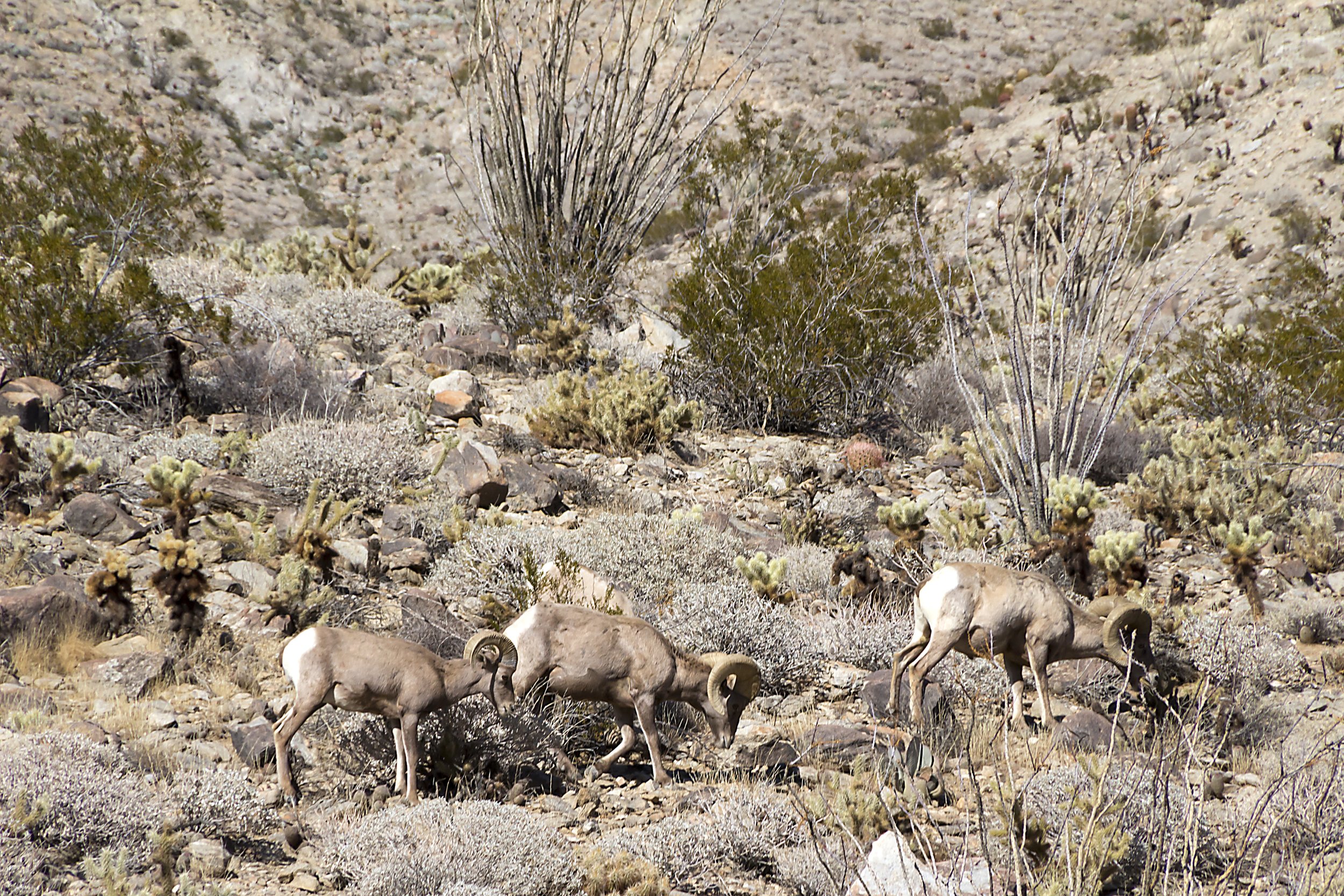
In California's Jacumba Wilderness, border wall construction is cutting off a migration corridor for federally Endangered Peninsular desert bighorn sheep, permanently separating these animals from fresh water and altering their life-long migration patterns.
The Jacumba Wilderness, comprised of expansive desert washes and plentiful mountains and canyons, spans more than 31,000 acres along the national border in San Diego and Imperial Counties. The high elevations of this federally protected wilderness serve as a corridor for Peninsular desert bighorn sheep, a species that was listed under the federal Endangered Species Act in 1998. It is here that the U.S.-Mexico border wall is about to be constructed.
If the wall proceeds with no protective measures in place, the Jacumba subgroup of the Endangered Peninsular desert bighorn sheep will be cut off from rare sources of water, food, shelter, and mates, their migration routes blocked. They are already facing deadly razor wire being installed at some points of the border. Add to this, the effects of wall construction, road building, and an increase in human activity. Experts believe that this will be the last gasp for this population.

How you can help
The federal government can waive environmental laws like the Endangered Species Act by using the 1996 Illegal Immigration Reform and Immigrant Responsibility Act. But Customs and Border Protection can still be asked to implement wildlife mitigations into its projects. While we can’t stop construction of this wall, we need to mitigate the ecological impacts on this federally protected wilderness.
Please urge your representatives to push for protective measures to ensure that these majestic and endangered animals have a way to access water and forage in the Jacumba Wilderness. Use our quick action form to contact Congress today.
What do sheep have to do with us?
The presence of bighorn serves as an indicator of overall ecosystem health. Loss of a key herbivore can impact the food web, result in more invasives and soil erosion, and reduce the landscape's ability to store carbon and mitigate climate change—all of which impact human life.
-
As native herbivores, they help shape plant communities through grazing and browsing, influencing vegetation structure and nutrient cycling across the landscape. They contribute to wildfire resilience by consuming grasses and other vegetation that typically serve as a fuel source, and their grazing can slow the spread of invasives which often increase fire frequency and intensity. The loss of this population could contribute to increased fuel loads and an increased spread of invasive plants, potentially elevating wildfire risk.
-
Bighorn serve as an important prey source for predators such as mountain lions, coyotes, and eagles, helping sustain the food web. Protecting bighorn sheep habitat simultaneously conserves the broader network of plants, wildlife, and ecological functions throughout the Jacumba Wilderness.
-
Beyond their ecological importance, desert bighorn sheep are deeply connected to the cultural heritage of Indigenous Tribes and are an iconic symbol of the Jacumba Wilderness. The loss of this iconic species would sever an important connection to the region's historic landscape while also reducing wildlife viewing and scientific opportunities that support ecotourism and local economies in border communities.