
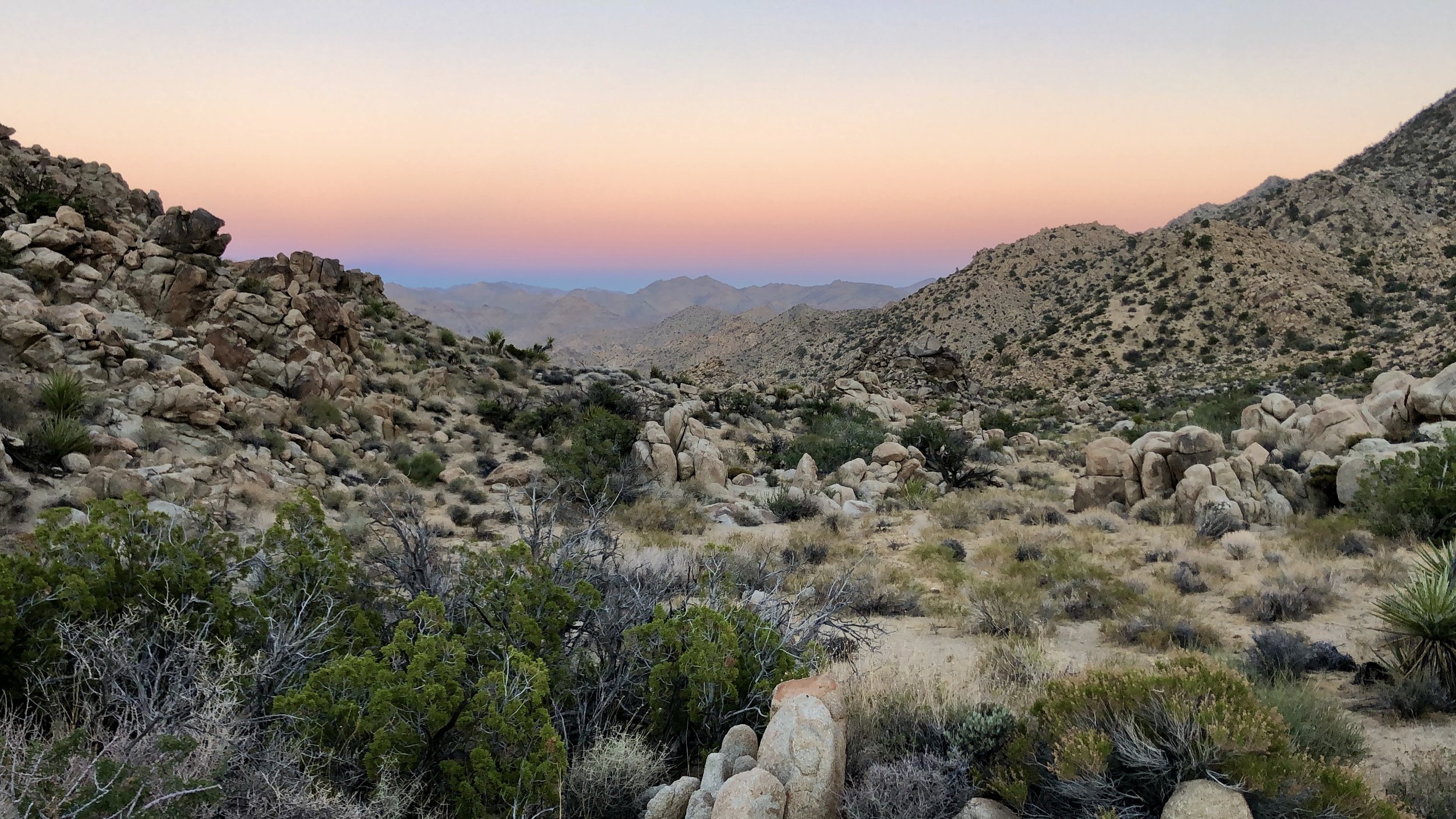

Deep in the Mojave, researching the night sky
Research by WISDOM interns help us understand the quality and the importance of the Mojave Desert’s dark night skies. Last fall a cohort of three college women began monitoring the night sky quality in the western portion of Mojave Trails National Monument. Their research will help the Bureau of Land Management in its effort to work toward International Dark Sky support for the National Monument.

After the summer rains, new growth
Monsoonal rains across the Mojave Desert this summer have led to the germination of summer annuals like chinchweed and fringed amaranth in some parts of the desert. Learn how to identify native and non-native seedlings popping up in the high desert this summer.

Ay te Voy: Navigating a career in conservation
Corina Godoy felt she had a calling to work in conservation. Along the way, she didn’t see many people who looked like her. Undeterred and embracing her passion, she forged ahead, knowing that she would have to clear her own path.

Latino Conservation Week: Essential reading list
Latino Conservation Week celebrates the connections of the Latino community and their passion for the outdoors. Compiled by MDLT staff and our partners in conservation from our desert communities, we hope this reading list inspires you to learn more about the world around us from our community of Latino voices.

The women mapping the Mojave’s dark night skies
WISDOM interns discovered the darkest spot in the western portion of Mojave Trails National Monument. A new group is continuing that quest for the entire monument.

Juneteenth reading list
Juneteenth commemorates the day the last enslaved people were emancipated in the United States in 1865. These nonfiction books by black authors continue to shape our culture, contribute to conservation awareness, celebrate exploration, and acknowledge the ongoing work towards equality still necessary over 150 years later.

Landscaping with desert native plants
With environmental threats like habitat loss and climate change upon us, our beloved wildlife and pollinators will appreciate the sanctuary of your yard. Native plants are well-adapted to this climate and soil, making them a low-maintenance way to beautify your outdoor spaces.