
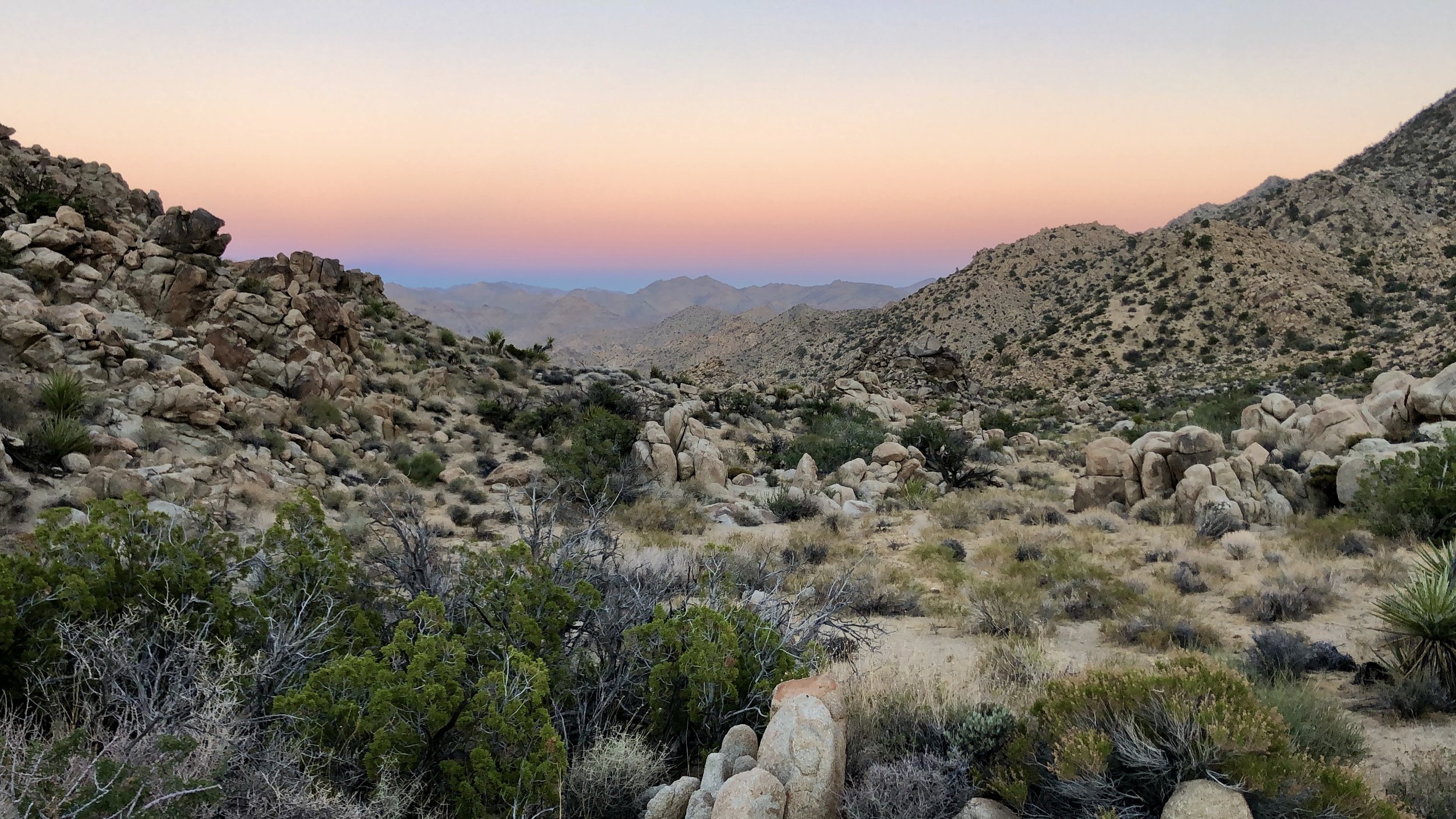

The silence inside Mojave Trails
To date, the Mojave Desert Land Trust has acquired over 10,000 acres within Mojave Trails National Monument. Over half of that is within wilderness.

Mapping Joshua trees across the Mojave
If you live in, visit, or care about the Mojave Desert, you’re probably quite familiar with the ungainly silhouette of its most iconic resident: the Joshua tree. Yucca brevifolia and its related species Yucca jaegeriana are endemic to the Mojave Desert, meaning that they’re not found anywhere else on earth. As the manifestations of climate change multiply, even that restricted range is likely to shrink, when low-elevation and southerly populations struggle to adapt to hotter conditions.

Rare desert flower launches new herbarium at Mojave Desert Land Trust
While out on a land monitoring expedition in February 2017, a group of Mojave Desert Land Trust staff came across a very special plant. “We were going out onto our lands to monitor and collect seed, and in the process we were coming across some rare species,” says Madena Asbell, Director of Plant Conservation Programs at the land trust. “Last year we came across something that was very rare, so much so that other people were interested in having us document it.”
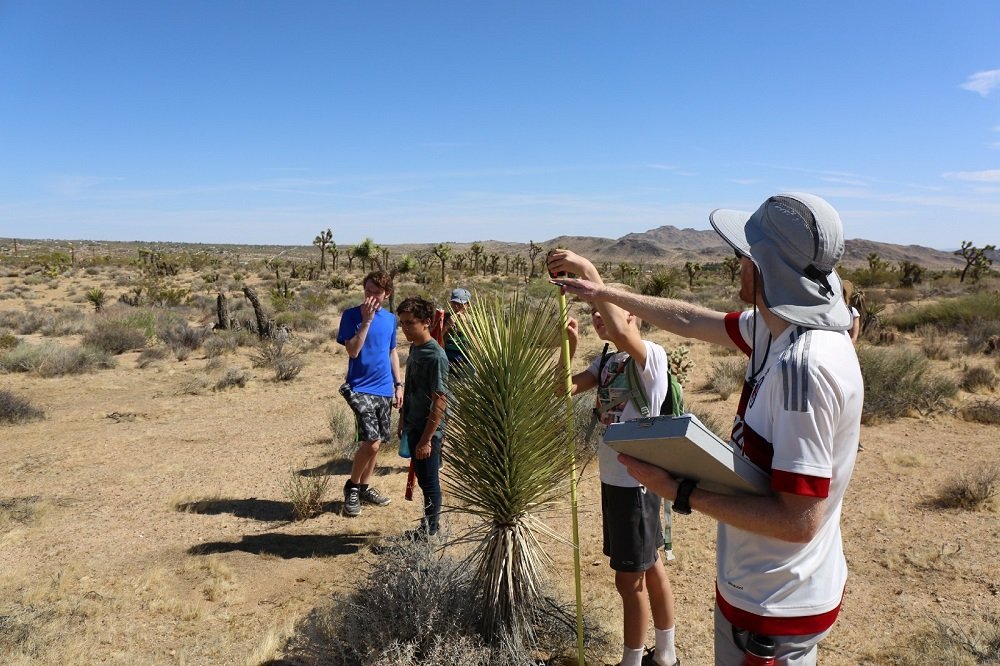
Tracking climate change through the Joshua tree
It’s 10am and the sun already feels strong. Seventh and eighth graders pile out of vans and start applying sunscreen. They’ve driven 150 miles from Grauer School near San Diego to become citizen scientists for the day. “I see you’re all wearing the right shoes,” observes Adam Henne, outreach and volunteer coordinator at Mojave Desert Land Trust. In a safety briefing he warns the group about the cholla cactus and reminds everyone to hydrate. “One more thing you’ll need to watch out for: snakes. A good rule is never to put your hands or feet where you can’t see them.”
Submit your comments: Defend the desert plan!
Our desert lands are facing a new threat. The Bureau of Land Management wants to review a plan that governs the entire California desert. It is asking for public comments and is holding a series of public meetings on a proposal that could change how desert lands are used. The public has until March 22 to submit comments to the BLM. That’s where you come in. In this article, we provide several resources to help you submit your comments or find a public meeting near you, and we provide some talking points that you can use.
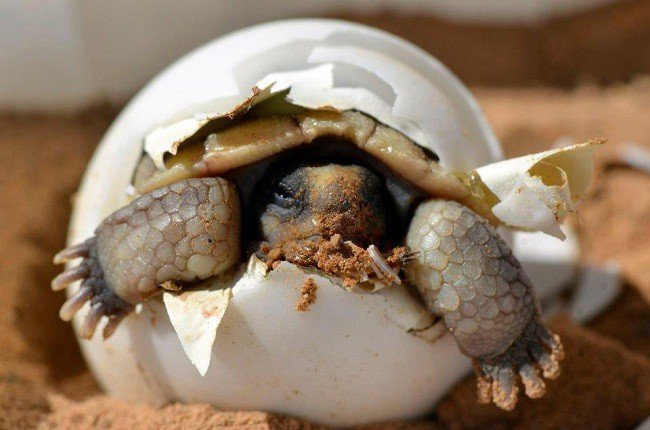
Why desert tortoises need desert defenders
A rare sighting of a unique creature… Desert tortoises are extremely elusive, spending upwards of 95% of their time underground. To say they are camera-shy is an understatement. Desert tortoises are also what we call “ecosystem engineers”. Their burrows are used by other species for shelter. They eat plants and spread seeds around. They hold an integral place in the dynamic desert landscape. Although this remarkable creature has been around since the time of the dinosaur, they are now endangered.

Burning Plants to Grow Seeds
We associate fire with destruction. But some plants, known as “fire followers”, grow abundantly in places where there’s been a blaze. Apricot mallow (Sphaeralcea ambigua) is one such plant. Our nursery and seed bank has been experimenting with different ways of helping this popular garden plant to germinate. They recently did five scientific experiments with apricot mallow seeds.