
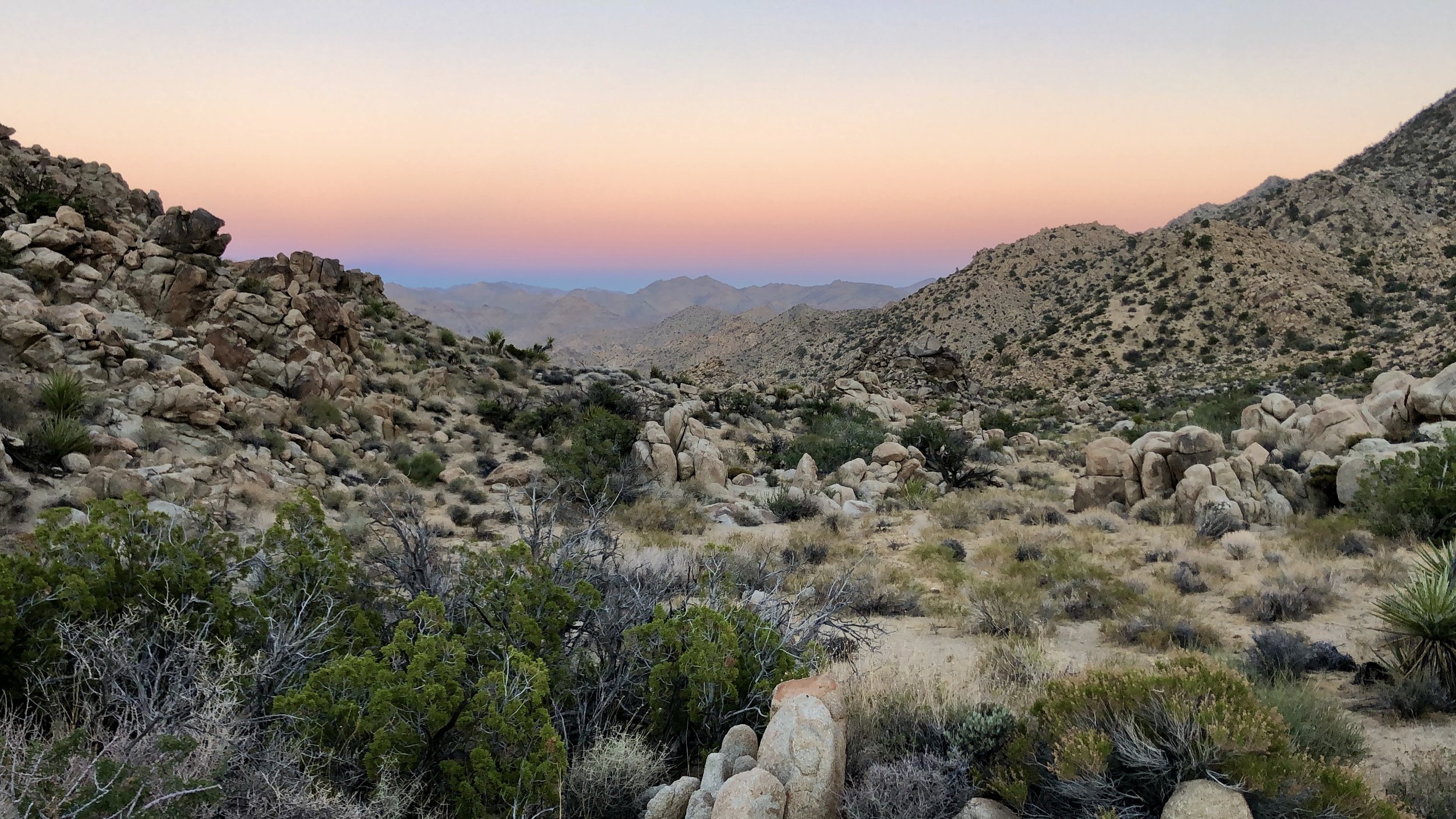

Tracking desert tortoise in the Colorado Desert
The desert tortoise population is in steep decline — in some areas, the population has decreased by 90%. Each year the Mojave Desert Land Trust heads out to areas of critical tortoise habitat looking for signs of hope for this threatened species.

Landscaping with desert native plants
With environmental threats like habitat loss and climate change upon us, our beloved wildlife and pollinators will appreciate the sanctuary of your yard. Native plants are well-adapted to this climate and soil, making them a low-maintenance way to beautify your outdoor spaces.

Get weeding! Help manage invasive plants in the Mojave
While seeing splashes of bright green amidst our sandy washes might seem like a sight for sore eyes, not all of the greenery is beneficial. Some of these are invasive species that if left unchecked, can run rampant over the landscape, harming ecosystems and the animals who rely on native flora for food. When gardening in your little slice of desert paradise, you’ll want to pull the invasive weeds as soon as you notice them to help the native plants to thrive. How will you know the difference? Read on!

Chia: A plant of power
In this edition of the Dorothy Ramon Learning Center August 2020 newsletter, reprinted in full with permission, we explore paanihac (Serrano), pasal (Cahuilla), pashal (Luiseño), ‘ilépesh (Barbareño Chumash), nulh’amulh (Kumeyaay), or chia, as this sage plant (Salvia columbariae) is known in a few local Southern California languages. Chia’s tiny seeds offer an important Native American traditional energy food.

The bighorn sheep is famously elusive. Interns hope to understand its movement
Every few weeks, Alejandra Lopez leaves her home in Long Beach, CA to drive 3.5 hours to join an all-female research team collecting scientific data on the bighorn sheep in the Mojave Desert.

Desert plants — and the desert floor itself — are key fighters of climate change
The so-called ‘barren’ lands of the Mojave actually play an important role in keeping carbon out of the atmosphere. Scientists have been surprised to find that deserts, like other ecosystems, function as a carbon sink. This means the Mojave Desert and all the world’s arid lands play a key role in the carbon cycle and carbon uptake — and that preserving them is of high importance as the climate crisis continues. But wait: How does a landscape that seems so empty keep carbon?

Seven biologically rich areas, now protected
The Mojave Desert Land Trust recently purchased 1,200 acres in the Sierra foothills. These lands are home to seven springs and may be some of the most species-rich spots in Southern California. Welcome to Desert Springs.